




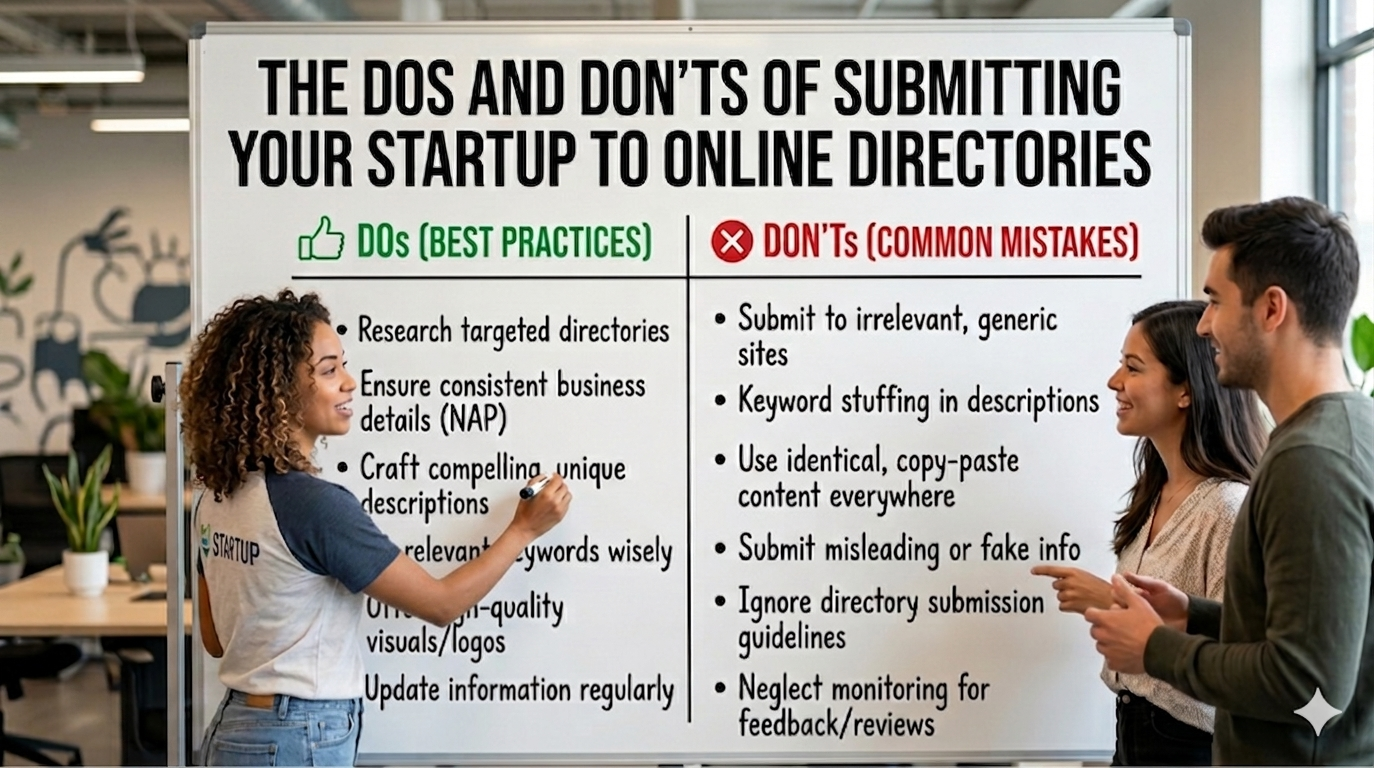
In the competitive world of startups, it's easy to dismiss directory submission as an outdated SEO tactic. This is a misconception. Strategic submission is a precise, foundational move for building high-quality backlinks, boosting brand visibility, and connecting with crucial early adopters. A well-executed directory strategy creates a permanent digital footprint that signals credibility to search engines, investors, and potential customers alike.
This guide provides actionable strategies to help you maximize the impact of your efforts. We'll walk you through preparing your assets, choosing the right platforms, crafting a compelling listing, and turning submissions into a sustainable source of growth.
The Strategic Benefits of Startup Directory Submission
Before diving into the "how," it's crucial to understand the "why." Submitting your startup to the right directories provides a multi-faceted return on your time investment.
- Foundational SEO: Each listing on a reputable directory creates a high-authority backlink and a brand citation, which are core signals Google uses to determine your credibility and ranking potential.
- Targeted Referral Traffic: Niche-specific directories put your product in front of an audience that is actively searching for solutions like yours, driving highly qualified leads to your website.
- Increased Brand Visibility: Getting listed on platforms like Product Hunt or BetaList can generate significant initial buzz, putting your brand on the radar of early adopters, tech journalists, and even potential investors.
- Building Social Proof: A presence on multiple respected platforms acts as a form of third-party validation, building trust with potential customers who are just discovering your brand.
- Access to Startup Perks: Many directories and launch platforms partner with major companies like AWS, Stripe, and HubSpot to offer exclusive discounts and credits to their listed startups, saving you thousands on essential tools.
Pre-Submission Checklist: Prepare Your Asset Kit
Before you submit to a single directory, you must standardize your core company information. Inconsistency confuses search engines and dilutes your brand authority. Creating a centralized "Asset Kit" saves countless hours and ensures every listing is professional and consistent.
- Tools for Your Kit:
- A shared document (e.g., Google Docs, Notion) for all text-based information.
- A spreadsheet (e.g., Google Sheets, Airtable) to track submissions, live URLs, and status.
- A cloud folder (e.g., Google Drive, Dropbox) with all visual assets, pre-sized for common requirements.
- Required Information Checklist:
- Company NAP: Your official Name, Address (even a virtual office), and Phone Number must be 100% identical everywhere to build a strong local SEO entity.
- URLs: The canonical version of your homepage (
https://www.example.com), social media profiles (LinkedIn, X/Twitter), and direct app store links. - Optimized Descriptions:
- Tagline: A one-liner (under 60 characters) that explains what you do. Example: Instead of "AI-powered CRM," try "The CRM that writes its own follow-up emails." An AI Slogan Generator can help spark ideas.
- Short Description: An "elevator pitch" (under 250 characters) focusing on the primary benefit.
- Long Description: A 200-300 word overview using the Problem-Agitate-Solve framework, naturally including target keywords.
- Visuals:
- High-resolution logo: Square, horizontal, and variants for light/dark backgrounds.
- Product Screenshots: 3-5 high-quality images showcasing your product's key UI and "aha!" moments.
- Founder Headshot: A professional photo for platforms that highlight the makers.
- Demo Video: A link to a short (under 2 minutes) product demo.
- Categorization: A pre-defined list of 5-10 relevant categories and tags (e.g., "SaaS," "FinTech," "Marketing Automation").
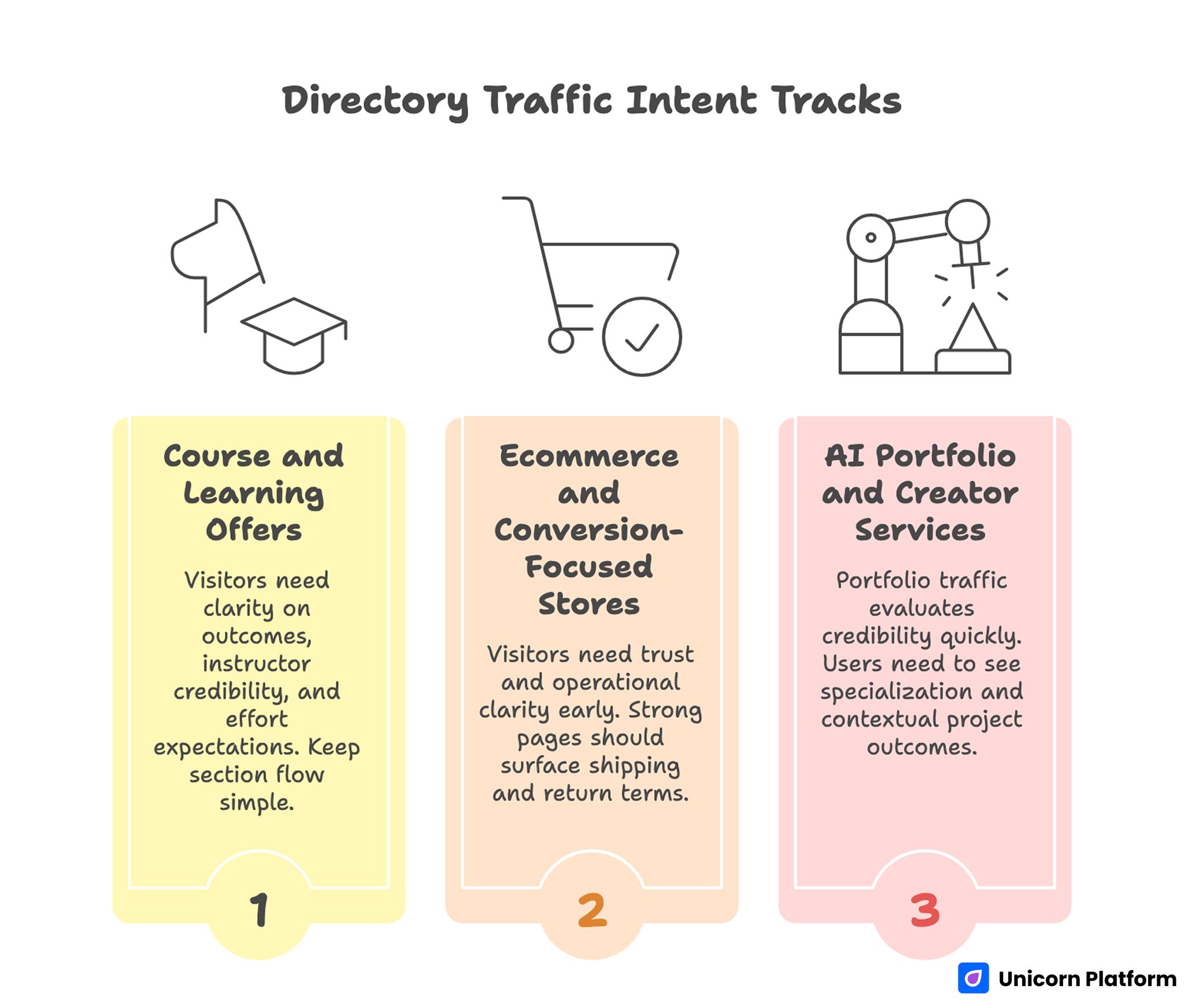
Source: unicornplatform.com
The Ultimate List of Startup Directories & Discovery Platforms
The goal isn't to be listed everywhere, but to be listed in the right places. Prioritize platforms where your ideal customers are actively searching.
Foundational Platforms (High Authority)
These are non-negotiable for establishing your online entity.
- Google Business Profile: Essential for local SEO and brand trust, even for remote companies.
- Bing Places for Business: The equivalent for Bing Maps and its associated search engines.
- Crunchbase: The go-to database for tech companies, funding information, and investors.
- AngelList: A key platform for startup recruiting, fundraising, and discovery.
- F6S: A large community for founders, startups, and accelerator programs.
Startup Launch & Discovery Platforms
These are designed for generating buzz and attracting early adopters.
- Product Hunt: The premier platform for launching new tech products to an enthusiastic community.
- BetaList: Ideal for pre-launch startups to showcase their idea and build a waitlist.
- Indie Hackers: A community of independent founders where you can share your journey and product.
- Hacker News (Show HN): A high-risk, high-reward platform where a successful post can drive massive traffic.
- Launched!: A community to share what you've launched and get feedback.
Niche & Industry-Specific Directories
Finding platforms dedicated to your industry is invaluable for reaching a targeted audience.
- For SaaS: G2, Capterra, and GetApp are the top software review sites.
- For AI Tools: There's An AI For That (TAAFT), Futurepedia, AI Top Tools.
- For E-commerce: Shopify App Store, BigCommerce App Marketplace.
- For Web3/Crypto: DappRadar, State of the DApps.
- For No-Code: Nocodery, NoCode.tech.
Actionable Tips for Crafting a Submission That Converts
Treat each directory submission as a mini-landing page for your brand.
- Focus on Quality Over Quantity: Your time is better spent creating ten excellent, fully-completed profiles on relevant platforms than one hundred incomplete profiles on spammy ones.
- Distinguish Between Platform Types: A standard directory is different from a launch platform. Tailor your approach and expectations accordingly. A launch requires active community engagement, while a directory listing is more passive.
| Feature | Standard Business Directory | Niche Review Site | Startup Launch Platform |
|---|---|---|---|
| Primary Goal | SEO, Credibility | User Reviews, Social Proof | Launch Buzz, Early Adopters, Feedback |
| Audience | General Searchers, B2B Buyers | In-Market Solution Seekers | Tech Enthusiasts, Investors, Makers |
| Example(s) | Crunchbase, StartupBlink | G2, Capterra | Product Hunt, BetaList, Hacker News |
| Effort Level | Low (Submit & Monitor) | Medium (Encourage Reviews) | High (Engage with Community) |
- Optimize Every Listing:
- Use Keywords Naturally: Weave your primary keywords into your description, but prioritize clarity. Write for humans first.
- Complete 100% of the Profile: Fill out every field, even optional ones. Complete profiles appear more trustworthy to algorithms and users.
- Engage After Submission: On platforms like Product Hunt or Indie Hackers, be prepared to answer questions, thank users for feedback, and participate in the discussion.
Common Submission Pitfalls and How to Avoid Them
What you don't do is just as important as what you do. These errors can waste time and harm your brand.
- DON'T Use Automated, Bulk Submission Services: These services use low-quality, spammy sites that can harm your domain's reputation. Real value comes from manual, thoughtful placement on reputable sites.
- DON'T Neglect Foundational Search Engine Submission: Do not pay for services that "submit your site to search engines." Submit your sitemap directly and for free via Google Search Console and Bing Webmaster Tools. This is your direct line to the search engines that matter most.
- DON'T Pay for Every Listing: The majority of high-quality directories offer a free submission option. Start there. Only consider paying to be "featured" on a high-traffic, hyper-relevant niche directory or to expedite a review on a critical platform with a long queue.
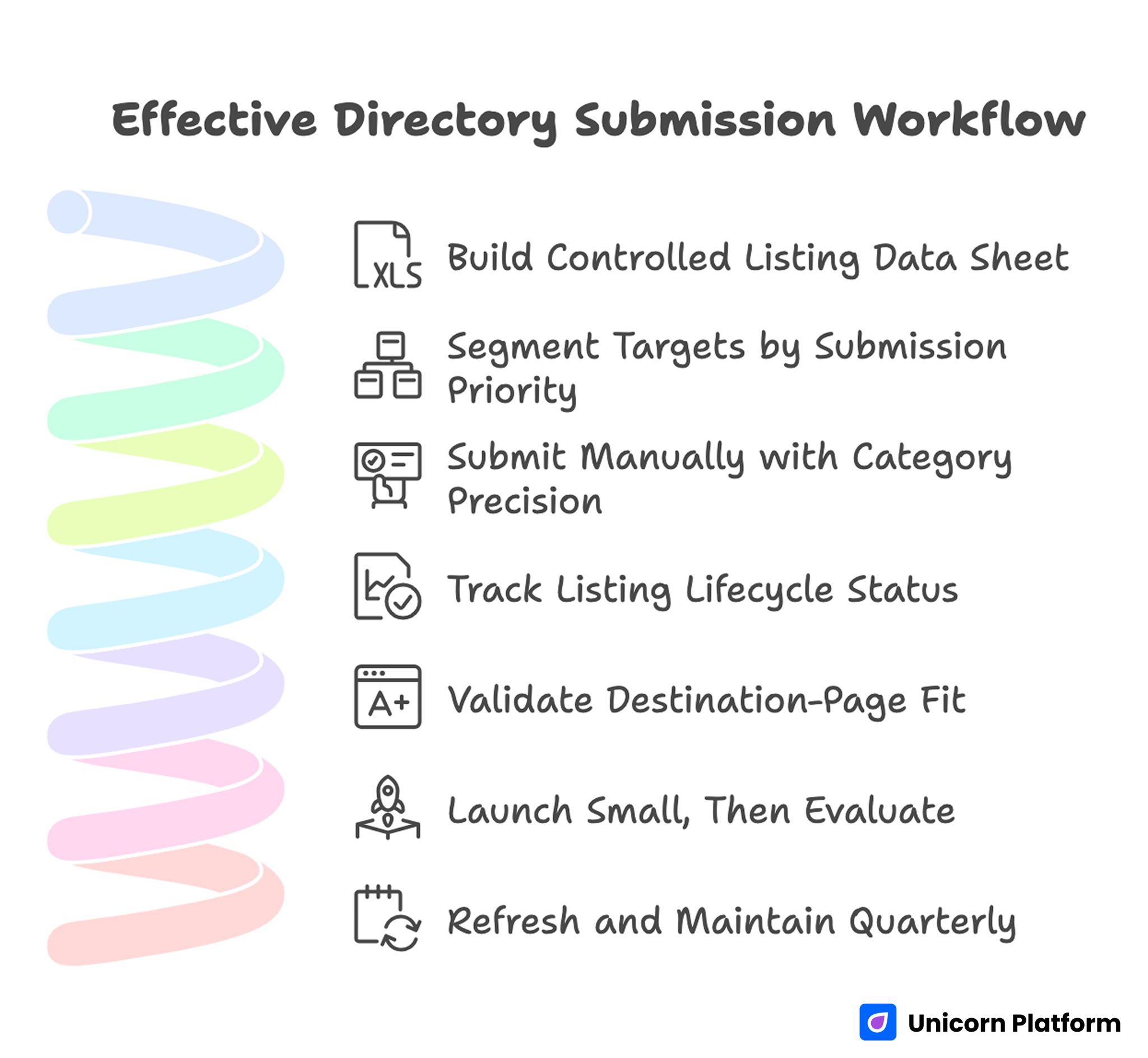
- DON'T Set It and Forget It: Your startup will evolve. Plan to review and update your top 10-15 directory listings quarterly. Update descriptions for new features, upload new branding, and correct any outdated information.

Source: unicornplatform.com
Tools to Streamline Your Submission Workflow
While bulk automation is harmful, several tools can make the manual submission process more efficient.
- Password Manager (e.g., 1Password, Bitwarden): Securely store the unique login credentials you create for each directory.
- Form Filler (e.g., browser built-in, Dashlane): Use a form-filling tool to auto-populate common fields like your name, email, and company URL, saving you repetitive typing.
- Tracking Spreadsheet (e.g., Airtable, Google Sheets): The tracking sheet from your Asset Kit is your most important tool. Use it to log submission dates, listing URLs, and status to maintain control over your digital footprint.
- Brand Monitoring (e.g., Google Alerts): Set up alerts for your brand name to catch new reviews or questions on interactive platforms so you can respond promptly. You can also use dedicated tools like Buzz Watch for more advanced monitoring.
What Launched Today is a discovery platform where founders can launch their startup to reach thousands of makers and other founders. Submitting a product provides exposure, potential new users, and a DR 48 backlink for SEO. Explore more at https://whatlaunched.today.
FAQs: Your Startup Directory Submission Questions Answered
How long does it take for a directory to approve a submission?
Approval times vary wildly. Some automated directories list you instantly, while manually curated platforms like BetaList can take several weeks or longer. Tracking your submission date is key.
How many directories should I submit to?
Start with a curated list of 20-30 highly relevant platforms. Focus on the foundational directories first, then a handful of launch platforms, and finally the top 5-10 directories specific to your niche. Quality trumps quantity.
What's the real SEO value of directory submissions?
The primary SEO benefits are building a diverse profile of high-quality backlinks from authoritative domains, creating brand mentions (citations) that strengthen your online entity, and driving valuable referral traffic.
Should I submit my startup before or after the official launch?
It depends. Submit to "pre-launch" directories like BetaList before your launch to build a waitlist. Submit to general directories like Crunchbase and Google Business Profile on or immediately after your launch day to capitalize on your buzz.
How do I write a compelling startup description for a directory?
Start with the problem you solve. Use clear, benefit-oriented language ("Save 10 hours a week on reporting") instead of just listing features ("Automated PDF reporting"). Keep sentences short and scannable.
Conclusion: Turn Submissions into a Sustainable Growth Tactic
Strategic directory submission is a fundamental marketing and SEO task for any new startup. It’s a powerful, low-cost way to build brand authority and create pathways for customers to find you. By focusing on quality over quantity, sidestepping common pitfalls, and keeping your listings fresh, you can transform this simple task into a reliable engine for discovery, credibility, and early-stage growth as part of your overall startup launch strategy.

