



You've built something new. The code is clean, the design is sharp, and you're ready to show it to the world. But "the world" is a noisy place. How do you get noticed?
Enter the startup discovery platform. Think of it as a digital launchpad where founders showcase new products to a built-in audience of early adopters, tech fanatics, journalists, and investors. It’s the modern-day equivalent of opening a shop on the busiest street in town, giving you a chance to be seen and heard above the noise.
Getting initial visibility is harder than ever. A successful launch on one of these platforms provides your first user traction, critical feedback on your onboarding or features, and the social proof needed to stand out. This early footprint is crucial for gaining momentum in an ecosystem increasingly defined by AI-driven personalization and automation.
Our Analysis Criteria: How We Compared the Best Platforms
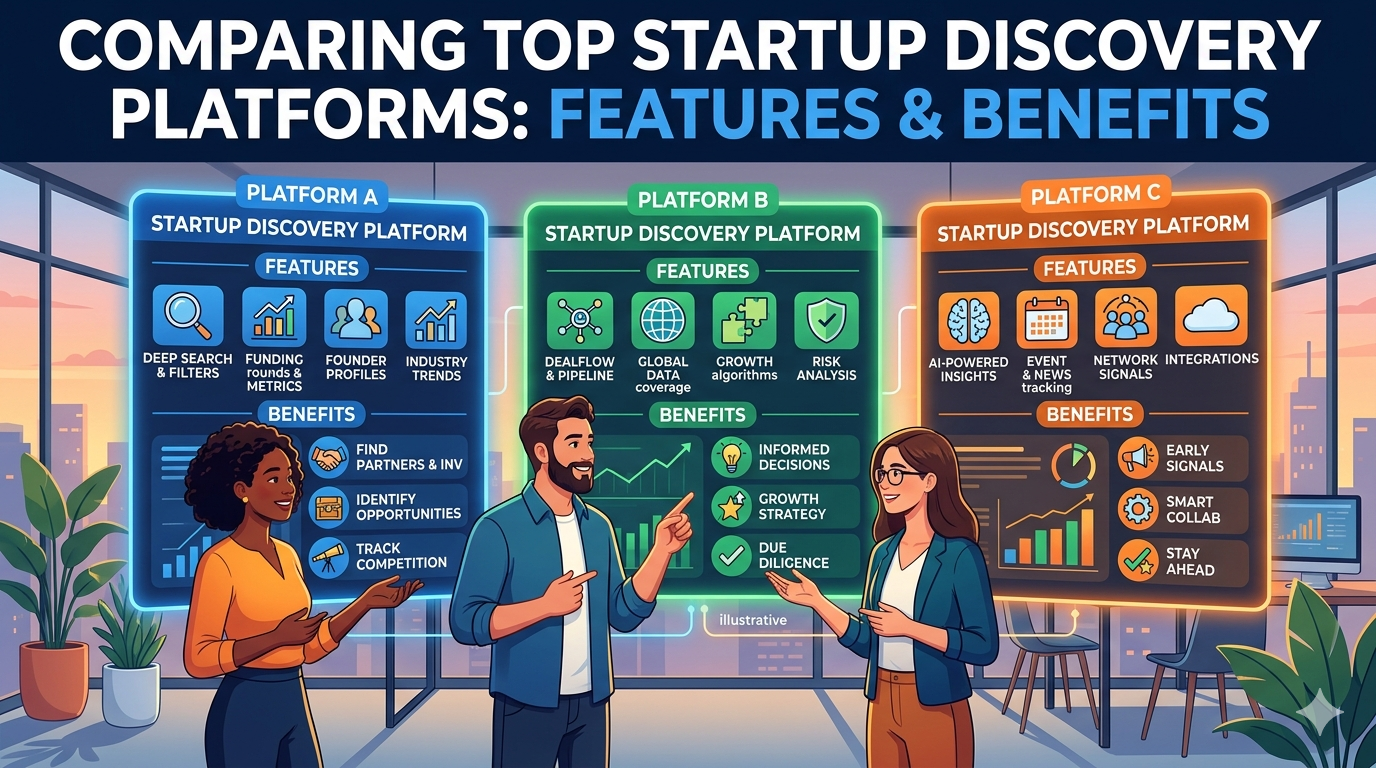
Not all launchpads are created equal. To give you a clear picture, we broke down the top platforms using five key criteria. This is the exact framework you can use to evaluate where to spend your energy.
- Audience & Community: Who hangs out here? We look at the size and profile of the user base (e.g., developers, VCs, indie hackers) and their engagement level. A million passive users is less valuable than ten thousand active ones who leave detailed comments.
- Key Features: What can you do on the platform? This covers core mechanics like upvoting systems, forums, AMAs with founders, curated newsletters, or special awards that boost visibility.
- Niche vs. General: Does it cater to everyone, or is it a specialized hub? Some platforms are a global stage for all things tech, while others are built for specific verticals like B2B SaaS, AI tools, or open-source software.
- Exposure Potential: What’s the real-world upside? We assess the likelihood of a launch catching the eye of the press (think
TechCrunchorWired), investors, or major partners. - Founder Effort: How much work is it? We look at the level of pre-launch preparation, launch-day community engagement, and the ongoing effort required for success.
Source: WhatLaunched.Today

The Top Startup Discovery Platforms: A Detailed Comparison
Each of these platforms can work wonders, but only if they align with your product and goals. Let's break down the heavy hitters.
1. Product Hunt: The Global Stage for Tech Launches
- Overview: Product Hunt is the undisputed champion of daily tech launches. It’s a competition where new products vie for the top spot on a global leaderboard, making it the go-to destination for discovering "what's next."
- Best For: SaaS products, mobile apps, developer tools, and consumer tech with broad, immediate appeal. If your product is slick and easy to grasp in a GIF, this is your stage.
- Key Features:
- Daily upvoting system that determines rankings and visibility.
- "Ship" toolkit to build a pre-launch landing page and email list.
- Prestigious "Product of the Day/Week/Month" awards.
- Active discussion and review sections for direct user feedback.
- Pros & Cons:
- Pros: Massive potential for a viral traffic spike. A top-five finish almost guarantees attention from media and investors. You'll get high-quality feedback and join a strong community.
- Cons: It's extremely competitive. A successful launch requires weeks of preparation. A launch that flops can be a significant blow to team morale.
2. Hacker News (Show HN): The Technical Litmus Test
- Overview: Run by Y Combinator, Hacker News is a no-frills forum for the technically minded. "Show HN" is a specific tag founders use to share their work with a highly discerning—and often brutally honest—audience.
- Best For: Developer tools, open-source projects, APIs, B2B SaaS, and any product with a deep technical foundation. If your value proposition is more about the "how" than the "what," this is your audience.
- Key Features:
- A simple, text-based submission format like "Show HN: I built a tool that [solves a specific problem]."
- An upvoting system that can propel a post to the highly coveted front page.
- In-depth, unfiltered technical feedback from domain experts.
- Pros & Cons:
- Pros: Reaching the front page can drive enormous spikes of qualified traffic. The feedback is invaluable for product refinement. It's a huge validation of your technical credibility.
- Cons: The audience is highly critical. Blatant self-promotion is heavily moderated. You must be present in the comments for hours, ready to engage with deep technical questions.
3. BetaList: The Early Adopter Magnet
- Overview: BetaList does one thing, and it does it well: it features pre-launch startups. Its entire purpose is to help founders validate an idea and build an email waitlist before the official launch day.
- Best For: Startups in the idea or MVP (Minimum Viable Product) stage. Perfect for gauging interest and collecting your first user emails.
- Key Features:
- Features a small, curated number of new startups on its homepage daily.
- Sends a popular newsletter to a dedicated audience of early adopters.
- Focuses exclusively on "coming soon" products, leveling the playing field.
- Pros & Cons:
- Pros: Access to a highly targeted audience that loves trying new things. It's a low-pressure way to test the waters and build a waitlist.
- Cons: The free submission queue can be long. Paid "expedite" options are often necessary for a timely feature. Traffic volume is smaller than a big splash on Product Hunt.
4. Indie Hackers: The Bootstrapper's Community
- Overview: Acquired and supported by Stripe, Indie Hackers is a community-first platform for bootstrapped founders. The focus is less on a single "launch day" and more on the transparent journey of building a profitable business.
- Best For: Micro-SaaS, bootstrapped businesses, and any project by a solo founder or small team that values transparency and sustainable growth over venture-backed blitzscaling.
- Key Features:
- A product directory where founders can publicly share revenue metrics, often verified by Stripe.
- Active forums for asking questions, sharing wins, and getting advice.
- Interviews and podcasts featuring successful founders sharing their real stories.
- Pros & Cons:
- Pros: An incredibly supportive and transparent community. Amazing for networking, learning from peers, and getting honest advice on everything from pricing to marketing.
- Cons: Not designed for a "launch day" traffic spike. Discovery is more about long-term contribution. The audience looking specifically to discover new products is smaller than on other platforms.
5. Reddit: The Power of the Niche
- Overview: Reddit is a massive collection of thousands of specific communities called "subreddits." For founders, forums like r/startups, r/sideproject, and industry-specific subreddits (e.g., r/SaaS, r/iosprogramming) can be goldmines.
- Best For: Any product that serves a well-defined niche, hobby, or professional community. If you can say, "My ideal customer is a member of X group," there's probably a subreddit for them.
- Key Features:
- An upvote-based system that determines visibility within each community.
- Highly engaged and passionate user bases that are experts in their domain.
- Strict, community-enforced rules against spam and self-promotion.
- Pros & Cons:
- Pros: Direct access to a perfectly targeted and qualified audience. The feedback is often brutally honest but incredibly useful. It's completely free to participate.
- Cons: You must be a genuine member of the community first. Dropping a link and running is the fastest way to get banned. Your post must provide value before mentioning your product.
