




What Does SaaS Stand For?
SaaS stands for Software as a Service. This designation identifies a specific cloud computing framework where external vendors host applications on off-premise servers. Organizations access these digital tools via internet browsers or mobile interfaces, eliminating the need for local installations.
The acronym specifically maps to a delivery architecture governed by remote provision.
"SaaS" acts as a hyponym beneath the broader hypernym "Cloud Computing." The structural components of this entity include defined meronyms: external servers, executable codebases, centralized databases, and frontend graphical user interfaces.
Providers assemble these meronyms into a unified product. The client bypasses the acquisition of physical hardware. The provider assumes total mechanical ownership over the hosting environment. End-users require only internet connectivity and valid authentication credentials. This model transforms software from a physical asset into a measurable utility.
Mapping: SaaS Terminology
• SaaS (Software as a Service)
• Delivery Mechanism: Remote Cloud Hosting
• Access Point: Web Browsers / Mobile Applications
• Client Responsibility: Internet Connectivity / User Management
• Provider Responsibility: Server Maintenance / Code Updates
What is the SaaS Concept and Meaning?
The saas concept defines a software delivery methodology operating entirely through cloud infrastructure. Providers maintain the foundational code, databases, and servers remotely. The saas meaning dictates that organizations rent access to fully functional applications rather than purchasing underlying hardware networks.
Software deployment historically required individual installations on proprietary local machines. The modern interpretation of what is saas replaces this physical distribution protocol. Vendors centralize the application within highly secured off-premise data centers. The provider distributes graphical interfaces via HTTP requests.
This architecture democratizes enterprise-grade processing capabilities. Small organizations leverage the exact identical computational power utilized by multinational corporations. The vendor scales backend processing dynamically based on instantaneous demand. The client experiences zero operational friction regarding hardware limitations.
The core conceptual shift involves ownership.
Clients do not own the software codebase. Clients secure usage rights bounded by explicit temporal contracts. The meaning of everything stored "on the cloud" simply designates that physical servers exist in geographically separate facilities. This spatial separation guarantees structural independence from the client's internal local area networks.
How Does the SaaS Business Model Work?
The saas business model operates on recurring subscription frameworks rather than one-time perpetual licenses. Providers charge monthly or annual fees, granting instant accessibility to hosted platforms. This pay-as-you-go economic structure translates capital expenditures into manageable operational costs for enterprise clients.
Monetization within this digital framework relies strictly on recurring revenue. Software publishers abandon the legacy model of selling physical installation media. The business model aligns directly with actual usage metrics. Vendors implement distinct pricing tiers. These tiers correlate precisely with functional modules, storage capacities, or registered user counts.
Core Components of the SaaS Economic Structure:
• Recurring Billing Protocols: Monthly or annual financial cycles replace singular capital investments.
• Usage-Based Scaling: Operational costs scale linearly with the addition of new employee accounts.
• Zero Upfront Hardware Costs: Clients redirect budgets previously allocated for local server acquisitions toward direct operational initiatives.
• Turnkey Implementation: Organizations bypass lengthy deployment timelines. Accounts activate instantaneously upon payment verification.
What Are the Subscription Dynamics of SaaS?
Subscription mechanisms within the saas software ecosystem allow organizations to scale resource consumption flexibly. Clients upgrade or downgrade their service tiers based on exact active user counts. This financial elasticity replaces heavy upfront hardware investments with predictable, usage-based billing cycles.
Providers enforce strict authentication gates tied directly to the subscription database. Active subscriptions grant unhindered platform access. Expired or suspended subscriptions trigger immediate access revocations. This mechanism ensures zero piracy and precise revenue tracking. Clients analyze internal software utilization metrics. Administrators deactivate unused licenses instantly.
This immediate scalability prevents the historical inefficiency of purchasing excess software licenses for projected future growth. Subscription elasticity represents a fundamental economic advantage over static legacy deployments.
How Does SaaS Cloud Storage Function?
Saas cloud storage acts as the centralized data repository for web applications. High-security off-premise data centers host all organizational information. This cloud storage saas framework guarantees constant uptime, automated data backups, and strict privacy controls managed completely by the provider.
Data generated within the application transmits directly to vendor-controlled servers. The provider fragments and encrypts this data across multiple physical storage drives. Geographic redundancy protocols duplicate the data packets in separate regional data centers.
This replication guarantees information persistence during catastrophic hardware failures. The client interacts with the data instantaneously via the application interface. The physical location of the storage medium remains abstracted from the user experience. The provider executes massive backend synchronization algorithms continuously.
What is the Difference Between SaaS, IaaS, and PaaS?
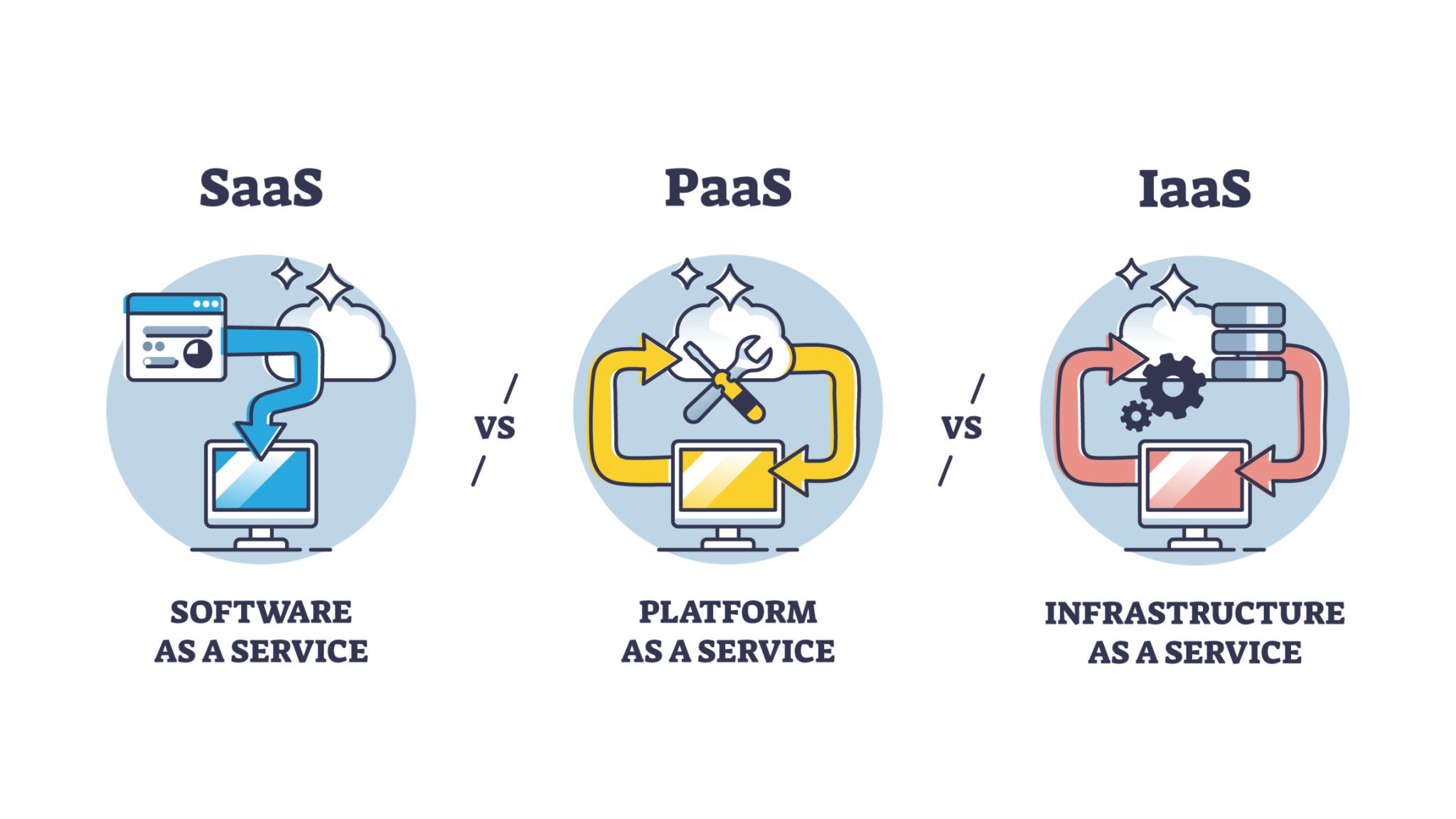
SaaS delivers complete, ready-to-use applications directly to end-users via web browsers. Conversely, IaaS provides raw virtualized computing infrastructure like servers. PaaS occupies the middle tier, supplying a development framework for software engineers to build applications without managing the underlying hardware.

Source: VectorMine / Getty Image
The cloud computing hierarchy divides responsibilities distinctly between the vendor and the client. The precise classification depends entirely upon the specific layer of abstraction provided by the host.
Cloud Computing Classification Data:
| Cloud Model | Full Name | Primary End User | Core Function | Vendor Management Level |
|---|---|---|---|---|
| SaaS | Software as a Service | Business End-Users | Ready-to-use software apps | High (Code, Data, Servers, UI) |
| PaaS | Platform as a Service | Software Developers | Application building frameworks | Medium (Servers, Middleware, OS) |
| IaaS | Infrastructure as a Service | IT Administrators | Raw computing networks | Low (Physical Servers, Storage) |
What is Infrastructure as a Service (IaaS)?
Infrastructure as a Service provisions fundamental computing resources over the internet. Vendors supply virtualized servers, network switches, and raw storage capacity. Internal IT departments utilize IaaS to replace physical data centers, maintaining direct control over operating systems and middleware installations.
IaaS represents the foundational layer of remote computing. Organizations rent raw computational power. The vendor manages physical facility cooling, electricity, and the underlying hypervisor architecture. The client maintains absolute authority over virtual machine configuration. IT teams install proprietary operating systems, configure bespoke firewalls, and deploy custom databases. IaaS demands high technical proficiency. It functions as the exact digital replica of an internal server room.
What is Platform as a Service (PaaS)?
Platform as a Service establishes a specialized environment tailored specifically for software developers. The vendor abstracts away server maintenance complexities. This deployment model provides the necessary programming tools, database management systems, and testing environments to accelerate rapid application development lifecycles.
PaaS eliminates the requirement to configure raw infrastructure.
Developers push code directly into pre-configured staging environments. The platform compiles, tests, and deploys the executable files automatically. The vendor handles server load balancing, database scaling, and operating system security patches.
Engineering teams focus exclusively on writing application logic. PaaS accelerates product timelines by removing structural maintenance friction.
What Are Prominent SaaS Examples?
Enterprise software categories offer numerous saas examples operating within the cloud. Standard implementations include Customer Relationship Management networks, Enterprise Resource Planning systems, and Contract Lifecycle Management platforms.
These tools highlight the widespread adaptability of the software as a service framework. Specific business applications dominate the cloud software marketplace. Specialized vendors isolate distinct operational workflows and optimize them through remote hosting.
