




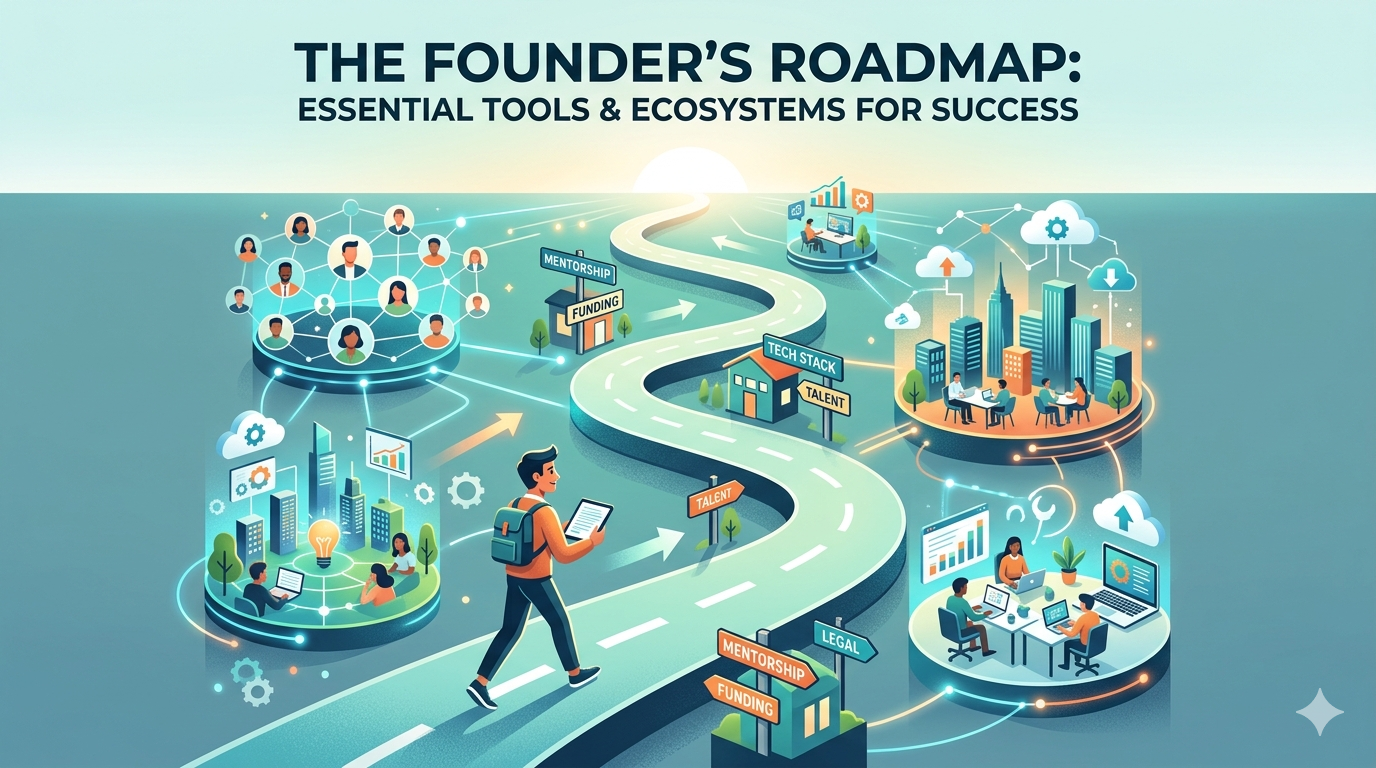
Building a successful startup requires a strategic combination of the right tools, a powerful network, and a scalable operational foundation. This guide provides a chronological roadmap for founders to navigate the essential tools and ecosystems at each stage of growth, from initial strategy to securing a Series A.
- Prerequisites: A validated business idea, a co-founding team (optional but recommended), and initial seed or pre-seed funding.
- Tools Needed: Project management software, communication platforms, CRM, data analytics tools, networking platforms.
- Clear Outcome: A scalable startup equipped with the right technology stack and ecosystem connections to achieve product-market fit and secure growth funding.
Step 1: Establish Your Foundational Strategy & Leadership
Before selecting any tool, you must build a solid foundation based on elite business education, a clear leadership framework, and a deep understanding of your market. This initial phase is about architecture, not acquisition; the right framework makes every subsequent tool more effective.
Cultivate Your Leadership Acumen
Your ability to lead and make decisions under pressure will define the startup's trajectory. It's critical to understand different leadership models to guide your team effectively through the uncertainty of early growth.
A particularly effective model for early-stage startups is the Authoritative Leadership Style. This approach, focused on providing a clear vision and mobilizing the team toward it, can be crucial for cutting through the noise in the chaotic early stages. It establishes direction when formal processes are still nascent. For structured learning on this and other core business principles, leverage resources from institutions like Harvard Business School (HBS Online). Their courses on management, strategy, and entrepreneurship provide frameworks that have guided generations of successful founders.
Define Your Business & Operational Blueprint
A clear plan translates vision into action. This blueprint serves as your company's operating system, dictating how work gets done and how progress is measured.
First, develop a comprehensive business plan. You can use a shared Google Docs template for a more agile approach. The key is to document your assumptions, market analysis, and go-to-market strategy.
Next, outline your core operational workflows for product development, marketing, and sales. Choose a project management methodology that fits your team's style, which will inform your selection of a project management tool. Your choice here sets the rhythm for your entire product organization.
Step 2: Build Your Minimum Viable Stack (MVS)
With a strategy in place, select a core set of affordable, scalable tools to manage daily operations, communication, and initial marketing efforts. The goal of the MVS is speed and efficiency, not feature perfection. Choose tools that are easy to implement and won't require significant overhead.
Set Up Your Core Operations Hub
This is the digital infrastructure that keeps your team connected and productive.
- Communication: Slack is non-negotiable for real-time internal chat and integrations.
- Finance: Start with an accounting platform that can integrate with most payroll and banking systems, creating a clean financial record from day one. For payment processing, select a platform with a robust API that is developer-friendly.
- Productivity: An internal wiki is essential for documenting processes and institutional knowledge. A flexible platform can serve as your knowledge management hub, preventing critical information from getting lost in chat channels or individual drives, boosting overall team productivity.
Launch Initial Marketing & Sales Tools
These tools help you acquire your first users and manage relationships without a significant budget.
- Website & Analytics: Build a professional website and install web analytics immediately to track website traffic, user behavior, and conversion goals. This data is the foundation of all future marketing and SEO decisions.
- Email Marketing: Use an email marketing service to build your first email list. Start collecting emails from interested users on your landing page even before your product is ready.
- Early CRM: A Customer Relationship Management (CRM) system is your single source of truth for customer interactions. Many powerful CRMs offer free or discounted plans for startups that can be used to track initial leads, customer feedback, and sales conversations.
Step 3: Integrate with the Startup Ecosystem
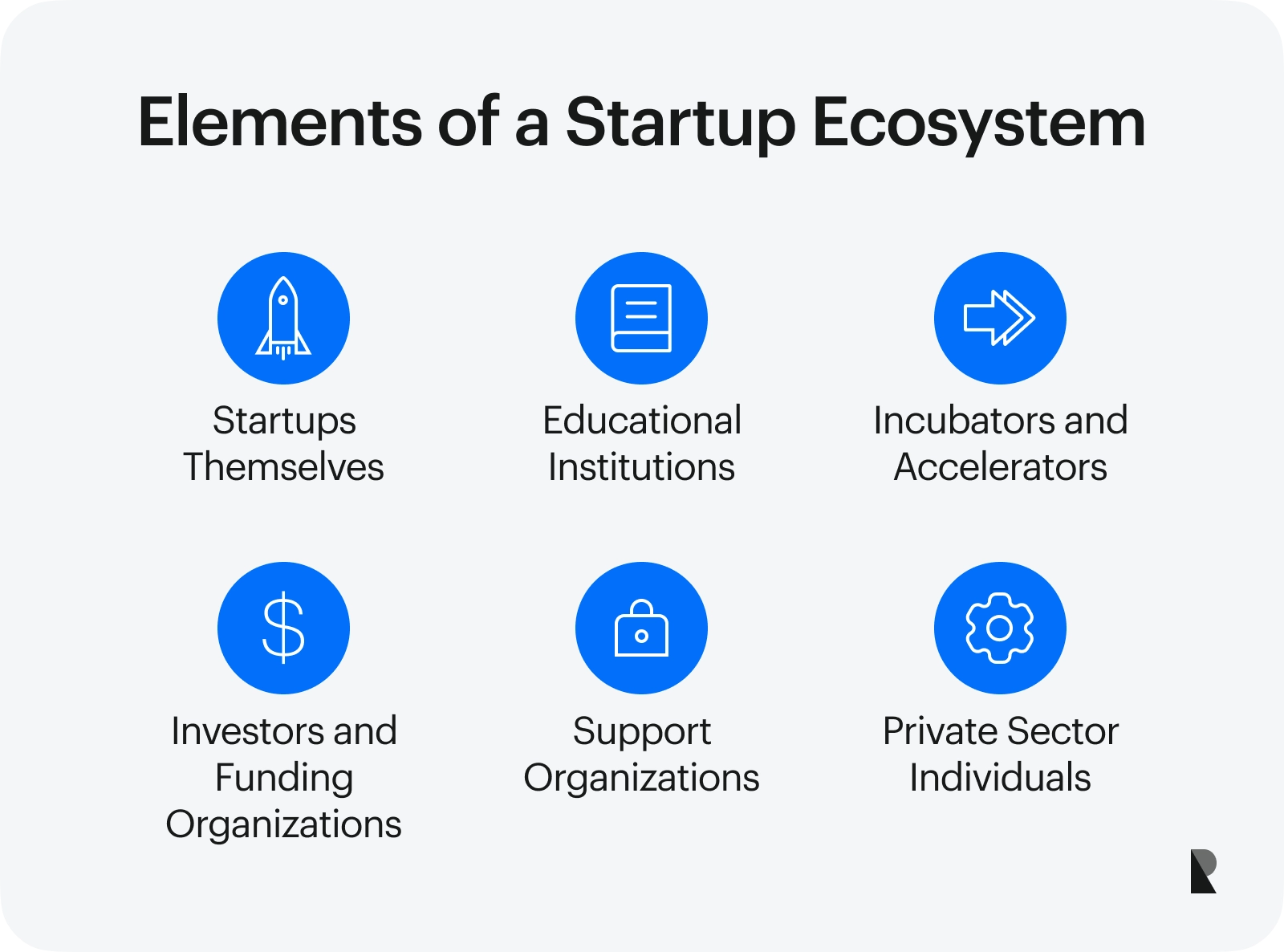
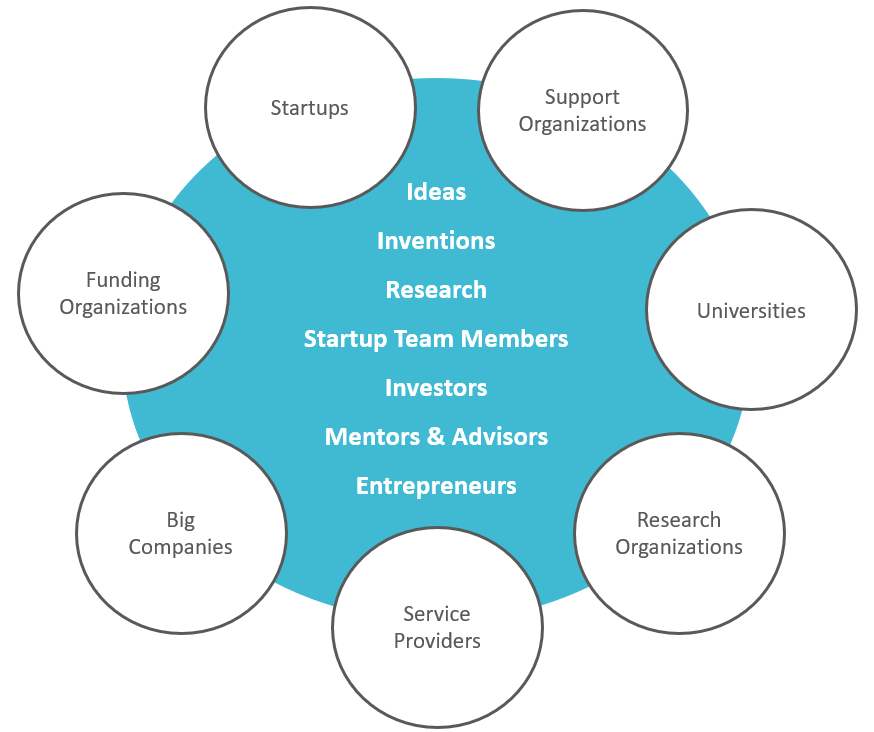
No startup succeeds in a vacuum. Actively engage with networks, communities, and educational platforms to accelerate learning, find partners, and gain visibility. Your ecosystem is a force multiplier for your own efforts.
Tap into Founder Networks & Educational Resources
Learning from peers who are slightly ahead of you is one of the fastest ways to avoid common pitfalls.
For localized insights, look for platforms like Swisspreneur. Their free Startup Masterclasses, taught by successful founders, provide tactical advice grounded in real-world experience. Use these platforms as a model to find the equivalent in your own city or industry.
To understand the power of networks, study resources like the Swiss Startup Mafia Map. It visualizes the intricate web of connections between founders, investors, and companies. The exercise of mapping your own local or industry ecosystem can reveal surprising partnership opportunities and key influencers.
Master Professional Networking
A strong professional network is your greatest asset for hiring, fundraising, and strategic partnerships.
Build a detailed and active presence on LinkedIn. It is your digital headquarters for professional identity. Upgrade to LinkedIn Premium (either the Business or Sales Navigator plan) to gain a significant advantage. The key benefits are InMail credits for contacting people outside your network, advanced search filters to find specific roles or companies, and the ability to see who has viewed your profile—a powerful signal of interest.
Use these tools to identify potential partners, investors, and key hires. Look beyond the obvious players. For example, a highly specialized B2B company like Kejora Gasbumi Mandiri, an Oil and Gas Software Provider, demonstrates how even niche industries have vibrant ecosystems. Finding and partnering with such players can create a defensible competitive advantage.
Step 4: Implement Scalable Systems for Growth
As you find product-market fit and customer volume increases, your MVS will begin to show its limits. Now is the time to upgrade your tool stack from "minimum viable" to a scalable, data-driven platform that can handle increasing complexity.
Evolve to an Integrated CRM and Data Platform
Siloed data is the enemy of growth. As your team grows, you need a single source of truth that connects sales, marketing, and customer service.
This is the stage to adopt a unified platform like the Salesforce Platform. As it evolves into the Agentforce 360 Platform, its focus is on creating a central hub for all customer data and interactions. The primary benefit of such a system is its AI native foundation, which enables you to automate complex workflows and generate intelligent, predictive insights from your customer data without a team of data scientists.
Unify and Secure Your Data
With more customers comes more data, and with more data comes more responsibility. You must have systems in place to ensure data hygiene and security.
Explore advanced solutions like Data 360 Clean Rooms, which can help with secure data collaboration. This is critical for building trust and complying with privacy regulations.
In some industries, scaling also involves integrating specialized hardware. A startup in field service or manufacturing might use RealWear assisted-reality headsets to provide remote experts with a first-person view of a worksite, integrating this visual data directly into their CRM or support platform.
Step 5: Prepare and Execute Your Funding Strategy
With a scalable foundation and proven traction, the next step is to secure a major funding round like a Series A to fuel rapid growth. Your operational rigor and data discipline will be under a microscope.
Build Your Data Room and Pitch Deck
Investors invest in predictable, scalable growth. Your data room is the evidence.
Use a secure platform like Google Drive to create your data room. It should contain all key business documents: financial statements, key customer contracts, your cap table, and detailed dashboards showing your key metrics (e.g., MRR, CAC, LTV, churn).
Craft a compelling pitch deck that tells a story backed by this data. It must clearly outline your traction, the strength of your team, the size of the market opportunity, and exactly how you will use the funds to achieve specific milestones.
Target and Engage VCs for a Series A Round
Raising capital is a sales process. You need the right tools to manage your pipeline of potential investors.
Use LinkedIn Premium to research and identify VCs who have a track record of investing in your sector and at your stage. The single most effective way to connect with an investor is through a warm introduction. Leverage your ecosystem connections (from Step 3) to find a mutual contact who can vouch for you.
Prepare for a rigorous due diligence process. The scalable systems you built in Step 4 are no longer just for operations; they are now proof to investors that you can deploy their capital efficiently and have the data infrastructure to report on progress transparently.
Step 6: Optimize and Scale Post-Funding
Securing funding is the starting line for the next phase of growth, not the finish. This capital must be deployed strategically to double down on what works, optimize your operations, and expand your team.
Scale Your Team and Culture
Your biggest investment will be in people. Hiring and retaining top talent is paramount.
Use recruiting platforms like LinkedIn Recruiter or an applicant tracking system (ATS) to manage your hiring pipeline efficiently. As the team grows, invest in tools that support and scale your company culture, such as platforms for performance management and goal setting.
Invest in Advanced Analytics & Niche Tools
With more data comes the opportunity for deeper insights.
Implement business intelligence (BI) tools like Tableau. These platforms connect to your various data sources (CRM, finance software, product database) and allow you to build sophisticated, interactive dashboards to monitor the health of your business in real-time.
For industry-specific needs, invest the capital in specialized software that creates a competitive moat. A startup in the energy sector, for instance, might use advanced reservoir modeling tools like tNavigator or an economic forecasting tool like the Global Economic Model (GEM) to inform high-stakes strategic decisions. These are the types of specialized assets that differentiate a market leader.
The Bottom Line: From Tools to Traction
This playbook provides a chronological map for building a scalable startup. It begins not with tools, but with strategy, and progresses from a minimum viable stack to an integrated, data-driven platform ready for hyper-growth. Each step builds upon the last, creating a resilient foundation.
Frequently Asked Questions (FAQ)
What is the difference between the Salesforce Platform and the Agentforce 360 Platform?
The Agentforce 360 Platform represents the evolution of the Salesforce Platform. It emphasizes an AI-native foundation where AI agents and automated workflows are deeply integrated into the core CRM, data, and collaboration tools to drive intelligent, autonomous business processes.
When should my startup switch from free tools to paid subscriptions?
You should switch to paid tools the moment the limitations of the free version are actively costing you time or inhibiting growth. This trigger point often occurs when you need advanced automation features, more user seats, critical integrations with other software, or dedicated customer support to resolve issues quickly.
How can I find a niche ecosystem like the one for an Oil and Gas Software Provider?
To find a niche ecosystem, look for industry-specific conferences, trade publications, professional associations, and dedicated LinkedIn groups. Search for podcasts or online communities that serve your specific vertical. Platforms like Swisspreneur often have counterparts in major industries that act as central hubs for networking and knowledge sharing.
Is LinkedIn Premium truly essential for fundraising a Series A?
While you can raise a round without it, LinkedIn Premium provides a significant advantage. The ability to directly contact investors via InMail, see who is researching your profile (and your competitors'), and perform unlimited, highly-filtered searches gives you a critical edge in identifying and connecting with the right VCs for your business.
