


The Startup 'Cold Start' Problem: Finding Your First Users
Getting your first users is often the hardest part of building a startup. It's less of a mass-marketing problem and more of a targeted search mission. You aren't trying to convince skeptics; you're trying to find the small, passionate group of people actively looking for a solution like yours. These are your early adopters, and they are the key to validating your idea, gathering feedback, and building initial momentum.
This guide provides a playbook of actionable strategies to acquire your crucial first 100 users. We'll cover everything from manual, unscalable outreach to strategic platform launches, helping you turn an empty user list into a thriving community.
Step 1: Lay the Groundwork (Pre-Launch Essentials)
Before you even think about reaching out to your first potential user, you need a solid foundation. Think of this as setting up your "store" before you put up the "Open" sign.
- Outcome: A polished, ready-to-launch package that makes a strong first impression and is optimized to convert interest into action.
Solidify Your One-Liner Pitch and Value Proposition
You must be able to explain what your product does and for whom in a single, compelling sentence. This is the foundation of all your marketing copy. A great formula is: "We help [Target Audience] achieve [Desired Outcome] by [Unique Mechanism]." Avoid jargon and focus on the user's benefit.
Create a High-Converting Landing Page
Your landing page is your digital storefront. All traffic will be directed here, so it must be optimized for one thing: converting a visitor into a user. This page needs:
- A clear, prominent call-to-action (CTA) like "Sign Up for Early Access" or "Get Your Free Account."
- A concise explanation of product benefits, not just features.
- A frictionless sign-up flow that asks for minimal information.
Prepare Your Visual Assets
People scroll quickly. Visuals are your best tool to stop that scroll. Prepare a suite of high-quality assets:
- Clean Logo: Your brand's first impression.
- High-Quality Screenshots: Show your product in its best light. Use annotations to point out key benefits.
- Engaging GIF/Demo Video: A short, looping GIF showing the core user action is incredibly effective. A 30-60 second demo video can explain more complex products.
Source: substack.com
Define Your "Ask" for Early Adopters
Be explicit about what you want from these first users. Are you asking them to join a waitlist, use a live beta and report bugs, or become a paying customer with a steep discount? Knowing your "ask" shapes your entire CTA and messaging.
Step 2: Actionable Strategies to Get Your First 100 Users
There is no single magic bullet for user acquisition. The best approach is to layer several high-effort, high-impact strategies that focus on learning and building relationships.
Strategy 1: Do Things That Don't Scale (Manual Outreach)
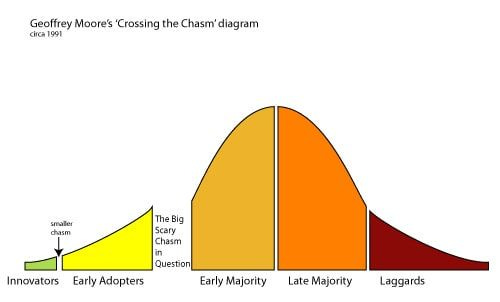
The most valuable advice for early-stage founders is to "do things that don't scale." This means manually recruiting your first users one by one.
- Personal Network: Start with friends, family, and former colleagues who fit your target user profile. A warm introduction is the easiest way to get honest feedback.
- LinkedIn & X/Twitter: Search for people with relevant job titles or who are talking about the problem you solve. Send a personalized, non-spammy message. Focus on their problem, not your solution. Ask if they'd be open to a 15-minute chat about their workflow.
- Direct Email: Find potential users and send a concise, personal email. Don't use a generic template. Mention their work, a recent post, or something specific to show you've done your research.
Strategy 2: Engage in Relevant Online Communities
Go where your target audience already congregates online. The key is to provide value before you ask for anything.
- Find Your Niche: Identify the subreddits, Slack channels, Discord servers, and Facebook Groups where your ideal users hang out.
- Become a Member, Not a Marketer: Spend weeks or even months being a helpful member of the community. Answer questions, offer advice, and build a reputation.
- Share Your Work (When Appropriate): Once you've established trust, you can share what you're working on in a non-promotional way. Ask for feedback or share a milestone. For example, "I've been working on a tool to solve [problem discussed in the group]. Would anyone be interested in trying it out and giving me some brutal feedback?"
Strategy 3: Leverage Startup Directories & Launch Platforms
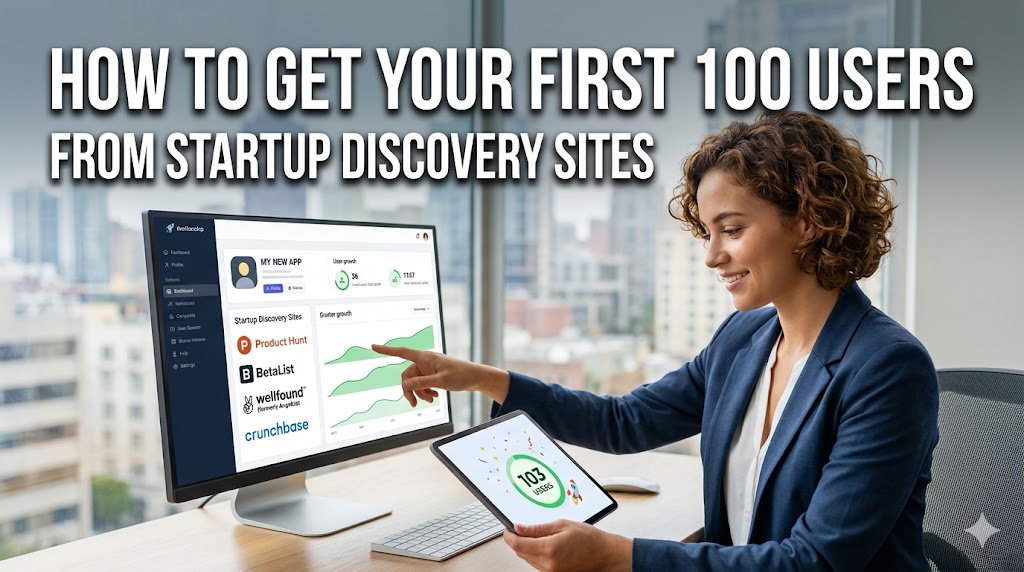
Once your product is ready for the public, a strategic launch on a discovery site can drive a significant burst of traffic and sign-ups.
Pre-Launch vs. Post-Launch Platforms
- Pre-Launch (e.g., BetaList, Launching Next): Ideal for gathering email sign-ups and validating an idea before your product is fully built.
- Post-Launch (e.g., Product Hunt, Hacker News "Show HN", Indie Hackers): For products that are live and ready for users. A successful launch here can put you in front of thousands of early adopters, investors, and journalists.
How to Prepare for a Successful Launch
- Choose the Right Platform: Don't launch everywhere at once. Pick one primary platform for your "big launch" and focus your energy there. Research niche directories too (e.g., a specific AI startup directory if you have an AI tool).
- Craft a Magnetic Listing: Use your one-liner as the tagline. Your title should be clear, not clever. Use your best visuals (especially a GIF) as the thumbnail to grab attention.
- Prepare Your "First Comment": On platforms like Product Hunt, the founder's first comment is crucial. Use it to share your story, explain the problem you're solving, and state your "ask."
- Time it Right: Most platforms run on a 24-hour cycle. Launching at 12:01 AM PST on a Tuesday or Wednesday gives you a full day in the spotlight for a global audience.
- Engage All Day: On launch day, be present. Reply to every comment, answer every question, and thank everyone for their feedback.
