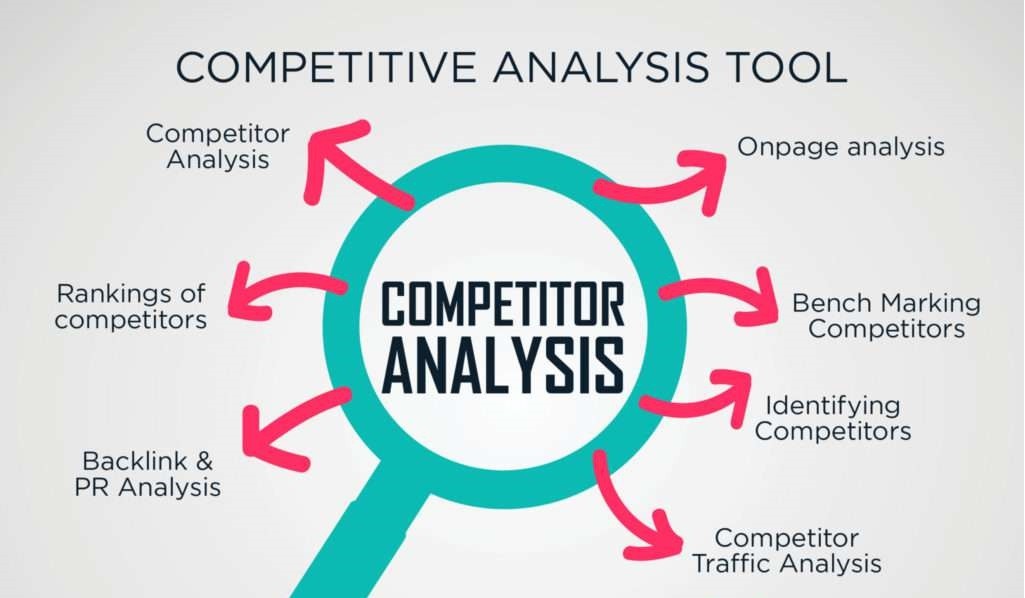






Conducting a competitive analysis is a cornerstone of a solid business plan, but many founders get bogged down by the perceived cost and complexity. They imagine weeks of manual research or expensive software subscriptions are the only way to get ahead.
While powerful paid tools have their place, a wealth of strategic insight is hiding in plain sight. This guide breaks down the best startup competitive analysis tools, from industry-standard platforms to clever, budget-friendly methods. We'll show you how to gather intelligence, identify market gaps, and build a winning strategy, regardless of your budget.
What is Startup Competitive Analysis (and Why It's Crucial)?
For a startup, competitive analysis is the process of identifying and evaluating rivals to understand their strengths, weaknesses, and strategies. It's not about copying what others do; it's about finding opportunities they've missed.
A thorough analysis helps you:
- Validate Your Idea: Discover if there's a real need for your solution.
- Identify Market Gaps: Find underserved customer segments or feature needs.
- Refine Your Value Proposition: Clearly articulate what makes your startup different and better.
- Inform Your Product Roadmap: Prioritize features that will give you a competitive edge.
- Develop a Data-Driven Strategy: Make informed decisions about pricing, marketing, and sales.
Best Competitive Analysis Tools for Startups
The right tool depends on your goals and budget. Some platforms offer an all-in-one view, while others specialize in a specific area like SEO or social media. Here’s a breakdown of top tools categorized by their primary use case for a startup.
| Tool | Best For | Starting Price |
|---|---|---|
| Semrush | All-in-one SEO, content, and market research | ~$140/mo |
| Ahrefs | SEO and backlink analysis | ~$129/mo |
| Similarweb | Website traffic and audience analysis | From $125/mo |
| Sprout Social | Social media listening and engagement | ~$249/mo |
| BuiltWith | Uncovering a competitor's tech stack | Free lookup available |
| Startup Directories | Free, foundational competitor discovery | Free |
For All-in-One Market & SEO Research
These tools provide a comprehensive view of a competitor's digital footprint.
- Semrush: A powerhouse for startups serious about digital marketing. You can analyze a competitor’s keyword strategy, backlink profile, paid ad campaigns, and top-performing content. It’s ideal for identifying the marketing channels that are already working for others in your niche.
- Ahrefs: Renowned for its best-in-class backlink data, Ahrefs is essential for any SEO-focused strategy. Use its "Content Gap" tool to find valuable keywords your competitors rank for, but you don’t. This provides a direct roadmap for your content strategy.
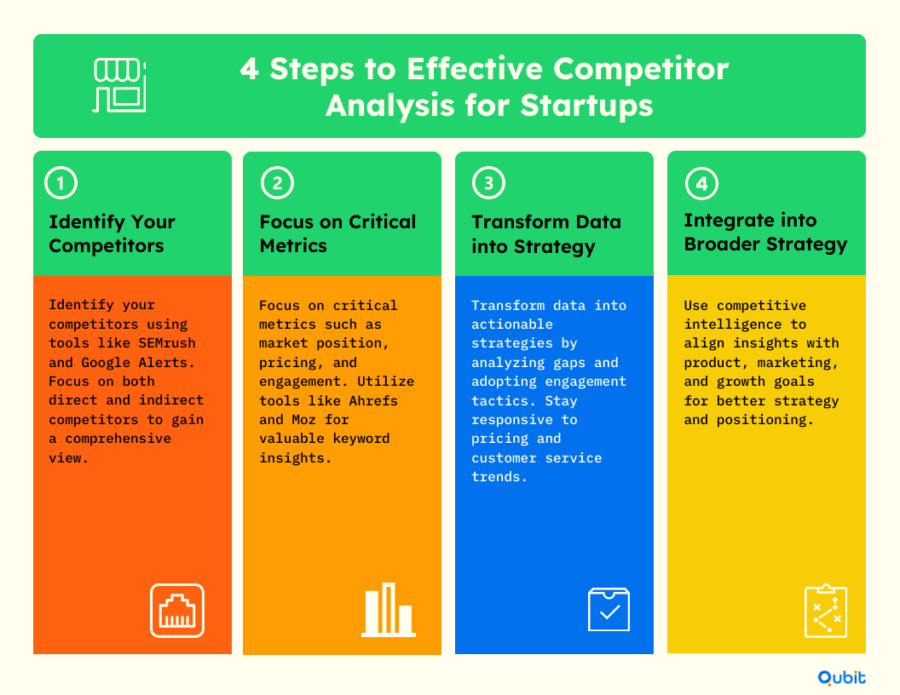
Source: qubit.capital
For Web Traffic & Audience Analysis
Understanding where your competitors' traffic comes from and who their audience is can reveal partnership opportunities and effective marketing channels.
- Similarweb: Offers high-level estimates of a competitor's website traffic, top traffic sources (direct, search, social), and audience geography. The tool is powerful for getting a directional sense of a rival's market presence and digital strategy.
For Social Media & Brand Monitoring
Social media is a real-time focus group. These tools help you listen in.
- Sprout Social: A comprehensive social media management platform that includes powerful competitor analysis features. You can track competitor performance, monitor brand mentions, and analyze audience sentiment to understand how your messaging compares.
- BuzzSumo: Excellent for content-focused analysis. Discover which content formats and topics perform best for your competitors across social media. It helps you answer the question, "What should we write or post about to get traction?"
For Uncovering Tech Stacks & Sales Intelligence
Knowing what tools your competitors use can offer clues about their operational priorities and scale.
- BuiltWith: This tool reveals the technology a website is built on, from its analytics provider and CRM to its e-commerce platform. For a startup, this can help you understand a competitor's operational sophistication and identify potential software integrations for your own product.
For Free & Foundational Research
Before you spend a dime, you can gather a massive amount of data using public directories. These platforms are treasure troves of data, revealing competitors' launch-day messaging, early customer feedback, feature sets, and pricing models.
- Broad Platforms (Product Hunt, BetaList): Use these sites to find market leaders and trending new products. The comments section on a Product Hunt launch is raw, unfiltered customer sentiment—invaluable for identifying praised features and common complaints.
- Investor-Backed Directories (Crunchbase, AngelList): Find data on funding rounds, team size, and high-level strategy for competitors who have attracted venture capital. This helps you understand which companies the smart money is betting on.
- Niche & Regional Directories: A targeted search for "[your niche] startup directory" (e.g., "HealthTech startup directory") or a regional one can reveal focused rivals that larger platforms might miss. Learning what is a startup directory and how to leverage them is a critical, low-cost research skill.