




March 23, 2026
5 min read
Team

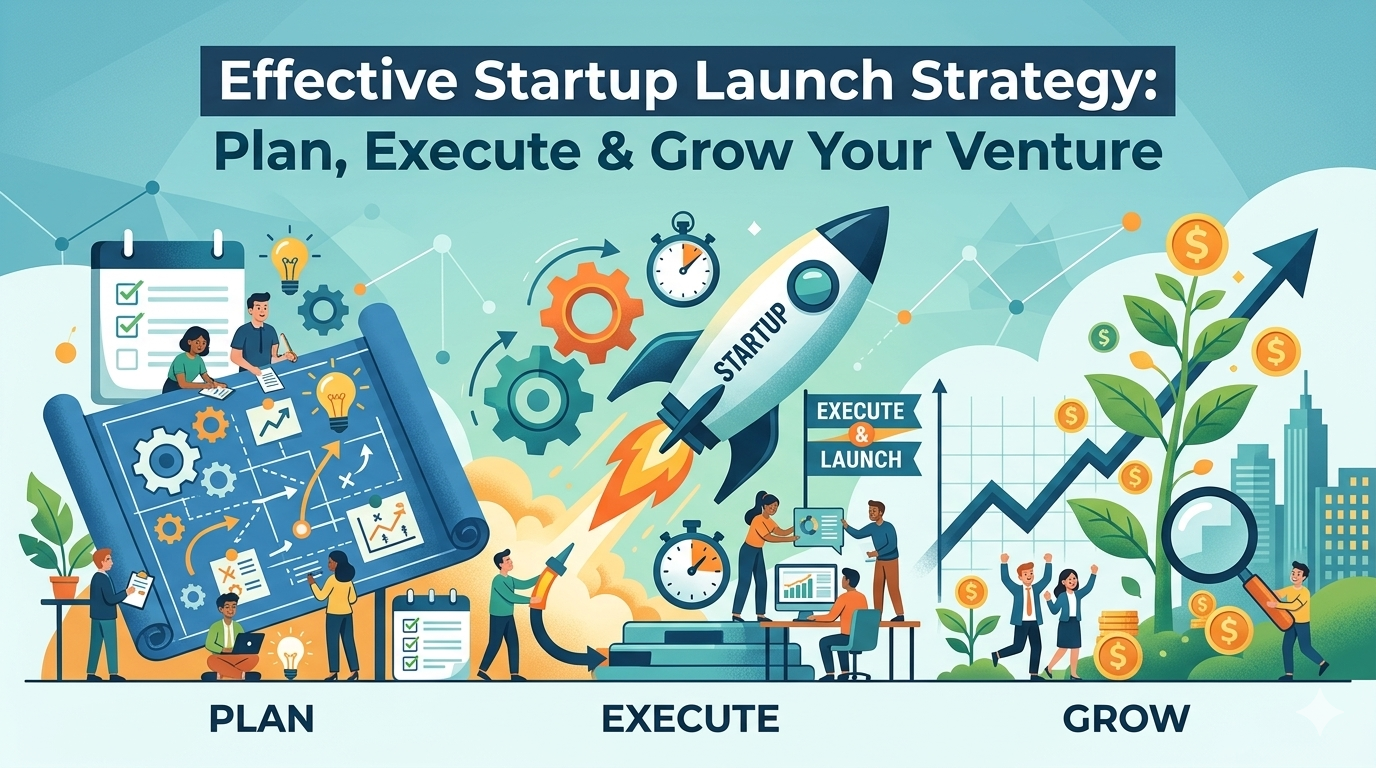
Effective Startup Launch Strategy: Plan, Execute & Grow Your Venture

Master your startup launch strategy. Learn market validation, business planning, digital marketing, and scaling for successful growth. Plan, execute & optimize your venture for long-term success.

SEOGrowth HacksStartup Launches
Share this article:
Effective Startup Launch Strategy: Plan, Execute & Grow Your Venture

A startup launch strategy is a meticulously planned framework encompassing all critical steps and considerations required to successfully introduce a new venture or offering to the market, optimizing for initial traction and long-term viability.

I. Pre-Launch Foundations: Strategic Planning & Validation

Strategic planning and thorough validation form the bedrock of any successful startup launch. This phase ensures the venture is built on a solid understanding of the market and a robust operational framework. Without these foundational elements, a startup risks misdirection and resource depletion.

Idea Validation & Market Research

Idea validation confirms the market need for a product or service. Market research provides data-driven insights into the target audience and competitive landscape.

Identifying Market Gaps and Opportunities: Market gaps represent unmet customer needs or underserved segments. Opportunities arise from emerging trends, technological advancements, or inefficiencies in existing solutions. Comprehensive analysis of industry reports and consumer behavior patterns identifies these areas. This process involves examining current offerings and pinpointing areas where a new solution can provide superior value.

Target Audience Analysis: Deep diving into demographics, psychographics, and needs involves understanding who the potential customers are. Demographics include age, income, and location. Psychographics cover attitudes, interests, and lifestyles. Identifying specific pain points and desires of this group informs product development and marketing messages.

Creating detailed buyer personas aids in visualizing the ideal customer.

Competitive Analysis: Evaluating existing solutions and identifying unique selling propositions involves a systematic review of direct and indirect competitors. This analysis identifies their strengths, weaknesses, pricing, and market share. A Unique Selling Proposition (USP) defines what makes a startup's offering distinct and superior to competitors, providing a clear competitive advantage. SWOT analysis is a standard method for this evaluation.

Business Plan Development

A robust business plan serves as a comprehensive roadmap, guiding the startup through its initial phases and growth. It outlines objectives, strategies, and financial projections.

Defining Vision, Mission, and Core Values: A vision statement describes the desired future state of the company. A mission statement defines the company's purpose and primary objectives. Core values are the guiding principles that influence internal decisions and external interactions. These elements establish the company's identity and strategic direction.

Developing a Sustainable Business Model: A business model describes how a company creates, delivers, and captures value. This includes identifying:

  • Key partners
  • Activities
  • Resources
  • Value propositions
  • Customer relationships
  • Channels
  • Customer segments
  • Cost structure
  • Revenue streams

A well-defined model ensures economic viability and potential for growth.

Pricing Strategy: Approaches to monetize and compete effectively involve selecting the right method for setting product or service prices. Common strategies include cost-plus pricing, value-based pricing, and competitor-based pricing. Psychological pricing techniques, such as charm pricing, can also influence consumer perception.

The chosen strategy must align with market position and revenue goals. Market penetration strategies involve lower initial pricing to gain market share, while market skimming involves higher initial pricing for early adopters.

Legal & Financial Preparation

Proper legal and financial setup protects the startup and ensures compliance. This foundational work prevents future complications.

Choosing the Right Legal Structure for Startup Businesses: The legal structure impacts liability, taxation, and administrative burden. Various legal structures are available, each impacting liability, taxation, and administrative burden, from simpler forms to those suitable for equity financing.

Securing Initial Funding (Bootstrapping, Angel Investors, Venture Capital): Funding sources depend on the startup's stage and capital needs. Bootstrapping involves self-funding or using early revenue. Angel investors are high-net-worth individuals providing capital for a share of equity. Venture Capital (VC) firms invest larger sums in high-growth potential startups, typically across multiple funding rounds (seed, Series A, B, etc.). Each method has distinct implications for control and equity dilution.

Financial Projections and Budgeting: Financial projections forecast future revenue, expenses, and cash flow, typically for 1-5 years. This includes an income statement, cash flow statement, and balance sheet. Budgeting allocates resources for planned activities and monitors financial performance. Accurate projections are essential for fundraising and operational planning.

Building Your Founding Team

The strength and cohesion of the founding team are paramount for a startup's success. Effective leadership and complementary skill sets drive early momentum.

Key Roles and Responsibilities: A founding team requires a diverse set of skills encompassing technical expertise, business acumen, and leadership capabilities. Essential early roles often involve a combination of strategic, technical, and market-focused expertise. Clearly defined responsibilities prevent overlap and foster accountability.

Business Assessment Center: Evaluating potential hires and team dynamics involves a structured process to assess candidates' competencies and behavioral traits. These centers often use a combination of interviews, psychological tests, group exercises, and simulations to observe how individuals perform under various conditions. The aim is to predict future job performance and team fit, especially critical in the high-stakes environment of a startup.

Leadership Development:
Executive Coaching for founders and key leaders provides personalized guidance to enhance leadership skills, strategic thinking, and decision-making. Coaches help founders navigate challenges such as managing rapid growth, building effective teams, and refining their leadership presence. This external support fosters self-awareness and performance improvement.

Fostering Transformational Leadership within the early team involves inspiring and motivating team members to achieve extraordinary outcomes. This leadership style, identified by researchers like James MacGregor Burns and Bernard Bass, encompasses four key components:

  • Idealized influence (serving as a role model)
  • Inspirational motivation (articulating a compelling vision)
  • Intellectual stimulation (encouraging creativity and innovation)
  • Individualized consideration (attending to individual team member needs)

It cultivates a high-performing and purpose-driven organizational culture from the outset.

Considering Chief of Staff Development for organizational efficiency involves integrating a strategic operational partner for the founder or CEO. A Chief of Staff manages crucial projects, streamlines communications, and ensures alignment across departments. This role optimizes the founder's time, enhances decision-making, and contributes significantly to early organizational efficiency.
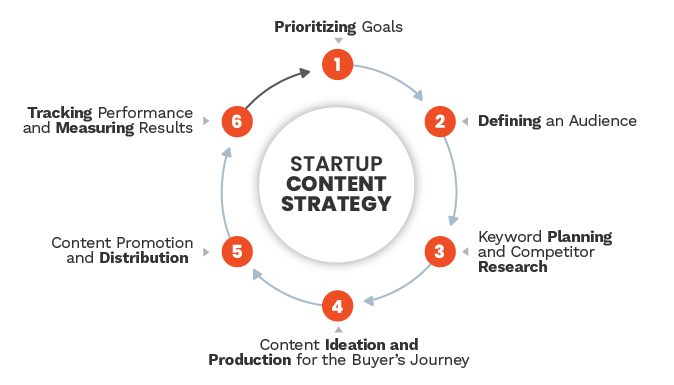
Startup marketing strategy involves strategic planning and validation

II. Product & Brand: Crafting Your Market Offering

Developing a compelling product and establishing a strong brand identity are critical for market acceptance and differentiation. This phase defines what the startup offers and how it is perceived.

Product/Service Development

The product development process for a startup emphasizes efficiency, user feedback, and iterative improvement. This ensures the offering meets market needs effectively.

Minimum Viable Product (MVP) Definition: An MVP is the version of a new product with just enough features to satisfy early customers and provide feedback for future product development. It allows a startup to test its core hypothesis with minimal resources and time.

Brand Identity & Positioning

Establishing a clear brand identity and positioning sets the tone for how the startup interacts with its market. It communicates value and creates emotional connections.

Naming, Logo, and Visual Identity: The startup's name, logo, and visual elements (color palette, typography) form its visual identity. These components must be memorable, relevant to the brand's purpose, and distinctive. Consistent application across all touchpoints reinforces brand recognition.

Messaging and Storytelling: Brand messaging articulates the startup's value proposition, benefits, and unique personality. Storytelling creates a narrative around the brand, its origins, and its impact, fostering an emotional connection with the audience. This narrative should be authentic and resonate with target customer aspirations.

Achieving Brand Salience in a crowded market: Brand salience refers to the degree to which a brand is thought of or noticed when a customer is in a buying situation. It means the brand is easily recalled and recognized by consumers. Achieving high brand salience requires consistent, pervasive marketing efforts that highlight distinctive brand assets and link the brand to relevant customer needs and consumption situations. This ensures the brand is top-of-mind among target customers.

Digital Infrastructure Setup

A robust and compliant digital infrastructure is essential for online operations. This includes technical foundations and legal safeguards.

Website and Application Development: The website and any accompanying applications are primary digital storefronts and interaction points. Development priorities include user-centric design, functionality, and scalability.

Ensuring Robust Hosting and Security: Reliable hosting ensures website availability and performance, and security measures protect user data and maintain operational integrity.

Legal Compliance: Implementing a clear Website Privacy Policy and managing HTTP Cookies (Web Technology): Legal compliance is critical for any online presence. A Website Privacy Policy informs users about data collection, usage, and protection practices. Managing HTTP Cookies (Web Technology) involves obtaining explicit user consent for non-essential cookies and providing transparency about their purpose, aligning with global privacy standards.
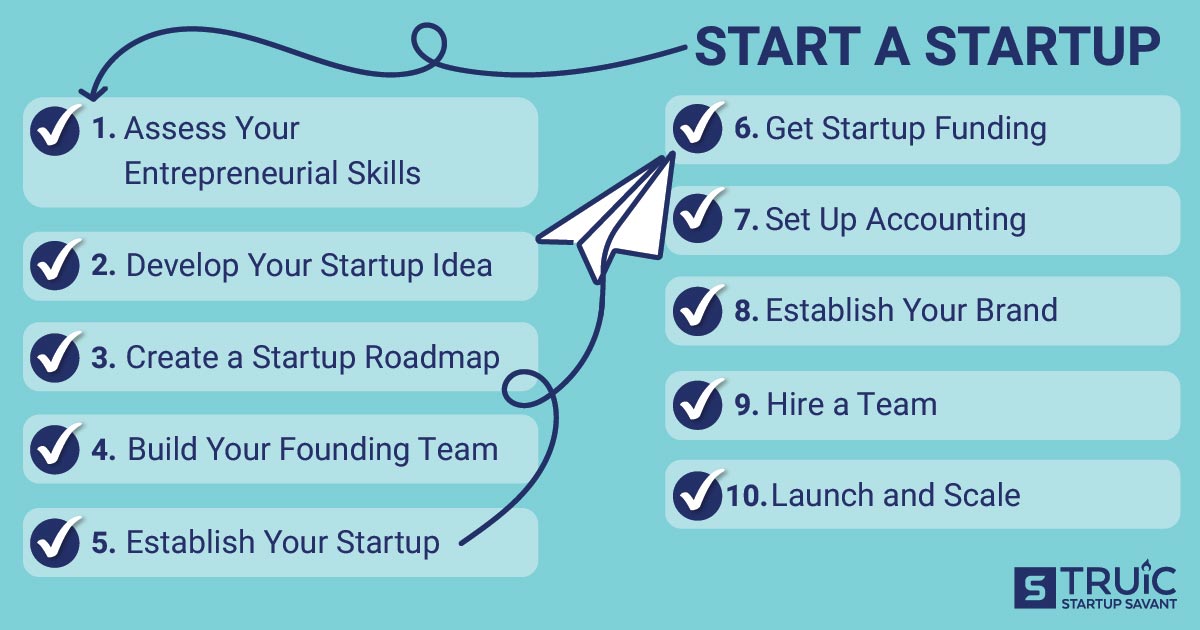
Founders collaborating on starting a new business venture

III. Go-to-Market: Launch Execution & Outreach

The go-to-market phase transforms strategic plans into actionable launch activities. This involves selecting channels and executing integrated marketing and sales initiatives.

Developing Your Market Entry Strategy

A defined market entry strategy ensures targeted outreach and resource efficiency. It dictates how the product reaches its intended customers.

Identifying Core Channels and Tactics: Core channels are the primary avenues for reaching customers, and tactics are specific actions within these channels. A clear understanding of the target audience's media consumption habits guides channel selection.

Considerations for Business Localization if targeting diverse markets: Business localization adapts a product or service to meet the linguistic, cultural, and regulatory requirements of a specific target market. This goes beyond simple translation to include cultural nuances, legal compliance (e.g., local data protection laws), and market-specific preferences in design and functionality. Effective localization is crucial for international market acceptance and can significantly impact user adoption rates.

Integrated Marketing & Communications

Integrated marketing ensures a consistent brand message across all communication channels. This maximizes impact and reinforces brand identity.

Social Media Marketing: Social media marketing involves leveraging platforms like Instagram, LinkedIn, X (formerly Twitter), or TikTok to build brand awareness, engage audiences, and drive traffic. This includes:

  • Platform selection
  • Content strategy
  • Community engagement

Platform selection depends on target audience demographics and platform strengths (e.g., visual content on Instagram, professional networking on LinkedIn). A content strategy defines what to post and when, while community engagement builds loyal followers. For example, in Japan, LINE remains the dominant messaging and super app, crucial for any social media marketing strategy targeting Japanese consumers in 2025.

Search Engine Optimization (SEO): SEO optimizes website content and structure to rank higher in search engine results. On-page SEO includes keyword optimization, content quality, and internal linking. Off-page SEO involves building high-quality backlinks from other reputable websites. Technical SEO addresses website architecture, crawlability, mobile-friendliness, and site speed. These combined efforts increase organic visibility and attract qualified traffic.

Content Marketing (Blog, Video, Podcasts): Content marketing creates and distributes valuable, relevant, and consistent content to attract and retain a clearly defined audience. This can include:

  • Blog posts
  • Videos
  • Podcasts

The goal is to establish thought leadership, build trust, and subtly promote the startup's offerings by providing solutions to audience problems.

Public Relations and Media Outreach: Public Relations (PR) manages the spread of information between a startup and its public. Media outreach involves engaging journalists and influencers to secure positive coverage in news outlets and industry publications. Common PR tactics include:

  • Engaging with media
  • Participating in industry activities

This builds credibility and increases brand exposure.

Sales Strategy & Lead Generation

A well-defined sales strategy converts leads into customers. Lead generation identifies potential customers, while a sales funnel guides them through the purchase process.

Building a Sales Funnel: A sales funnel represents the customer's journey from initial awareness to final purchase, guiding strategies to move them through the process.

IV. Post-Launch Growth & Optimization

After the initial launch, the focus shifts to sustained growth, measuring performance, and continuous adaptation. This phase transforms a fledgling startup into a stable enterprise.

Measuring Success & Iteration

Continuous monitoring and adaptation are crucial for long-term viability. Data-driven decisions inform product and strategy adjustments.

Key Performance Indicators (KPIs) and Analytics: KPIs are measurable values demonstrating how effectively a company is achieving its business objectives. For startups, these often include metrics related to:

  • Customer acquisition
  • Customer value
  • Revenue
  • Retention

Analytics tools track user behavior, website traffic, and other critical metrics to provide data for evaluation.

Gathering Customer Feedback and Product Iteration: Customer feedback is essential for understanding user satisfaction and identifying areas for improvement. Product iteration involves making continuous improvements and new feature development based on this feedback, ensuring the product evolves to meet changing user needs and market demands.

Scaling Operations

Scaling refers to expanding the business while maintaining efficiency and profitability. This requires careful planning for increased demand and organizational growth.

From Startup Businesses to Small and Medium-sized Enterprises (SMEs): The transition from a startup to an SME involves significant changes in operational complexity, team size, and management structure. Startups are typically focused on rapid innovation and market validation, while SMEs prioritize sustainable growth, operational efficiency, and process standardization. This transition often necessitates formalizing processes, expanding infrastructure, and adapting organizational culture.

Hiring and Team Expansion: Scaling operations requires strategic hiring to meet increased demand and fill specialized roles. This includes establishing:

  • Robust recruitment processes
  • Effective onboarding programs
  • Strategies for talent retention

Maintaining a strong company culture amidst growth is a significant challenge requiring intentional leadership.

Ongoing Leadership & Governance

Effective leadership and sound governance structures are vital for steering a growing company. They provide strategic oversight and ensure long-term stability.

Establishing Advisory Boards and seeking Board of Directors Coaching: Advisory boards provide non-binding strategic guidance from experienced professionals. A Board of Directors, on the other hand, provides legal oversight and governance. Board of Directors Coaching enhances the effectiveness of the board, improving their strategic contribution, decision-making processes, and overall governance responsibilities. This ensures a high level of accountability and informed guidance for the growing enterprise.

Adapting leadership styles for sustained growth: As a startup scales, leadership needs evolve. Early Transformational Leadership, characterized by vision and inspiration, may need to be complemented by more structured and delegated approaches. Leaders must adapt their styles to manage larger teams, foster middle management, and develop scalable organizational processes. This often involves a blend of visionary leadership with other approaches to empower teams and sustain engagement.

V. Startup Launch vs. Established Business Expansion

Understanding the fundamental differences between a startup launch and an established business expansion is critical for resource allocation, strategy, and risk management. Each presents unique challenges and opportunities requiring distinct approaches.

Feature Startup Launch Strategy Established Business Expansion
Primary Goal Market validation, initial traction, survival Market share increase, new revenue streams
Risk Tolerance High Moderate to High
Resource Constraints Significant Often less severe, but still a factor
Focus Innovation, agility, rapid iteration Optimization, efficiency, leveraging existing assets
Leadership Style Transformational Leadership, visionary Often more diverse, adapted for established organizational structures
Capital Source Seed funding, angel, venture capital Retained earnings, corporate loans, public markets

VI. Real-World Success: A Case Study in Fintech Innovation

This section details the successful launch of "SwiftPay," a fictional fintech startup.

SwiftPay emerged in 2023, targeting the underserved market of small online merchants struggling with high transaction fees and slow payout times from traditional payment processors. Their launch exemplifies a well-executed strategy across validation, pricing, and digital outreach.

Market Validation Process: SwiftPay initiated its launch with extensive market research. They conducted over 200 interviews with e-commerce entrepreneurs, focusing on pain points related to existing payment gateways. This revealed a strong demand for a solution offering transparent, low fees and instant payouts. They validated this further through an online survey of 1,000 small business owners, confirming fee structure and speed as top priorities. This data informed their MVP features, prioritizing a straightforward integration API and a simple merchant dashboard over complex analytics.

Innovative Pricing Strategy: SwiftPay adopted a two-tiered pricing model. The "Essentials" plan offered a flat, low percentage fee per transaction with daily payouts. The "Pro" plan, targeting higher-volume merchants, included a small monthly subscription for even lower transaction fees and real-time payouts. Both plans featured zero setup fees and no hidden charges, directly addressing merchant frustrations identified during market validation. This transparent, value-based pricing contrasted sharply with the opaque, often tiered pricing of competitors.

Effective Use of Social Media Marketing and SEO: SwiftPay's digital strategy was meticulously planned. For social media marketing, they focused on platforms where their target audience—small business owners and e-commerce entrepreneurs—were most active. Their content strategy included short video tutorials on integrating SwiftPay, testimonials from early beta users, and educational posts on payment processing best practices. They actively engaged in discussions, answering questions and positioning themselves as industry experts.

Concurrently, their SEO strategy targeted keywords such as:

  • "low fee payment gateway for small business"
  • "instant payout merchant services"
  • "e-commerce payment solutions"

They published in-depth blog posts comparing payment processors, offering guides on improving checkout conversion, and detailing the benefits of faster payouts. This comprehensive content, coupled with strategic backlink acquisition from e-commerce blogs and financial publications, significantly boosted their organic search visibility. Within six months, SwiftPay achieved top rankings for several high-intent keywords, driving substantial organic traffic to their platform and contributing to rapid user adoption. Their initial launch focused on demonstrating clear value, building trust through transparent communication, and leveraging digital channels to reach their precise target audience efficiently.

VII. Frequently Asked Questions (FAQ)

What is the most critical element of a successful startup launch?

The most critical element of a successful startup launch is thorough market validation. This process ensures that the startup is solving a genuine problem for a clearly defined target audience, thereby mitigating the risk of building a product or service nobody needs or wants. Without market validation, even a perfectly executed launch strategy will likely fail.

How can small startups compete with larger enterprises during launch?

Small startups can compete with larger enterprises during launch by focusing on niche markets, offering superior customer experience, and demonstrating extreme agility. Niche specialization allows startups to dominate specific segments. Personalized customer service builds loyalty. Their ability to rapidly iterate and adapt based on feedback enables quicker responses to market changes than larger, slower organizations.

What role does leadership play in a startup's initial success?

Leadership plays a foundational and transformative role in a startup's initial success. Effective founders provide a clear vision, inspire their early team (e.g., through Transformational Leadership), make critical decisions under uncertainty, and adapt the strategy as needed. Strong leadership fosters a resilient culture, attracts talent, and maintains focus amidst the inherent challenges of launching a new venture.

How important is market entry strategy for global startups?

A market entry strategy is extremely important for global startups. It defines how a startup will penetrate foreign markets, addressing cultural nuances, regulatory landscapes, and competitive dynamics. Without a tailored strategy, including Business Localization efforts, global startups risk missteps, brand rejection, and significant financial losses due to a lack of understanding of local conditions.

What legal considerations are vital before launching online?

Before launching online, vital legal considerations include establishing the correct legal structure for the business, drafting a comprehensive Website Privacy Policy, and ensuring compliance with data protection regulations regarding HTTP Cookies (Web Technology).

VIII. The Bottom Line

A well-executed startup launch strategy is the bedrock of future success, requiring meticulous planning, agile execution, and adaptable leadership. By focusing on market understanding, strong branding, and a robust digital presence from day one, startups can navigate the initial challenges and lay the groundwork for becoming thriving enterprises. Keeping abreast of successful launches and emerging ventures provides invaluable insights. This continuous awareness aids in refining one's own launch strategy and staying ahead in a dynamic market.

Published on March 23, 2026

By WhatLaunched Team