





April 23, 2026
5 min read
Team

Accelerate Your Launch: How Static Site Generators Benefit Early-Stage Startups

Discover how static site generators for startups can accelerate your launch. Learn the benefits of SSGs like Next.js & Astro for better speed, security, and lower costs.

Share this article:

Startups operate on a simple equation: speed, cost, and stability. Choosing a web technology stack that nails all three isn't a luxury—it's a survival strategy.

While traditional platforms like WordPress are familiar, they often come with a heavy tax of constant maintenance, security vulnerabilities, and scaling costs. This is why a growing number of founders are turning to a more modern approach: static site generators (SSGs).

SSGs offer a powerful alternative, transforming your website into a set of pre-built, hyper-fast files. This guide cuts through the noise to help you select the right static site generator for your startup, comparing the top contenders and explaining how they fit into a lean, scalable, and future-proof tech stack.

Our Top Picks at a Glance

For those in a hurry, here’s a quick overview of the best static site generators for different startup needs:

  • Best Overall (Versatility & Growth): Next.js — The perfect choice for startups building with React, offering a seamless path from a static marketing site to a complex, interactive web application.
  • Best for Content & SEO Performance: Astro — Ideal for content-heavy marketing sites, blogs, and landing pages where top-tier speed and Core Web Vitals are non-negotiable.
  • Best for Raw Speed & Scale: Hugo — The undisputed champion for startups with massive content libraries, such as large blogs, documentation hubs, or knowledge bases, thanks to its near-instant build times.
  • Best for Simplicity & Flexibility: Eleventy (11ty) — A great fit for lean teams that value simplicity and want to build a fast, no-frills website without being tied to a specific JavaScript framework.

Why SSGs are a Game-Changer for Startups

The reason static site generators for startups are gaining so much traction is simple: their core benefits perfectly match the needs of an early-stage company. You need to move fast, stay lean, and build a solid technical foundation. SSGs deliver on all fronts by powering the Jamstack (JavaScript, APIs, and Markup), a modern architecture for building faster, more secure websites.

Blazing-Fast Website Performance

When a user visits a static site, the server simply sends a pre-built HTML file. There's no on-the-fly page assembly or database query.

  • Near-Instant Load Times: Files are served from a Content Delivery Network (CDN), a global network of servers. This means the website is delivered from a location physically close to the user, slashing latency.
  • Better Conversions & SEO: Speed is a core feature. Faster load times improve user experience and are a major ranking factor for Google's Core Web Vitals. A static site gives you an immediate technical SEO advantage.
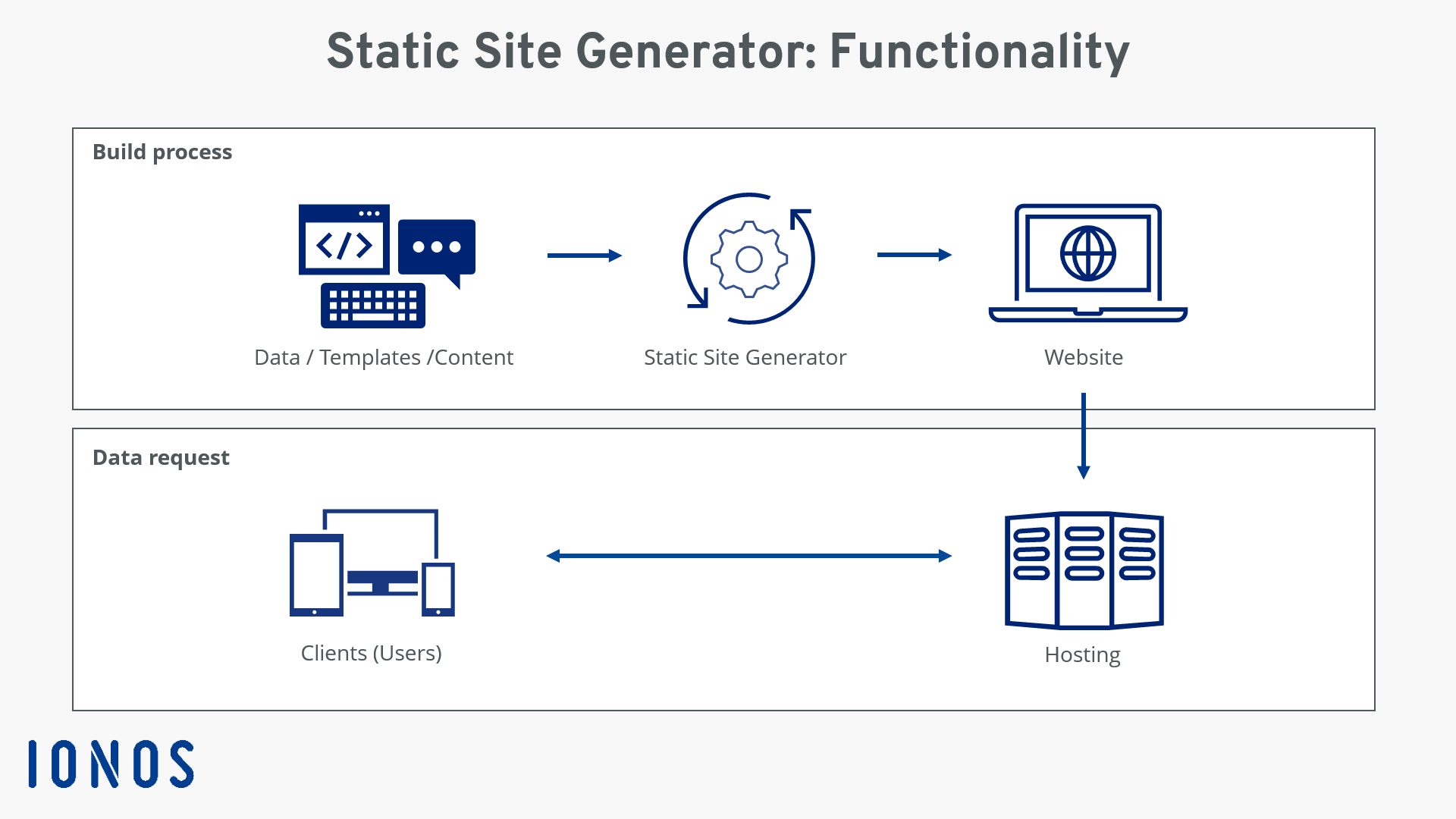
Diagram showing the static site generator workflow from development to deployment on a CDN.

Fort-Knox Level Security

Most website hacks target vulnerabilities in server-side software or databases. A static site eliminates this entire class of threats. With no direct connection to a database and no server-side code to exploit, the attack surface is dramatically reduced. For a startup, this means less time spent on security and a lower risk of data breaches, saving precious time and money.

Radically Lower Costs

Running a traditional dynamic website involves paying for powerful servers and database hosting. Static sites flip the script.

  • Minimal Hosting Fees: Since you're just serving simple files, hosting is incredibly cheap or even free.
  • Generous Free Tiers: Modern hosting platforms built for the Jamstack (like Netlify, Vercel, and Cloudflare Pages) offer free tiers that can easily support a professional, high-traffic website.

Superior Developer Experience

A happy, productive development team is a startup's superpower. SSGs are built to optimize the developer workflow.

  • Streamlined Workflow: A git push can automatically trigger a build and deploy the live site in seconds. Features like hot-reloading make development fast and fluid.
  • Faster Iteration: This improved Developer Experience (DevEx) means your team can build, ship, and test marketing pages much faster than with a clunky, traditional CMS.

Effortless Scalability

What happens when your startup gets a massive traffic spike? A traditional server would likely crash. A static site, served by a globally distributed CDN, handles it without breaking a sweat. This built-in scalability gives you a foundation that can grow with you.

How to Choose: Key Factors for Your Startup

Before diving into specific tools, understand the criteria that matter most for an early-stage company.

  • Developer Experience (DevEx): How quickly can your team build and iterate? Consider the tool's learning curve, the templating language it uses, and how well it integrates with modern front-end frameworks.
  • Performance: While all SSGs are fast, some are faster than others. Look at build times (how long it takes to generate the site) and the out-of-the-box optimizations that impact user-facing speed.
  • Scalability: Will the tool grow with you? This applies to both content volume (can it handle 10,000 blog posts?) and application complexity (can it evolve from a simple site to a dynamic app?).
  • Ecosystem & Community: A large, active community means better documentation, more third-party plugins, and easier access to help when you get stuck.

Chart comparing the fast build times of static site generators like Hugo, Gatsby, and Next.js.

Top Static Site Generators for Startups

Choosing an SSG is about matching the tool to your team's skills and your project's goals. Here’s a curated look at the best options for a startup environment.

1. Next.js: For the React-Powered, App-Focused Startup

Best for: SaaS companies building a marketing site alongside a complex, interactive web application.

As the leading React framework, Next.js is a production powerhouse that excels at static site generation (SSG) but can also handle server-side rendering (SSR). It's the go-to for teams building more than just a brochure site. You can start with a lightning-fast static marketing site and evolve it into a full-featured app with user dashboards and API routes, all within one framework.

Key Features:

  • Hybrid Rendering: Per-page control over SSG, SSR, and Incremental Static Regeneration (ISR).
  • Massive ecosystem with countless libraries and community support.
  • One-click deployment and hosting via Vercel.
  • Automatic image, font, and script optimization for top performance.

Pros & Cons:

  • Pros: Extremely versatile, fantastic for SEO, strong corporate backing from Vercel, provides a clear growth path.
  • Cons: Can be overkill for a very simple site; the learning curve is steeper than simpler options.

2. Astro: For the Content-First Startup Obsessed with Performance

Best for: Marketing sites, blogs, and e-commerce storefronts where page load speed is a critical business metric.

Astro is a modern SSG built to ship as little JavaScript as possible. It uses an "Islands Architecture" to deliver unmatched performance by default. This approach lets you use UI components from any major framework (React, Vue, Svelte) but only loads JavaScript for the interactive parts, keeping the rest of the page as lightweight static HTML.

Key Features:

  • Partial Hydration ("Islands Architecture") for elite performance.
  • Framework-agnostic—bring your own UI components.
  • Content Collections API for managing Markdown and MDX with full TypeScript safety.
  • Excellent developer experience powered by Vite's near-instant hot-reloading.

Pros & Cons:

  • Pros: Exceptional out-of-the-box performance, ideal for content-heavy sites, very flexible.
  • Cons: Its ecosystem is newer and still growing; less suited for highly complex, state-heavy web applications.

3. Hugo: For Startups Needing Raw Speed and Scale

Best for: Media companies, open-source projects, or any startup building a massive documentation portal or knowledge base.

Written in Go, Hugo is famous for one thing above all else: speed. It has mind-blowingly fast build times, capable of rendering a site with thousands of pages in seconds. This is critical for startups where content is the core product, as it eliminates the slow builds that can kill developer productivity.

Key Features:

  • The fastest build times of any major SSG.
  • Powerful, built-in features for content organization (taxonomies, sections).
  • Installs as a single binary file with no external dependencies (like Node.js).
  • Robust built-in support for multilingual sites.

Pros & Cons:

  • Pros: Unbelievably fast, dependency-free and stable, powerful for large-scale content management.
  • Cons: Its Go-based templating system can be less intuitive for developers coming from a JavaScript background.

4. Eleventy (11ty): For the Lean Startup Prioritizing Simplicity

Best for: Small, developer-led teams who need a fast, custom marketing site or blog without framework overhead.

Eleventy is a simpler, more flexible SSG that proudly makes zero assumptions about your project. It's highly configurable and supports over ten different templating languages, letting you work with what you know. Its minimalist, unopinionated approach is perfect for lean teams that want to build exactly what they need without being locked into a specific ecosystem.

Key Features:

  • Templating language agnostic (use Liquid, Nunjucks, WebC, etc.).
  • Defaults to zero client-side JavaScript for excellent performance.
  • Flexible data sourcing lets you pull content from APIs, JSON, or Markdown files.
  • A strong and welcoming community of independent developers.

Pros & Cons:

  • Pros: Extremely flexible, lightweight, and easy to get started with.
  • Cons: Requires more manual configuration for advanced features; its plugin ecosystem is smaller than larger tools.

5. Jekyll: The Classic Choice for Simple Sites & Free Hosting

Best for: A startup's first blog, an open-source project's documentation, or a simple "coming soon" page.

As the original "blog-aware" SSG, Jekyll is a battle-tested tool written in Ruby. It's most famous for its deep, native integration with GitHub Pages, offering the most direct path to completely free, reliable hosting. For simple projects where cost is the primary driver, this combination is unbeatable.

Key Features:

  • Seamless, native support for GitHub Pages.
  • Simple and intentionally focused on blogs and content sites.
  • Mature ecosystem with a huge number of themes and plugins.
  • The Liquid templating language is straightforward and easy to learn.

Pros & Cons:

  • Pros: Proven and stable, great documentation, incredibly simple to set up with free hosting.
  • Cons: Build times can be slow on very large sites; the Ruby dependency can be a hurdle for JavaScript-focused teams.

At-a-Glance Comparison: Choosing the Right SSG

SSG Best For Performance Learning Curve Ecosystem
Next.js React-based web apps, versatile marketing sites Excellent Medium-High Massive
Astro Content-rich sites, blogs, landing pages Exceptional Low-Medium Growing
Hugo Large blogs, documentation, multi-lingual sites Blazing Fast Medium Large
Eleventy Lean sites, blogs, teams who value simplicity Excellent Low Medium
Jekyll Simple blogs, project pages, free hosting Good Low Mature

The Modern Startup Stack: Pairing Your SSG with Essential Tools

An SSG is the engine, but you need a few other parts to build the car. Here’s how they fit together.

Headless CMS: The Content Engine

A Headless CMS separates your content from your website's front-end. This is a game-changer, allowing your marketing team to manage content in a user-friendly interface (like Contentful, Sanity, or Strapi) without touching code.

When they publish an update, a webhook automatically triggers a new site build, and the changes go live in minutes.

UI Frameworks & Libraries

You can pair your SSG with any front-end styling solution. For rapid UI development, use a component library like Material UI. For fully custom designs, a utility-first framework like Tailwind CSS is an incredibly popular and efficient choice.

CI/CD and Hosting Platforms

This is where the magic happens. Platforms like Vercel, Netlify, and Cloudflare Pages connect directly to your Git repository. When you push a code change, they automatically build your static site and deploy it to their global CDN. This automated "Continuous Integration/Continuous Deployment" (CI/CD) pipeline is the backbone of fast, modern web development.

FAQ: Static Site Generators for Startups

Are static site generators good for SEO?

Yes, they are excellent for SEO. The combination of top-tier performance, heightened security (which improves uptime), and clean, crawlable HTML output gives you a strong technical SEO foundation right out of the box.

Can I build a dynamic web app with a static site generator?

Absolutely. This is a common misconception. Modern SSGs can "hydrate" into fully-featured single-page applications (SPAs) in the browser.

You can use client-side JavaScript and serverless functions to handle dynamic actions like user logins, form submissions, or e-commerce checkouts. This gives you the performance of a static site with the interactivity of a dynamic app.

How do I handle user-submitted forms on a static site?

Since there's no traditional backend, forms are handled by dedicated services like Netlify Forms, Formspree, or Basin. Your HTML form points to an endpoint provided by the service, which processes the submission and notifies you.

Is an SSG a better option than a website builder?

It depends on your team. For startups with access to developers, an SSG offers far more control, better performance, and zero vendor lock-in. For completely non-technical founders who need a simple landing page up today, a dedicated builder might be a faster initial path.

Conclusion: Build a Lean, Fast Foundation for Growth

Choosing from the best static site generators for startups gives you a powerful competitive advantage. You get elite performance, rock-solid security, and near-zero operational costs—all while enabling your team to build and iterate at high speed.

The right choice depends on your context. The app-ready power of Next.js is perfect for ambitious React teams, the raw speed of Hugo is unmatched for massive content hubs, and the performance-first mindset of Astro is ideal for marketing sites that need to make a great first impression. By embracing this modern architecture, you’re not just building a site that's fast to launch; you're building one that's designed to scale.

Once you’ve built that lightning-fast site, the next step is getting it in front of the right people. This is where your startup launch strategy moves from building a product to building an audience. You need initial exposure, early validation, and the foundational authority that signals to search engines that you’re a serious player.

That's precisely where you need a dedicated launchpad. After pouring your energy into development, the next logical move is to announce your arrival on a platform built for discovery. What Launched Today gives you direct access to an audience of thousands of other founders and makers, providing the initial exposure needed to gain traction. Launching with us also secures a high-value DR 49 backlink, giving your brand new domain an immediate and significant boost in authority from day one.

Launch Your Startup on What Launched Today →

Published on April 23, 2026

By WhatLaunched Team