


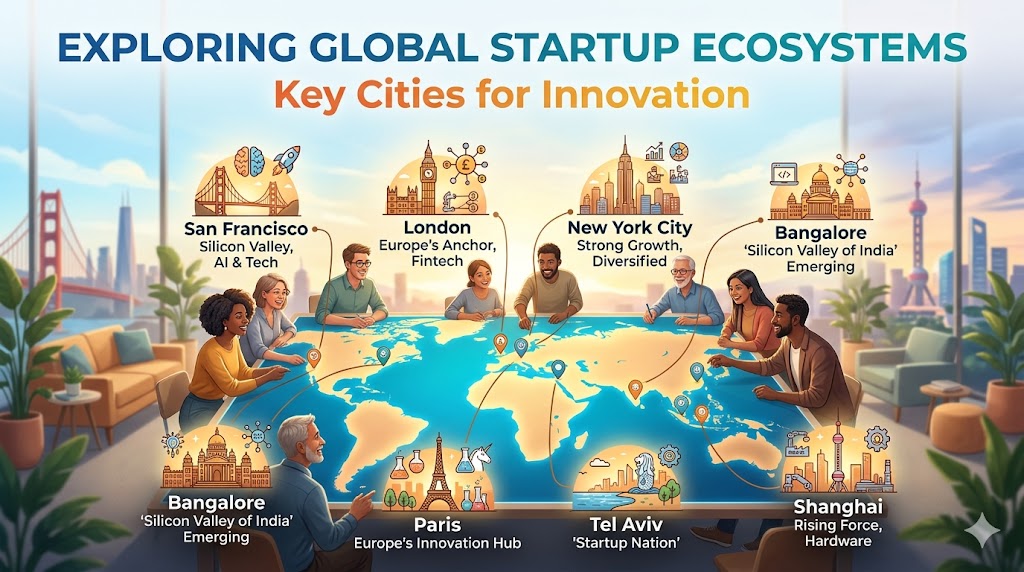
A startup ecosystem map is an interactive, data-driven tool that visually represents the key components of a startup environment. It charts the relationships between investors, accelerators, talent pools, and successful companies across different geographic locations. Our Global Startup Ecosystem Explorer allows founders, investors, and tech talent to discover and compare the world's top innovation hubs based on critical metrics like funding, talent density, and startup success.
What is a Startup Ecosystem?
A startup ecosystem refers to the network of people, organizations, and resources in a specific geographic area that interact to create and scale new ventures.

This includes:
- Talent: Skilled engineers, marketers, and operators.
- Capital: Angel investors, venture capital firms, and grants.
- Support: Accelerators like Y Combinator and Techstars, incubators, and university research programs.
- Community: Founder groups, networking events, and mentorship from experienced entrepreneurs.
- Customers: Access to a large and accessible market to test and scale a product.
A healthy ecosystem creates a virtuous cycle where successful startups lead to exits, which then fuels the next generation of founders and angel investors, strengthening the entire environment.
How Global Startup Hubs Are Ranked: The Core Metrics
Global startup hubs are typically ranked using a multi-faceted approach that considers several key pillars of a thriving startup ecosystem. This approach moves beyond simple funding numbers to capture the true health and potential of each location.
- Performance & Funding: This measures the bottom-line results, tracking total funding raised, the number and value of exits (M&A and IPOs), unicorn creation rate, and the total ecosystem value. This data is aggregated from leading public sources and data partners, reflecting the massive scale of capital in play, such as the lofty valuations seen in the AI space.
- Talent & Resources: Ideas need talent to become reality. Analysis often includes the density of technical talent (using proxies like GitHub activity and professional network data), the presence of top-tier universities producing STEM graduates, and the availability of accelerators and incubators.
- Market & Business Environment: This pillar assesses the operational landscape for growth, analyzing market reach, connectivity (e.g., international flight access), infrastructure quality, and local government support for entrepreneurs, such as startup visas or R&D tax credits.
- Momentum & Growth: A great ecosystem is not static; it's growing. Momentum is often tracked by looking at year-over-year growth in startup creation, early-stage funding, and exit values. This helps identify emerging hotspots before they become saturated and also accounts for "knowledge spillovers"—the effect where a high density of talent accelerates innovation.
The World's Leading Startup Ecosystems
The best startup ecosystems are typically led by Silicon Valley, New York City, and London, which consistently dominate for capital investment, talent concentration, and the number of successful exits. Reports and analyses, such as those from StartupBlink, often feature other major international hubs in their top tiers, including cities like Boston, Tel Aviv, Berlin, and Los Angeles.

Our interactive tool allows you to explore rankings beyond the top tier and filter by the criteria most important to you.
Emerging Startup Hotspots to Watch
Beyond the established leaders, several ecosystems are demonstrating notable growth and offer unique opportunities.
- Bangalore, India: A global powerhouse for SaaS and enterprise software, fueled by a deep and highly skilled engineering talent pool that attracts major R&D centers from around the world.
- São Paulo, Brazil: The definitive leader in Latin America, showing massive growth in FinTech and e-commerce by serving a huge domestic consumer market.
- Lagos, Nigeria: A rapidly expanding ecosystem with major innovations in mobile-first financial technology and platform solutions built for the unique challenges and opportunities across Africa.
- Miami, USA: A fast-growing hub for crypto/web3 and FinTech, attracting significant talent and capital from established hubs like New York and Silicon Valley due to favorable policies and a growing network of VCs.
Exploring the Data: The Global Startup Ecosystem Explorer
Our interactive tool provides a dynamic alternative to static annual reports, offering real-time insights into the world's most vibrant global innovation hubs.
How to Use the Tool: A Step-by-Step Guide
- Step 1: Define Your Search: Use filters to narrow your search by continent, country, or city. Refine further by key industries like Artificial Intelligence, SaaS, FinTech, or HealthTech to find locations with a critical mass of relevant activity.
- Step 2: Explore the Interactive Map: Visualize data on our global map. Click on startup hotspots to see high-level data and navigate to detailed profiles. This visual approach helps you quickly identify clusters of innovation.
- Step 3: Analyze and Rank: View sortable lists of cities and countries. Rank ecosystems based on total venture capital funding, number of unicorns, or our proprietary Momentum score to tailor the results to your needs.
- Step 4: Dive into Ecosystem Profiles: Our outputs include in-depth profiles for each location, featuring key statistics, notable startups, top active investors, and key local resources like accelerators, universities, and founder communities such as CofoundersLab and Founder Institute.