



The days of manually trawling through tech news, building static spreadsheets, and relying on network introductions to find the next breakout company are over. This traditional approach is slow, incomplete, and inherently biased by geography and personal connections. Today, AI for startup discovery has shifted the paradigm, enabling investors, sales teams, and corporate strategists to process vast, diverse datasets at superhuman speed, uncovering signals and trends that would otherwise remain hidden.
This guide provides a practical framework for using artificial intelligence to transform your sourcing and market research workflows. You will learn how to leverage AI to identify high-potential startups, spot emerging market trends, and perform rigorous competitive analysis with greater speed and accuracy than ever before.
Top AI-Powered Startup Discovery Platforms
While dozens of tools exist, they generally fall into a few key categories. Here are examples of the types of platforms leading the charge, each designed for a slightly different user.
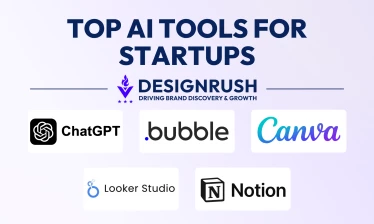
Source: designrush.com
1. The All-in-One Intelligence Engine
These platforms aim to be a single source of truth for VCs and corporate strategy teams. They aggregate data from news, patents, hiring sites, and web traffic, then layer on predictive analytics to score and rank opportunities.
- Best for: Venture Capital, Private Equity, and M&A teams needing a comprehensive view of the market.
- Key Features: Predictive success scores, founder background analysis, market mapping, and real-time alerts on growth signals.
2. The Sales & GTM Signal Platform
Focused on go-to-market teams, these tools identify companies that fit an Ideal Customer Profile (ICP) and are showing "buying signals." The AI looks for triggers like recent funding, key hires in decision-making roles, or adoption of a specific technology.
- Best for: Sales and Business Development teams looking for qualified leads.
- Key Features: ICP matching, buying signal detection (e.g., "just hired a VP of Engineering"), and CRM integrations.
3. The Niche Trend Spotter
These specialized tools focus on a specific vertical like HealthTech, ClimateTech, or Deep Tech. Their AI models are trained on domain-specific data, such as clinical trial results, academic papers, or patent filings, to identify nascent trends and the companies driving them.
- Best for: Corporate R&D, specialized investors, and market researchers.
- Key Features: NLP-driven analysis of scientific papers, patent tracking, and identification of emerging technology clusters.
Feature Comparison: Choosing Your Platform
Selecting the right tool depends on your specific role and objectives. Here's how different platform types stack up on key features.
| Feature | All-in-One Intelligence | Sales Signal Platform | Niche Trend Spotter |
|---|---|---|---|
| Primary Data Sources | Global news, funding data, web traffic, firmographics | Job postings, social media, tech stack data | Academic journals, patent offices, regulatory filings |
| Predictive Scoring | High (focused on funding/exit potential) | Medium (focused on purchase intent) | Low (focused on technological novelty) |
| Ideal User | Investor, M&A Analyst | Sales Rep, Partnership Manager | R&D Strategist, Tech Scout |
| Key Use Case | Deal sourcing & due diligence | Lead generation & prospecting | Technology landscaping & trend analysis |
| Typical Pricing Model | High-tier annual subscription | Per seat, per month | Custom/Enterprise contract |
How to Choose the Right AI Tool for Your Role
Your job function dictates what you need from an AI discovery platform.
For Venture Capital and M&A
Your primary goal is to find high-growth companies before they become obvious. You need a tool that provides a holistic view, combining quantitative growth signals with qualitative data on the team and technology. Look for platforms with strong predictive analytics and the ability to track founder networks and historical performance.
For Sales and Business Development
You need to find companies that are ready to buy now. Your focus should be on tools that excel at identifying buying signals. This includes tracking hiring for specific roles, increases in ad spend, or mentions of a competitor's product. The most valuable feature for you will be seamless integration with your CRM to automate lead pipeline creation.
For Corporate Strategy and R&D
Your objective is to understand emerging trends and identify potential partners or acquisition targets that align with your long-term roadmap. Prioritize tools that can perform deep technology analysis, such as scanning patent databases or analyzing the adoption of new software frameworks. You need to see the forest, not just the trees.
The 4-Step Framework for AI-Powered Startup Sourcing
Once you've selected a tool, success depends on a structured approach.
Step 1: Define Your Search Criteria
The most critical step is translating your goals into precise, machine-readable parameters. An AI can't help you with a vague goal like "find cool tech."
- Start with your Thesis or ICP: Before touching any software, document your ideal target. For an investor, this is an investment thesis (e.g., "Seed-stage FinTech SaaS in North America focused on API-first infrastructure with ex-FAANG founders"). For a sales leader, this is an Ideal Customer Profile (e.g., "B2B software companies with 50-200 employees in the EU that just hired their first Head of Security").
- Identify Key Growth Signals: List the quantifiable indicators the AI should monitor. These might include:
- hiring velocity
- web traffic spikes
- new patent filings
- media sentiment shifts
- technology stack adoption
Step 2: Aggregate and Monitor with an AI Platform
Use your chosen platform to automate data collection and monitoring.
- Configure Complex Alerts: Set up notifications for when a new startup meets your multi-layered criteria. For example: "Alert me when a company in the 'DevTools' sector with fewer than 15 employees, based in the EU, mentions 'WebAssembly' and 'GDPR compliance' on their website."
- Track Trigger Events: Monitor your watchlist for key events, such as a stealth startup launching a landing page, a competitor raising a new round, or a key executive from a major tech firm joining a company in your target sector.