




April 12, 2026
5 min read
Team

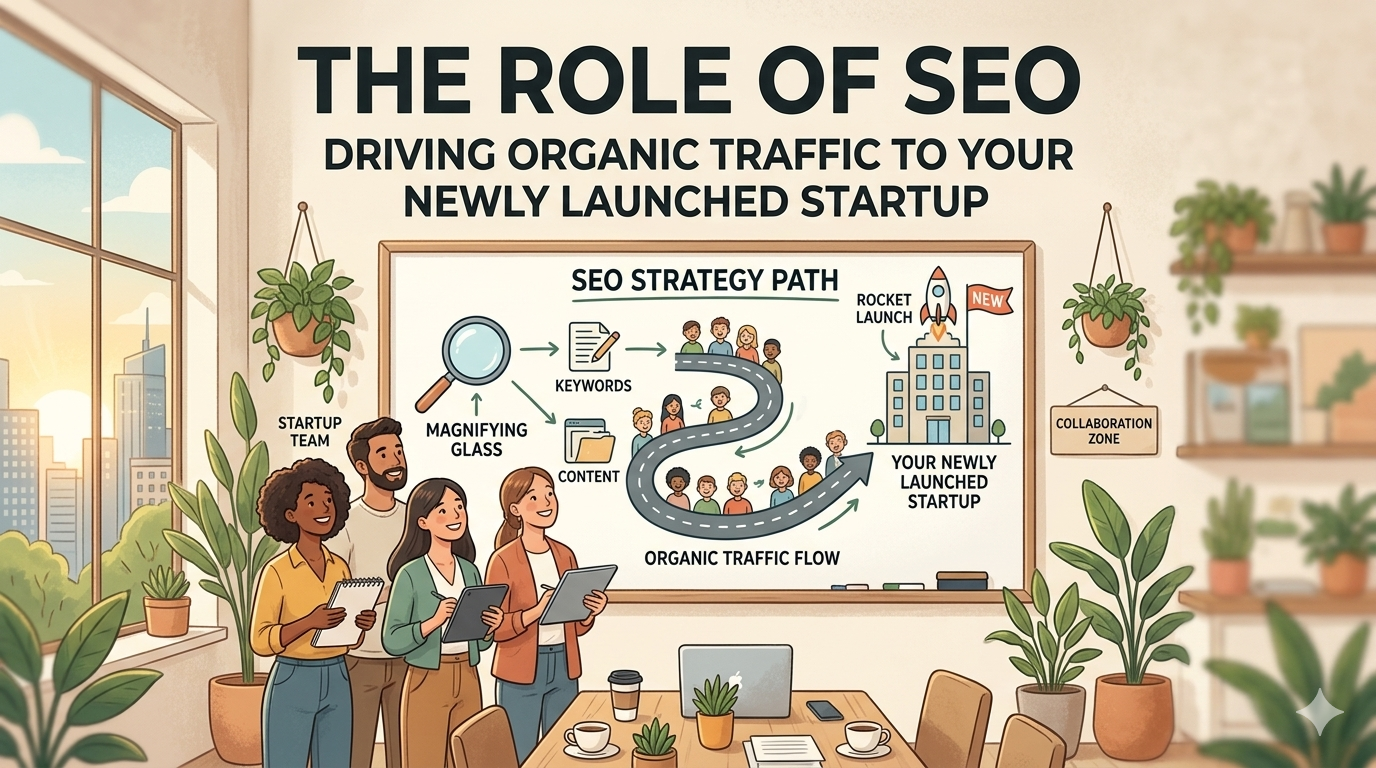
The Role of SEO in Driving Organic Traffic to Your Newly Launched Startup

Learn the essential role of SEO for newly launched startups. Our step-by-step guide covers technical setup, content strategy, and link building to drive organic traffic.

SEODirectorystartup
Share this article:
The Role of SEO in Driving Organic Traffic to Your Newly Launched Startup

Prerequisites

  • A live or soon-to-be-launched startup website.
  • A clear understanding of your target customer (buyer persona), which is a key part of the process to validate ideas.
  • Defined product or service offerings.
  • Access to your website's backend (CMS), like WordPress, Webflow, or Shopify.

Tools Needed

  • Required: Google Search Console, Google Analytics 4.
  • Recommended: A keyword research tool (e.g., Ahrefs, Semrush, or Moz have free tiers that offer limited daily searches), Google Trends for analyzing search interest over time.

Expected Outcome

A foundational SEO strategy designed for a new website, enabling it to be properly indexed by search engines, target relevant initial keywords, and establish a framework for long-term organic growth. You will have a clear, actionable roadmap to attract initial startup organic traffic and improve visibility for new products.


Step 1: Establish Your "Minimum Viable SEO" Foundation (Pre-Launch)

Before your startup even launches, setting up a technical and strategic foundation is critical for future success. This "Minimum Viable SEO" ensures Google can find, crawl, and understand your site from day one, preventing common new-site issues that can hamper growth.

Set Up Essential Tracking and Indexing Tools

  • Google Search Console (GSC): Verify your website ownership with GSC, typically by adding a DNS record or uploading an HTML file. This tool is non-negotiable for monitoring search performance, submitting sitemaps, and diagnosing technical indexing issues. It is the direct line of communication between your website and Google.
  • Google Analytics 4 (GA4): Install the GA4 tracking code to measure user behavior, traffic sources, and conversions. This data is invaluable for understanding how users from organic search interact with your site and which content drives business goals like demo requests or trial sign-ups.
  • Create and Submit Your sitemap.xml: A sitemap is a file that lists all the important pages on your site, signaling to search engines which URLs you consider canonical. Generate one (most CMS platforms like WordPress with Yoast or Webflow do this automatically) and submit it via Google Search Console to help search engines discover your content more efficiently.
A diagram showing the foundational pillars of SEO for startups, including technical SEO, content, and link building.

Conduct Foundational Keyword Research

  • Identify Core "Problem" and "Brand" Keywords: Start by brainstorming terms your ideal customer would use to find a solution like yours, even if they don't know your brand exists. Think in terms of problems, not just features. For a project management tool, this means targeting "how to track team workload" (a problem) instead of just "collaborative project board" (a feature). Also, identify variations of your brand name to track from day one.
  • Analyze Competitors' Top Keywords: Use a keyword research tool to see what keywords are driving traffic to early-stage competitors or established niche players. Reviewing some of the best new startups can give you a clear idea of your competition. Look for their "low-hanging fruit"—keywords with lower difficulty and clear purchase intent that you can realistically target, especially long-tail keywords (3+ words) and question-based queries.
  • Prioritize Initial Targets: Create a small, focused list of 5-10 primary keywords and map them to your core pages (e.g., Homepage targets "AI copywriting tool," while a features page targets "automated blog post generator"). This is your starting point for your launch SEO strategy. Avoid highly competitive, broad terms initially and focus on more specific phrases.

Ensure Your Site is Technically Sound

  • Mobile-Friendliness: Confirm your site is fully responsive and provides an excellent user experience on all devices. Google uses mobile-first indexing, meaning it predominantly uses the mobile version of your site for indexing and ranking.
  • Site Speed (Core Web Vitals): While you don't need perfect scores at launch, ensure your site isn't excessively slow. Use Google's PageSpeed Insights to check your Core Web Vitals (LCP for loading speed, INP for interactivity, and CLS for visual stability). A fast-loading site is crucial for user experience and is a confirmed ranking factor.
  • Simple, Logical URL Structure: Use clean, descriptive URLs. A structure like yourstartup.com/features/reporting-dashboards is far better for users and search engines than yourstartup.com/page?id=123. A clear structure helps search engines understand the site hierarchy.

Step 2: Optimize Core On-Page SEO Elements (At Launch)

With your foundation in place, the next step is to optimize the pages that will be live at launch. On-page SEO involves signaling to search engines what each page is about, making it clear and relevant to your target queries.

Craft SEO-Driven Title Tags and Meta Descriptions

  • Title Tags: For each core page, write a unique title tag (under 60 characters) that includes your primary target keyword, ideally near the beginning. A common, effective format is: Primary Keyword | Brand Name. The title tag is the blue link shown in search results and is a powerful ranking signal.
  • Meta Descriptions: Write a compelling meta description (under 160 characters) that acts as an "ad" in the search results, encouraging users to click. While not a direct ranking factor, a good meta description dramatically influences click-through rate (CTR), a key performance indicator that signals user interest to Google. Include a call-to-action like "Start your free trial."

Structure Content with Clear Hierarchies

  • Use a Single H1 Tag: Each page should have one, and only one, H1 tag. This tag should clearly state the page's main topic and typically includes the primary keyword. It's the most important heading on the page for SEO context.
  • Leverage H2s and H3s: Break up your content with descriptive subheadings (H2, H3, etc.) to improve readability for users and provide structural context for search engines. This scannable structure is crucial for holding user attention and helps Google understand the subtopics covered on the page.

Implement Basic Schema Markup

  • Organization Schema: Add this structured data markup to your homepage to tell Google key details about your startup (official name, logo, social media profiles). This helps control how your brand information appears in the Knowledge Panel and establishes your brand as a formal entity.
  • Product/Service Schema: Use this on your product pages to enable rich snippets in search results. These enhanced listings can provide details like price, ratings, and availability directly on the search results page. This is key for improving visibility for new products and increasing CTR. You can generate this code with free tools like Merkle's Schema Markup Generator and add it to your page's <head> section.

Step 3: Develop an Initial Content Strategy to Build Authority

Content is the engine of startup organic traffic. A new startup can't compete on domain authority, but it can compete on relevance and specificity. Your initial goal is to build Topical Authority around a specific niche your startup serves. This means becoming the go-to resource for a very specific set of problems.
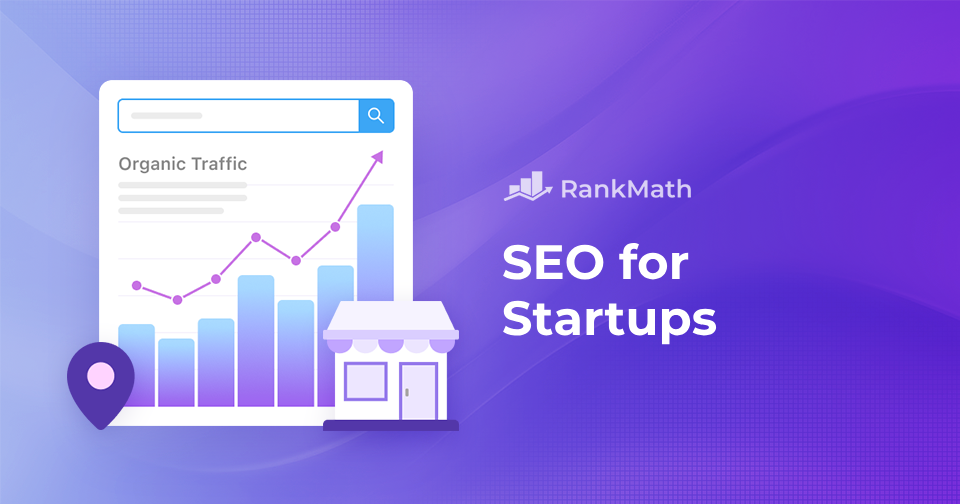
An infographic illustrating a content marketing strategy for a new business to gain organic traffic.

Plan Your First "Pillar" and "Cluster" Pieces

  • Identify One Core Problem: Choose one central problem your startup solves. Your search engine optimization guide should begin with this narrow focus to build momentum.
  • Write the Pillar Post: Create a comprehensive, long-form guide (2,000+ words) that covers this core problem from every angle. For a scheduling app, this might be "The Ultimate Guide to Efficient Meeting Management." This page is designed to be the definitive resource on the topic.
  • Create Cluster Posts: Write 3-5 shorter blog posts that address specific, related long-tail keywords, such as "how to write a meeting agenda," "best tools for taking meeting notes," or "strategies to reduce unnecessary meetings." Internally link these cluster posts back to the pillar page, and have the pillar link out to them. This structure signals to Google that you have deep expertise on the topic. For a deeper dive, review our guide on [Link to: Content Marketing for Startups: Building Authority and Attracting Users].

Focus on Demonstrating E-E-A-T

  • Experience, Expertise, Authoritativeness, Trustworthiness (E-E-A-T): As a new startup, building trust is paramount. Google's quality guidelines prioritize content that demonstrates these principles.
  • Author Bios: Create detailed author bios for your founders or subject matter experts that highlight their real-world experience, credentials, and social media profiles (like LinkedIn).
  • Case Studies/Early User Stories: If possible, showcase how early users are finding success with your product. This provides social proof and demonstrates real-world experience. Even simple testimonials can build credibility.
  • Transparent "About Us" Page: Clearly state your mission, introduce your team with real photos and roles, and explain why you are qualified to solve this problem.

Prioritize Bottom-of-Funnel Content

Not all content is created equal. While broad, educational content is great for awareness, startups need to see a return on their effort quickly. Focus on content that targets users who are close to making a decision.

Content Intent Description Example for a Project Management SaaS
Problem-Aware Targets users who know they have a problem but aren't looking for solutions yet. (Broad, Top-of-Funnel) "How to Improve Team Productivity"
Solution-Aware Targets users actively looking for solutions and comparing alternatives. (Specific, Bottom-of-Funnel) "Best Asana Alternative for Small Agencies"
Transactional Targets users ready to buy or sign up. (High-Intent, Bottom-of-Funnel) "ClickUp vs. Monday for Startups" or "[Your Brand] pricing"
  • Focus First: Prioritize "Solution-Aware" and "Transactional" content that captures users ready to make a decision. This aligns SEO directly with business goals from day one and can lead to faster conversions.

Step 4: Execute Your Launch SEO Plan to Gain Traction

You've laid the groundwork and optimized your site. Now, it's time to actively build signals that tell Google your new startup is credible and worthy of ranking.

Focus on Brand SERP Optimization

  • Goal: When someone searches for your startup's name, you want to control the entire first page of results. This builds trust and ensures potential customers find you, not a competitor or irrelevant information.
  • Actions: Create and complete profiles on relevant social media platforms (LinkedIn, X/Twitter) and business directories (Crunchbase, G2, Capterra if applicable). These high-authority domains will often rank quickly for your brand name, helping you secure that valuable digital real estate.

Begin Strategic, Foundational Link Building

  • Domain Authority: A new site starts with low authority. Link Building is the process of acquiring links from other websites to yours. These backlinks are like votes of confidence and are a primary factor in how Google determines your site's authority and trustworthiness.
  • Launch PR & Outreach: Announcing your launch is a perfect opportunity for Digital PR. Reach out to niche bloggers, industry news sites, and journalists who cover your space. A single link from a relevant, authoritative publication can have a significant impact. For a detailed guide on this, see [Link to: How to Generate Media Coverage and PR for Your Startup Launch].
  • Directory Listings: Submit your startup to relevant, high-quality startup directories and communities. These are often some of the first and most accessible links a new startup can acquire.
  • Guest Posting: Offer to write an article for a reputable blog in your industry. In exchange, you can often include a link back to your website in your author bio. This builds both authority and referral traffic.
  • Note on Authority: Building high-DR (Domain Rating) backlinks takes time and persistent effort. Focus on quality and relevance over quantity. One excellent link is worth more than a hundred low-quality ones. Learn more with our advanced guide, [Link to: How to Get a DR 49 Backlink: A Guide for Startup Founders].

Step 5: Measure, Monitor, and Iterate for Growth

SEO is not a "set it and forget it" task. The data you start collecting from Day 1 is your guide to what's working, what's not, and where to focus your efforts next.

Monitor Keyword Rankings and Impressions

  • Use GSC: The Performance report in Google Search Console is your source of truth. Track impressions (how often you appear in search) and clicks for your target keywords. A simple workflow is to export this data monthly to a spreadsheet to monitor progress. Look for keywords where you have high impressions but a low click-through rate—this may signal a need to improve your title tag or meta description to be more compelling.

Analyze Organic Traffic and User Behavior

  • Use GA4: In the "Traffic acquisition" report, filter by the "Organic Search" session default channel group. This shows how many users are arriving from search engines. Analyze their behavior: Which pages do they visit most? What is the engagement rate on your key pages? Are they completing goals, like signing up for a demo? This data helps you connect SEO efforts to tangible business outcomes. For more on this, check out our [Link to: Measuring Product-Market Fit: A Guide for Early-Stage Startups].

Conduct Regular Technical SEO Audits

  • Crawl Errors: Check the "Pages" report in GSC regularly for any errors that prevent Google from accessing your pages. Common issues for new sites include "404 - Not Found" errors or server errors (5xx).
  • Core Web Vitals: Keep an eye on your site's speed and user experience metrics in GSC to ensure they don't degrade over time as you add more features or content to your site. A healthy site is a rank-worthy site.

Frequently Asked Questions (FAQ)

How long does SEO take for a newly launched startup?

For a brand new domain, it typically takes 6 to 12 months to see significant, consistent organic traffic. Initial traction for specific, long-tail keywords can often be seen within 3-6 months if the strategy is well-executed and consistent. Patience is essential; SEO is a long-term investment in a sustainable growth channel.

What is a realistic SEO budget for a startup?

Budgets vary widely. A DIY approach using free tools can cost nothing but your time, focusing on content creation and manual outreach. Hiring a freelancer or a specialized consultant can range from $1,000-$5,000+ per month. The most important investment for an early-stage startup is time—either from a founder or a dedicated team member who can consistently execute the strategy.

Should I focus on SEO or paid ads first?

Ideally, a startup should leverage both. Paid ads provide immediate traffic and data that can inform your SEO strategy (e.g., testing which keywords convert best). SEO, on the other hand, builds a long-term, compounding asset that reduces your customer acquisition costs over time. If you must choose one due to budget, SEO is the superior long-term investment, but paid ads can provide the short-term lift needed to survive and learn.

Is technical SEO more important than content for a new site?

For a brand new site, foundational technical SEO is the absolute priority. If Google cannot efficiently crawl, index, or understand your site, even the most brilliant content will fail to rank. Think of it this way: technical SEO is the permission to compete, while great content is how you win. Once the technical foundation is solid (Step 1), the focus should shift heavily toward creating high-quality, targeted content (Step 3).

What's the single most important SEO task for a startup to do at launch?

The most critical task is setting up Google Search Console and Google Analytics 4 correctly and submitting your sitemap. Without this foundational tracking and indexing setup, you are flying blind. You cannot measure your efforts, identify critical technical problems, or understand how users are finding and interacting with your site.

Building Your SEO Momentum

Following this guide provides a clear, actionable roadmap for establishing your startup's SEO foundation. You’ve learned how to set up your technical base, optimize your core pages, and develop a content and link-building strategy. As you execute this plan, especially the critical link-building step, finding platforms that provide both visibility and authority is key. A crucial next move in any launch plan is to secure those initial, high-quality backlinks and get your product in front of an engaged audience.

This is where a startup discovery platform like What Launched Today becomes a logical and powerful next step. By submitting your product, you’re not just filling out a form; you’re executing a key part of your launch strategy. It's a direct way to get a high DR backlink to build your site's authority and simultaneously launch your product to an audience of thousands of makers and founders who are actively seeking new tools and innovations. This single action combines the brand visibility and link-building efforts discussed in Step 4, giving your new startup a significant boost right out of the gate.

Next Step: Explore whatlaunched.today

If this guide was useful, visit whatlaunched.today to learn how their product can help:

  • What whatlaunched.today offers: What Launched Today is a startup discovery platform where founders can launch their products to get a high DR backlink and reach an audience of thousands of makers and founders. Visitors can use the site to discover the latest and trending new startups.
  • Website: https://whatlaunched.today
Published on April 12, 2026

By WhatLaunched Team