



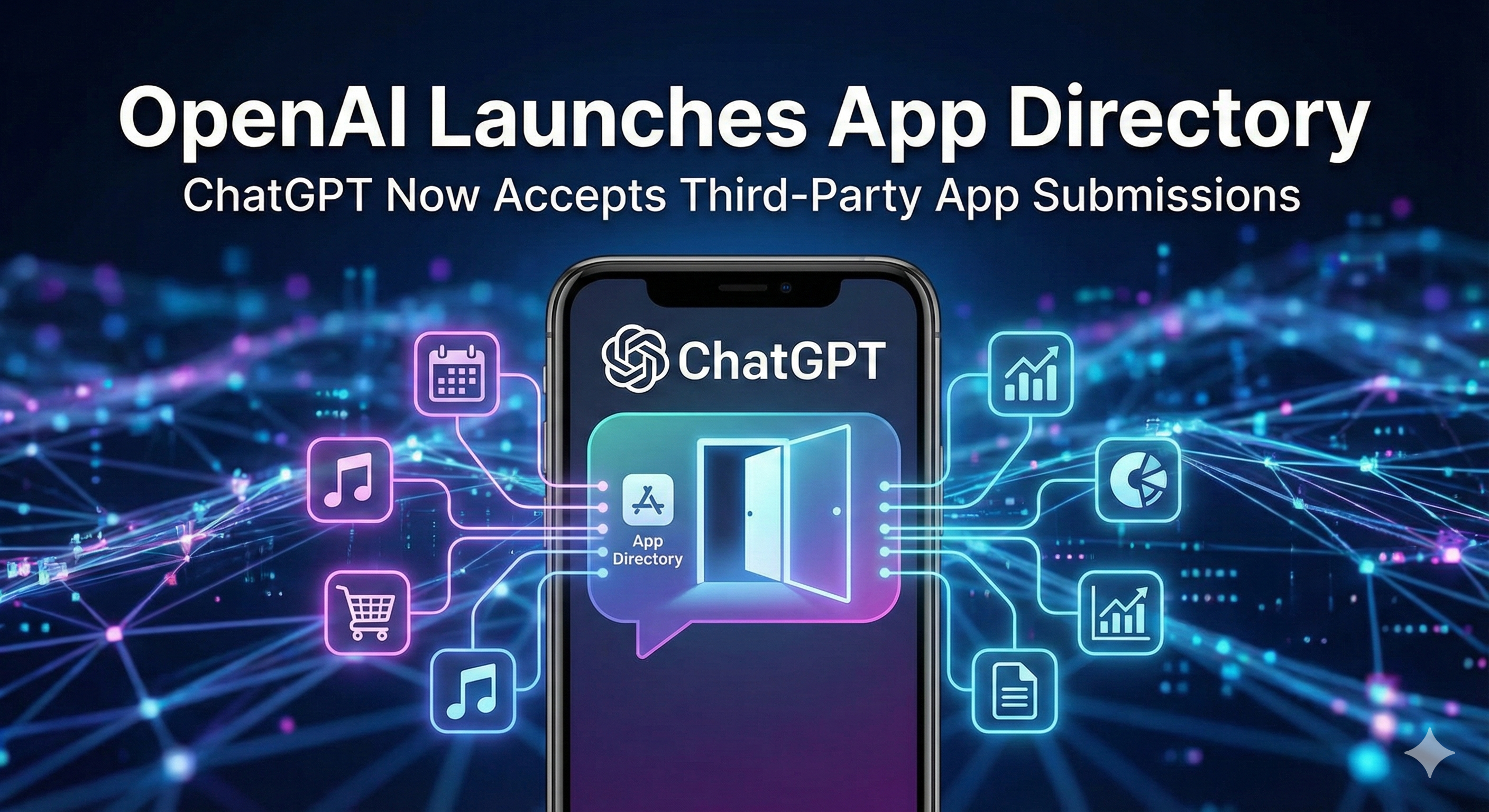
The era of ChatGPT as merely a "conversationalist" is officially over. In a landmark move that pivots the platform toward becoming a true operating system for AI, OpenAI has announced that it is now accepting submissions from third-party developers for its new ChatGPT App Directory.
This shift moves beyond the static "plugins" and text-based "GPTs" of the past year, introducing a robust ecosystem where interactive, deeply integrated applications can live directly inside your chat interface.
Here is everything you need to know about the new App Directory, the Apps SDK, and what this means for the future of software development.
From Chatbot to Platform: The New "App Directory"
For over a year, users have customized their experience with "Custom GPTs"—specialized versions of ChatGPT with custom instructions. While useful, these were largely text-centric.
The new ChatGPT Apps are fundamentally different. Powered by the Model Context Protocol (MCP), these apps are designed to be "chat-native." They don't just talk; they do. They can render interactive user interfaces (UIs) directly in the conversation stream, connect securely to external accounts via OAuth, and perform complex actions without the user ever leaving ChatGPT.
OpenAI’s goal is clear: to turn ChatGPT into a unified "command center" for your digital life, reducing the need to tab-hop between different websites to get work done.
Apps vs. Custom GPTs: What’s the Difference?
If you are a user or developer, you might be wondering how these "Apps" differ from the "GPTs" already in the store.
- Custom GPTs: Best for tailored personas, specific knowledge bases, and instruction-heavy tasks. They rely mostly on text interaction.
- ChatGPT Apps: Built for utility and action. They use the new Apps SDK to display visual elements (like interactive cards, maps, or dashboards) and facilitate real-time workflows.
For example, a Custom GPT might help you write a travel itinerary. A ChatGPT App from Booking.com or Expedia could actually show you interactive hotel listings, let you select dates via a visual calendar, and book the room—all within the chat window.
For Developers: The Apps SDK and Submission Process
For developers, this is a "gold rush" moment similar to the early days of the Apple App Store. OpenAI is actively encouraging developers to build chat-native experiences using their new tools.
Key Tools for Builders:
- Apps SDK (Beta): The core toolkit for building these integrations, allowing developers to define how their app connects to ChatGPT.
- Model Context Protocol (MCP): A standard that helps AI models understand and interact with external data and tools more effectively.
- Developer Dashboard: A centralized hub where you can test your integration, manage metadata, and track your submission status.