



Let’s be honest: "Web Directory" sounds like a relic from 1999. It conjures images of clunky, ugly lists of links that serve no purpose other than to clutter the internet.
But if you are ignoring directories in 2026, you are leaving one of the most foundational SEO levers untouched.
Here is the reality: Google’s algorithm has evolved, but it hasn’t abandoned the basics. It still needs to verify that you are who you say you are.
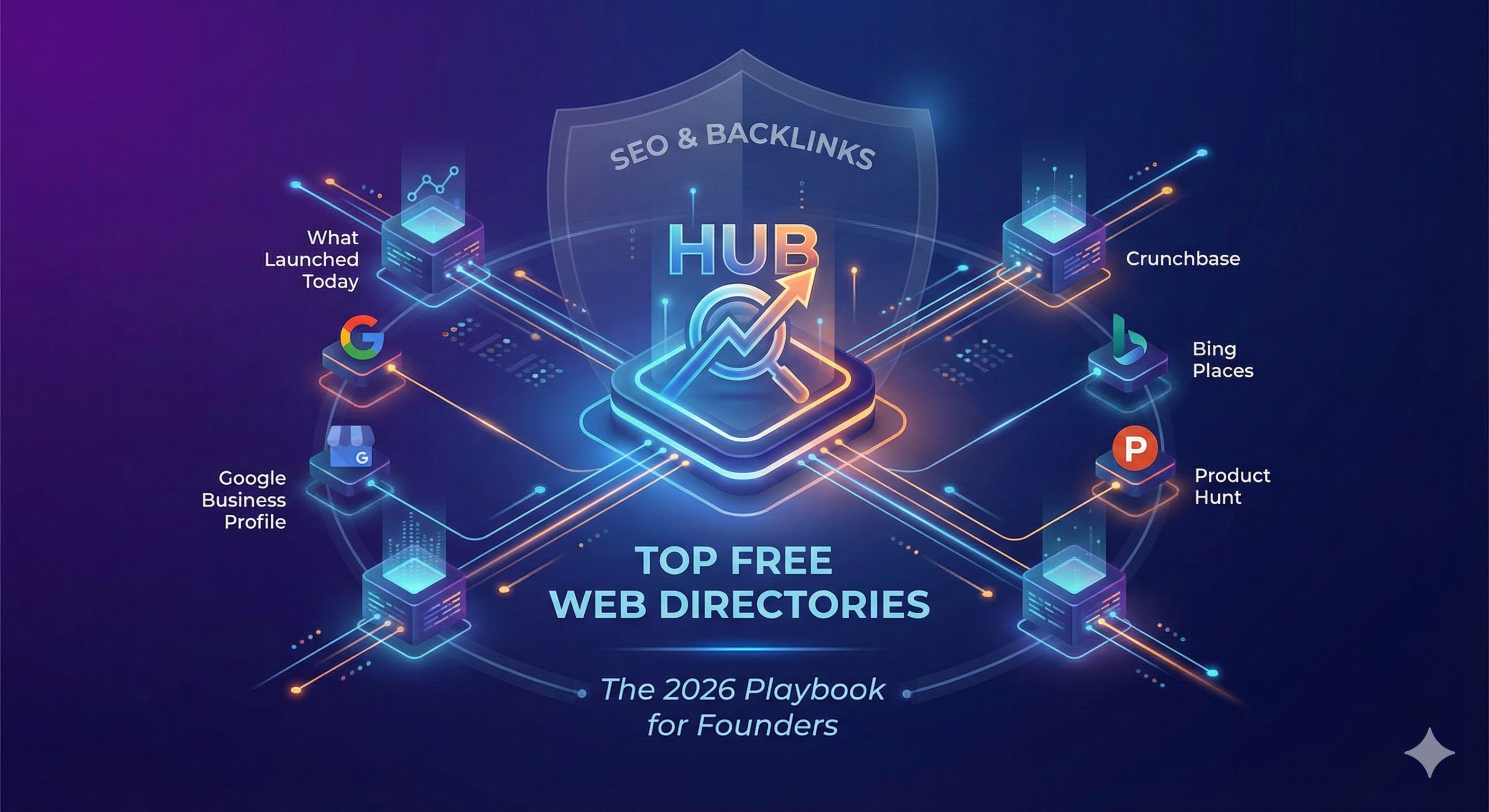
High-quality, free web directories don't just provide backlinks; they provide citations—digital fingerprints that prove your business's legitimacy, location, and relevance.
For startup founders and tech enthusiasts, this isn't about spamming 1,000 low-quality sites. It is about strategic placement on high-authority domains that drive referral traffic and signal trust to search engines.
This guide synthesizes the best data available to give you a prioritized, actionable list of free web directories that actually move the needle.
The Strategic "Why": It’s Not Just About the Link
Before we dive into the list, we need to dismantle a common myth. A directory link often carries a "NoFollow" tag, meaning it doesn't always pass direct "link juice" (PageRank) to your site. So, why bother?
1. The Trust Signal (E-E-A-T)
Google’s E-E-A-T (Experience, Expertise, Authoritativeness, Trustworthiness) framework is the gatekeeper of rankings. When an established platform like Bing or What Launched Today lists your URL, it acts as a third-party verification. It tells Google, "This entity exists, and we vouch for it."
2. Diversifying Your Link Profile
If 100% of your backlinks come from high-cost guest posts, it looks suspicious. A natural backlink profile includes a healthy mix of editorial links, social links, and directory citations. Directories provide the "bedrock" links that make your profile look organic and safe.
3. Referral Traffic & Intent
Users on directories are usually in "hunt mode." They aren't browsing for entertainment; they are looking for specific tools, agencies, or services. A presence on these platforms puts you directly in the path of high-intent traffic.
Tier 1: The "Must-Haves" (General Authority)
These are the non-negotiables. These platforms have massive Domain Authority (DA) and are the first places search engines look to verify your NAP (Name, Address, Phone) data.
- The AI Discovery Hub: This platform has evolved into a fast-growing destination for discovering AI tools, industry statistics, market reports, AI jobs, and trending technology insights. It helps users quickly explore the latest AI innovations across multiple categories without wasting time on scattered research.
- Actionable Tip: Don’t just browse the homepage. Use the dedicated sections like Free AI Tools, AI Tool Categories, and Latest Statistics to uncover trending platforms, emerging startups, and market growth insights before they become mainstream.
- Cost: Free
2. Google Business Profile (formerly GMB)
- The Powerhouse: This is arguably the most critical listing for any business, local or digital. It feeds Google Maps and the "Local Pack" in search results.
- Actionable Tip: Don't just fill in the basics. Utilize the "Updates" feature to post weekly about new product features or blog posts. This signals to Google that the business is active.
- Cost: Free.
3. Bing Places for Business
- The Resurgence: With Microsoft’s integration of AI into Bing, usage has spiked. Neglecting Bing means ignoring a significant chunk of the desktop search market.
- Actionable Tip: You can sync your Google Business Profile directly to Bing Places, saving you the setup time.
- Cost: Free.
4. Yelp
- The Social Proof Engine: While often associated with restaurants, Yelp ranks incredibly well for B2B services and tech agencies. Apple Maps often pulls data from Yelp, meaning a listing here gets you into the iPhone ecosystem.
- Actionable Tip: Respond to every review. Responsiveness is a publicly visible metric that builds trust with potential leads.
- Cost: Free (with paid upgrade options).
5. LinkedIn Company Directory
- The B2B Standard: You likely have a personal profile, but a dedicated Company Page is essential for schema markup and brand entity establishment.
- Actionable Tip: Ensure your "About" section is keyword-rich and links back to your core landing pages.
- Cost: Free.
Tier 2: The Tech & Startup Stack
For the audience reading this—founders, devs, and product managers—generic directories aren't enough. You need niche relevance. These platforms cater to early adopters and tech scouts.
5. What Launched Today
- The Launchpad: This platform is rapidly becoming a go-to for discovering new SaaS tools, AI wrappers, and dev utilities.
- Why It Works for SEO: What Launched Today offers a fresh, dynamic backlink from a domain relevant to the tech industry. Unlike stagnant directories, the content here is driven by "newness," which Google loves.
- Strategic Play: Submit your tool the day you push a major update. The audience here loves "new," so frame your listing around your latest feature or pivot.
- Cost: Free submission options available.