





An angel investor is a high-net-worth individual who provides capital for a startup, typically in exchange for convertible debt or ownership equity. Unlike venture capital (VC) firms that invest a pool of other people's money, business angels invest their own personal funds. They specialize in early-stage opportunities—primarily pre-seed and seed rounds—where risk is highest but the potential for outsized returns is also significant.
More than just a check, the best angels bring "smart money." This isn't just a buzzword; it's a tangible set of benefits that can dramatically alter a startup's trajectory. This value breaks down into three key areas:
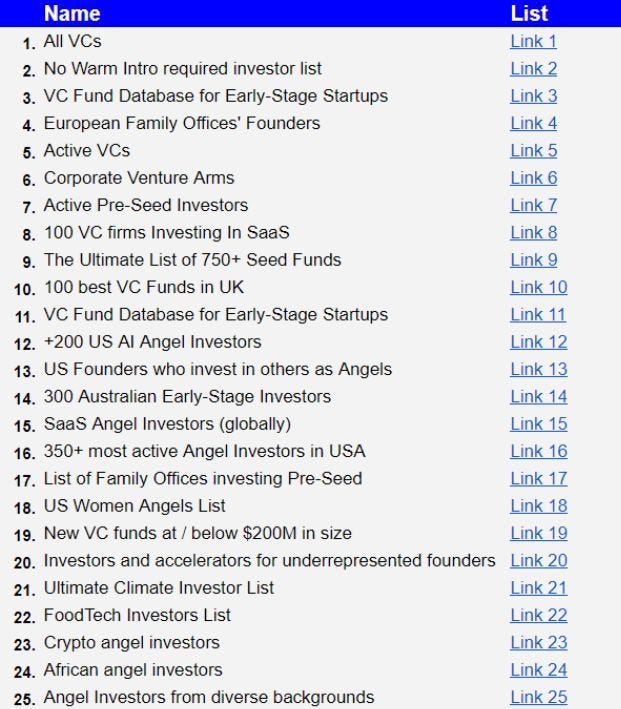
Source: Substack
- Mentorship and Strategic Guidance: A great angel has "been there, done that." A former SaaS founder can help you navigate pricing strategies; a former marketing exec can help you structure your first growth team. This hands-on guidance is invaluable when you're making critical early decisions about product-market fit, hiring your first ten employees, or pivoting your strategy.
- Network Access: An angel's Rolodex is one of their most valuable assets. They can make warm introductions to potential customers, strategic partners, and, most importantly, the venture capital firms you'll need for your next funding round (Series A). A recommendation from a respected angel can get your foot in the door at firms that would otherwise ignore a cold email.
- Credibility and Validation: Securing a check from a well-known angel acts as a powerful signal to the market. It tells other investors, potential hires, and customers that a smart, experienced person has vetted your business and believes in its potential.
An angel's involvement can range from being a passive financial backer to an active mentor or even a board member. According to industry analysis, only about 20% of companies that raise a seed round ever make it to a Series A, and the right angel can often be the deciding factor.
| Aspect | Detail | Notes |
|---|---|---|
| Investor Type | Angel Investor (or Business Angel) | A high-net-worth individual accredited by regulatory bodies (e.g., the SEC in the US). |
| Source of Funds | Personal Capital | They are investing their own money, making their risk calculus very different from a VC. |
| Typical Stage | Pre-Seed, Seed | The earliest, riskiest stages before a company has significant revenue or traction. |
| Check Size | $10,000 - $250,000+ | A typical seed round of $1M might be composed of checks from 10-20 different angel investors. |
| Value Add | "Smart Money" | Provides capital plus hands-on mentorship, network access, and industry-specific expertise. |
How to Choose the Right Angel Investor Directory
To choose the right angel investor directory, evaluate platforms based on investor quality, industry focus, platform features, and cost. The fundraising landscape is noisy, and your goal isn't to find the longest list of names but the shortest path to a check. The best choice depends entirely on your startup's stage, industry, and fundraising strategy.
Think of it as a "Signal vs. Noise" problem.
- High-Noise Platforms: These are massive databases like AngelMatch or a raw export from Crunchbase. They give you thousands of contacts but require intense, time-consuming filtering to find a good fit. This approach is like panning for gold—you have a huge area to cover, but you might find a hidden gem.
- High-Signal Platforms: These are curated platforms like OurCrowd or a formal angel group like Tech Coast Angels. The investors are pre-vetted and active, but competition is fierce, and the application process is rigorous. This is like applying to a selective club—entry is difficult, but once you're in, you're interacting with the right people.
Here is a practical workflow to guide your selection process:
- Define Your Fundraising Target: Be specific. Are you a B2B SaaS startup in the US raising a $750k pre-seed round, or a D2C CPG brand in the UK raising a £100k community round? Your answer immediately eliminates 80% of platforms.
- Match Platform Type to Your Strategy:
- Databases (Crunchbase, AngelMatch): Choose these if your strategy is data-driven, targeted cold outreach. You're responsible for building the list and crafting the pitch.
- Syndicates & Platforms (AngelList, FundersClub): Choose these if you have a strong lead investor and want to fill out your round, or if you fit the traditional VC-backed tech startup mold.
- Crowdfunding (Republic, Wefunder): Choose these if you have a strong consumer brand with an existing community of passionate users you can mobilize.
- Angel Groups (Gust, Keiretsu Forum): Choose these if you're ready for a more formal, structured pitching process and prefer to present to an organized group rather than individuals.
- Vet the Investor Focus: Dig into the platform. Don't just look at the homepage. Use their search filters. Is there a filter for "FinTech"? For "Healthcare AI"? For your specific city or region? If you can't find at least 20-30 investors who have previously invested in your specific niche, it's probably not the right platform.
- Analyze the True Cost: "Free" is rarely free. A free profile might get you listed, but you may need a paid plan for essential features like direct messaging or advanced search. For platforms that take a commission (like crowdfunding sites), model that cost into your financial plan. Don't forget the cost of your time. A complex application process for an angel group can take weeks.
| Criteria | Detail | Takeaway |
|---|---|---|
| Investor Quality & Activity | Are investors vetted? How recently have they made an investment? | A smaller list of 100 active, relevant investors is infinitely more valuable than a list of 10,000 dormant profiles. |
| Niche & Geographic Focus | Does the platform specialize in your industry or region? | A niche directory (e.g., FinTech angels) or a regional one (e.g., New York Angels) dramatically increases your odds of finding a fit. |
| Platform Model | Is it a database for research, a syndicate for closing, or a gateway to formal groups? | Match the platform's core function to your immediate fundraising need. |
| Cost & Time Investment | Is it free, a monthly subscription, or a commission on success? | Understand the full cost in both money and time. Some "free" platforms require payment for the most useful features. |
The 15 Best Angel Investor Directories & Platforms
Finding the right investors is part research, part networking, and part luck. These platforms tilt the odds in your favor by organizing the landscape and streamlining the process. We've broken them down into categories to help you find the perfect fit for your startup.
Quick Comparison of Top Angel Investor Platforms
| Platform | Best For | Model Type | Typical Cost |
|---|---|---|---|
| AngelList | US tech startups needing fundraising infrastructure. | Platform & Tools | Free profile; fees on RUVs/SPVs. |
| Republic | B2C startups with strong existing communities. | Crowdfunding | Commission on funds raised + filing fees. |
| Wefunder | Early-stage, community-driven companies. | Crowdfunding | Commission on success; no upfront cost. |
| Gust | Startups ready for formal angel group pitching. | Angel Group Gateway | Free for startups. |
| AIN | International startups & non-tech businesses. | Global Directory | Freemium; paid plan needed for visibility. |
| OurCrowd | Later-stage startups ($2M+ rounds) needing a lead. | Hybrid VC | No cost to founders; VC model. |
| AngelMatch | Founders doing data-driven cold outreach. | Investor Database | Subscription for full access. |
| Crunchbase | Deep investor research and finding warm intros. | Research Database | Freemium; Pro subscription needed. |
| VCStack | Finding high-signal, influential tech angels. | Curated Directory | Free to browse. |
| Tech Coast Angels | Southern California-based startups. | Regional Angel Group | Free to apply. |
| Keiretsu Forum | Startups seeking global capital and connections. | Global Angel Network | Application/pitching fees may apply. |
| YC Directory | Researching investors who back top-tier startups. | Research Database | Free. |
| SeedInvest | High-growth startups passing a rigorous VC-like vetting. | Crowdfunding (Vetted) | Commission on funds raised. |
| FundersClub | Classic VC-track startups seeking a fund lead. | Online VC Firm | No cost to founders; VC model. |
| PrivateEquityList | Founders building exhaustive, location-based lists. | Investor Database | Subscription for full access. |
A. Global Platforms & Crowdfunding Hybrids
These are the big names you've probably heard of. They offer massive networks and often come with built-in tools to manage your fundraise, but they also attract the most competition.
1. AngelList
AngelList is the default digital infrastructure for the startup ecosystem, combining a directory with powerful fundraising and hiring tools. It's less a matchmaking service and more a platform that provides the operational backbone—legal, banking, cap table management—to close your round efficiently.
Best For: US-based Delaware C-Corps in the tech sector raising anything from a $100K pre-seed to a multi-million dollar Series A.
Workflow: Its true power lies in its Roll-Up Vehicles (RUVs). A founder can secure a commitment from a lead investor, create an RUV, and then send a single link to dozens of smaller angels. These angels can invest amounts as small as $1,000, and all their checks are consolidated into a single line on your capitalization table.
| Feature | Detail | Takeaway |
|---|---|---|
| Core Function | Fundraising, hiring, and company management infrastructure for tech startups. | More than a list, it's a tool to get deals done. |
| Key Feature | Roll-Up Vehicles (RUVs) & Syndicates | Consolidates many small checks into one cap table entry, streamlining the process. |
| Target User | US-based Delaware C-Corps (Pre-Seed to Series A). | It's not built for LLCs or most international companies. Its legal and banking stack is US-centric. |
| Cost Structure | Free for basic profiles; fees for using fundraising tools like RUVs/SPVs. | The platform makes money by taking a small percentage or flat fee for managing investment vehicles. |
- Pros: Founder-friendly tools can save tens of thousands in legal fees; highest concentration of credible tech investors; RUVs keep your cap table pristine for future rounds.
- Cons: Primarily focused on the US tech scene; it’s an infrastructure platform, meaning you still have to find and convince the investors yourself.
2. Republic
Republic is a leading investment platform that facilitates fundraising from both accredited angel investors and the general public through equity crowdfunding. It merges the world of traditional angel investing with the power of the crowd, allowing your most passionate customers to buy a piece of your company.
Best For: B2C startups with a strong brand, a large email list, and an active social media community.
Workflow: A successful Republic campaign is a masterclass in marketing. Founders work with the Republic team to create a compelling campaign page. The key is mobilizing your existing audience to create initial momentum, which then attracts other retail investors on the platform.
| Aspect | Details |
|---|---|
| Investor Type | Accredited Angels & Unaccredited Retail Investors (the "crowd"). |
| Fundraising Method | Equity Crowdfunding (Reg CF, Reg A+, Reg D). |
| Best For | B2C startups with a strong existing community (e.g., D2C brands, consumer apps). |
| Cost Structure | Upfront legal filing fees + a commission (cash and equity) on funds raised. |
- Pros: Access to a much wider pool of capital; powerfully converts customers into brand evangelists; handles complex SEC compliance.
- Cons: Requires a significant marketing push to succeed; has a selective vetting process; a failed public campaign can be a negative signal.
3. Wefunder
Wefunder is a major crowdfunding platform built on the mission to let anyone invest in startups, enabling founders to raise a "Community Round" from fans and users. It has one of the largest communities of retail investors and is known for being founder-friendly, with no upfront costs to launch.
Best For: Early-stage, community-driven companies (e.g., a craft brewery, a SaaS tool with a passionate user base) that want to run a fast Reg CF campaign.
Workflow: Wefunder's model is designed to be low-risk. You can build a campaign page and start collecting non-binding reservations of interest. This allows you to test the waters and gauge investor demand before committing to a full campaign and legal filings.
| Feature | Detail | Takeaway |
|---|---|---|
| Core Function | Equity crowdfunding platform for "Community Rounds." | Turns your fans into your investors. |
| Key Feature | Zero upfront cost to launch a campaign. | You only pay a percentage of the raise if you successfully meet your funding goal. |
| Investor Base | Primarily retail investors (your customers, fans, and the general public). | Empowers you to raise capital from anyone, not just the wealthy. |
| Best For | Startups with a large, engaged email list or social media following. | Success is highly dependent on your own ability to market the campaign. |
- Pros: Huge community of retail investors; zero upfront cost lowers the barrier to entry; strong founder support and resources.
- Cons: Heavily reliant on the startup's existing audience; may not attract "smart money" angels who provide deep mentorship.
4. Gust
Gust is one of the original online platforms connecting startups with organized angel investment groups around the world. It functions as a SaaS platform that hundreds of investment organizations use to manage their deal flow, making it a centralized gateway to apply to many formal angel groups.
Best For: Startups with a product in market and early revenue that are ready to approach formal, organized angel groups.
Workflow: You create a single, comprehensive company profile. You can then use the platform to search for angel groups by location or industry focus and submit your profile for their consideration. This standardized process saves you from filling out dozens of unique application forms.
| Aspect | Details |
|---|---|
| Core Function | SaaS platform connecting founders to a global network of angel groups. |
| Network | Hundreds of investment organizations globally. |
| Application | Standardized process for applying to multiple groups. |
| Cost | Free for startups to create a profile and apply. |
- Pros: Provides direct access to a vast network of serious, established angel groups; streamlines the application process.
- Cons: Less of a direct-to-investor directory and more of a B2B platform for groups; the interface can feel dated.
5. Angel Investment Network (AIN)
Angel Investment Network is a global directory designed to connect entrepreneurs directly with individual angel investors across dozens of countries. Unlike platforms hyper-focused on Silicon Valley, AIN has a truly international reach and covers a huge variety of industries.
Best For: Founders looking for international capital, or those in sectors underserved by tech-focused platforms (e.g., hospitality, manufacturing).
Workflow: You create a pitch profile outlining your business and funding needs. This pitch is then listed in their directory, where registered investors can browse and contact you directly if they are interested.
| Feature | Detail | Takeaway |
|---|---|---|
| Core Function | Global online directory for direct entrepreneur-to-investor connections. | A straightforward matchmaking site. |
| Reach | Active in dozens of countries with localized websites. | One of the best options for international fundraising outside the main tech hubs. |
| Industry Focus | Extremely broad, covering almost every business sector. | Not limited to tech, which is a major advantage for many businesses. |
| Cost Structure | Freemium model; paid plans are necessary for better visibility and direct outreach. | You will almost certainly need a premium plan to get serious traction. |
- Pros: Truly global reach with a diverse investor base; covers a wide set of industries beyond just software; simple, direct connection model.
- Cons: Investor quality can be mixed, requiring founders to do significant due diligence; the most useful features are behind a paywall.
B. Curated & Database-Style Directories
This category is for the researchers and strategists. These platforms are less about community and more about data, ranging from highly curated lists to massive, filterable databases.
6. OurCrowd
OurCrowd is a hybrid VC-crowdfunding platform where the firm itself leads every investment after conducting rigorous, VC-level due diligence. Once OurCrowd commits its own capital, it opens the round to its network of accredited investors, who can co-invest alongside them.
Best For: More established startups (typically Seed-plus to Series C) raising $2M or more that are looking for a strong lead investor.
Workflow: Getting accepted by OurCrowd is like getting a term sheet from a traditional VC. You go through an intense screening and diligence process. If they decide to invest, they become a lead investor, and their backing provides a powerful signal to their network.
| Aspect | Details |
|---|---|
| Model | Hybrid VC-Crowdfunding Platform. |
| Due Diligence | Intensive, VC-level vetting; OurCrowd invests its own capital in every deal. |
| Best For | Later-stage startups (Seed+ to Series C) raising significant rounds ($2M+). |
| Cost | No fees for founders; operates on a traditional VC model. |
- Pros: Significant validation from a top-tier lead investor; keeps the cap table clean with a single SPV; access to a high-quality global investor network.
- Cons: Highly selective and rigorous vetting process with a very low acceptance rate; not a fit for very early-stage startups.
7. AngelMatch
AngelMatch is a massive, database-driven platform with contact information for tens of thousands of investors, including angels, VCs, and family offices. It’s a power tool for founders who want to build a highly targeted, data-driven outreach campaign.
Best For: Founders pursuing a targeted cold outreach strategy who need a tool to build their lead list efficiently.
Workflow: This is a pure data play. You subscribe, then use filters like "Invests in B2B SaaS," "Located in New York," and "Writes pre-seed checks" to narrow the list. You can then export this data to use in your personalized email outreach.
| Feature | Detail | Takeaway |
|---|---|---|
| Core Function | A massive, filterable database of global investors. | Built for building lists. |
| Key Feature | Advanced filtering and direct contact information (with paid subscription). | Designed for highly targeted outreach campaigns. |
| Size | Tens of thousands of investors (angels, VCs, family offices). | One of the largest raw databases available. |
| Cost Structure | Freemium; a paid subscription is required for full database access and exports. | The free version is a teaser; its real value is in the paid plan. |