




What Launched Today

The Top 15 Product Launch Platforms for Maximum Day-One Visibility

Published on July 24, 2026

Discover the top 15 product launch platforms to maximize your day-one visibility. Our guide reviews Product Hunt, Hacker News, G2, and more for every goal.

The Top 15 Product Launch Platforms for Maximum Day-One Visibility

A multi-platform launch strategy is essential for converting a single day's traffic into lasting business momentum. A product launch isn't just one event; it's a strategic campaign designed to build awareness, gather feedback, and establish authority. Relying on a single platform is like hosting a grand opening for your store but only putting a sign on one street—you leave users, data, and long-term SEO benefits on the table.

A well-sequenced campaign across multiple platforms transforms a traffic spike into a sustainable growth engine. This approach creates a "launch echo," where success on one platform amplifies your message for the next. The goal is to stack different types of "Trust Assets"—from the community proof of an active Reddit thread to the social proof of a Product Hunt leaderboard and the buyer proof of a G2 review. This multi-layered approach creates signals that search engines and AI models use to understand and recommend your product long after launch week.

Key Takeaways

  • Sequence Your Launch: Don't treat your launch as a single day. A successful campaign starts with pre-launch waitlists (BetaList), peaks with a major announcement (Product Hunt), and sustains momentum with SEO directories (Uneed, Startup Stash).
  • Match Platform to Goal: Choose platforms based on your primary objective. Use Product Hunt for viral buzz, Hacker News for technical credibility, G2 for B2B buyer trust, and AppSumo for rapid revenue.
  • Preparation is Everything: A successful launch is 90% preparation. Create a "launch kit" with high-quality assets (video, GIFs, copy) and engage with communities weeks before you ask for their attention.
  • Engagement is the Metric: On launch day, your most important job is responding to every comment and piece of feedback. This engagement drives visibility and builds your initial community.

Quick Comparison: Top Product Launch Platforms at a Glance

The best product launch platforms provide access to specific audiences for goals ranging from viral buzz to long-term SEO. This table compares the top-tier platforms to help you quickly identify the best fit for your startup's immediate needs.

Platform Best For Audience Type Pricing Model Effort Product Stage
Product Hunt Massive day-one visibility Broad Tech Enthusiasts Free Heavy Public Launch
Hacker News Technical products & dev tools Software Engineers & VCs Free Light Any Stage
BetaList Pre-launch validation Early Adopters & Testers Free / Paid Upgrade Light Pre-Launch Only
Indie Hackers Building in public Bootstrappers & Founders Free Medium (Ongoing) Any Stage
G2 / Capterra B2B SaaS validation High-Intent Business Buyers Free Listing / PPC Heavy (Reviews) Post-Launch
AppSumo Fast user acquisition Entrepreneurs, Marketers & SMBs Revenue Share Heavy (Ops) Self-Serve SaaS
Fazier AI-focused products AI Builders & Techies Free Light Early-stage

In-Depth Reviews of the Best Product Launch Platforms

Here’s a detailed look at the top platforms, categorized by their primary strength—from generating massive buzz to building a long-term foundation.

The Heavy Hitters: Platforms for Massive Day-One Buzz

These are the platforms where a successful launch can put your startup on the map overnight. They offer massive reach but come with intense competition. Success here is about creating a "spike" of attention that you can convert into long-term users.
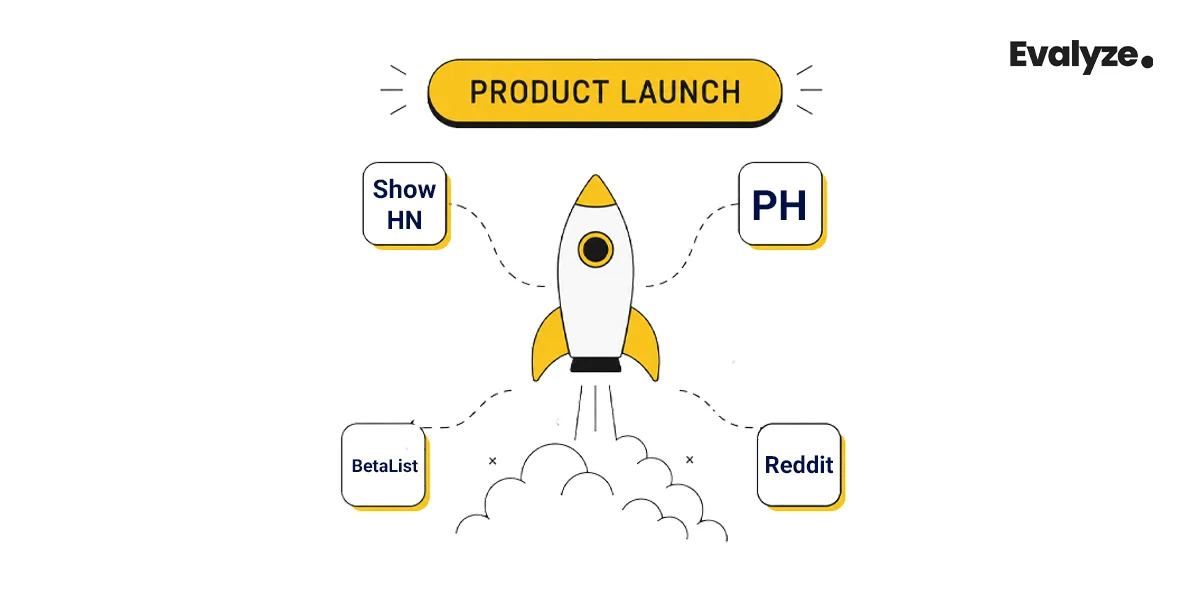
A rocket launching, symbolizing a startup product launch on multiple platforms.

Source: evalyze.ai

1. Product Hunt

Product Hunt is the premier platform for generating significant day-one visibility and social proof within the broad tech community. A top finish here can lead to tens of thousands of visitors, press coverage, and investor interest, making it the most popular destination for product launches.

It's where the entire tech world—from early adopters to VCs—looks to see what's new. A successful launch isn't just about getting upvotes; it's about the story, the engagement in the comments, and the quality of the product. The key is preparation: identifying a top "hunter" to post your product, preparing a compelling first comment, and mobilizing your network.

Pros:

  • Access to a huge, engaged audience of over 5 million monthly tech enthusiasts.
  • A top ranking provides a powerful backlink and can lead to significant press and investor interest.
  • The "Product of the Day/Week/Month" system provides sustained visibility for top performers.

Cons:

  • Extremely competitive, requiring weeks or even months of pre-launch preparation.
  • The traffic spike can be a vanity metric if you don't have a plan to convert visitors.
  • Success often relies on mobilizing an existing network for early support.
Aspect Detail Takeaway
Launch Type 24-hour voting cycle, starting at 12:01 AM PST. Prepare for an intense, full-day commitment.
Key Metric Upvotes, comments, and rank on the daily leaderboard. Engagement in the comments is as important as upvotes.
Required Asset High-quality demo video (60-90s) and a compelling maker's comment. Your first comment sets the tone for the entire launch.
Common Pitfall Asking for upvotes directly, which violates community guidelines. Instead, ask for genuine feedback and support.

2. Hacker News (Show HN)

Hacker News (HN) is a social news site for technical products and open-source projects targeting a software engineering audience. Its "Show HN" section is a rite of passage for founders seeking feedback from a highly discerning community.

The HN audience values transparency, technical depth, and a straightforward explanation of what you've built. A successful "Show HN" post often includes a detailed first comment from the founder explaining the problem, the solution, and the tech stack. Hitting the front page can send more high-quality, technical traffic than almost anywhere else, but the feedback will be brutally honest.

Pros:

  • Reaches a massive, highly technical audience of over 8 million monthly visitors.
  • Feedback is often technically insightful and can expose critical flaws or unique use cases.
  • A front-page appearance is a massive signal of technical validation for investors.

Cons:

  • The community is notoriously critical; a poorly received product can face harsh public criticism.
  • Success is unpredictable and depends on timing and community mood.
  • Overt self-promotion is a death sentence; the post must be framed as a genuine request for feedback.
Aspect Detail Takeaway
Submission Format Show HN: [Project Name] - [Brief, factual description] Keep the title simple and descriptive, not salesy.
Audience Expectation Complete transparency about tech stack, business model, and limitations. Be prepared to answer tough technical questions.
Primary Value Raw, unfiltered technical feedback and high-quality traffic. The insights can be more valuable than the traffic.
Pro-Tip Spend as much time crafting your first comment as you do the title. It sets the tone for the entire discussion.

3. Reddit

Reddit provides access to hyper-targeted niche communities (subreddits) for gathering specific feedback and acquiring early users. Platforms like r/startups, r/SaaS, and r/SideProject are ideal for founders who can provide genuine value before asking for attention.

Think of Reddit as a collection of thousands of small, passionate towns. You can't just drive through shouting about your product. You need to become a local—participate in discussions, offer help, and build karma. A common best practice is the 9:1 rule: make nine valuable contributions for every one promotional post. Redditors reward authenticity and will punish a lazy link-drop.

Pros:

  • Access to millions of users across highly engaged, niche-specific communities.
  • An opportunity to get unfiltered feedback directly from your ideal customer persona.
  • A successful post can go viral and drive significant, targeted traffic for days.

Cons:

  • Most subreddits have strict rules against self-promotion, and violating them can lead to a ban.
  • Requires building a history of genuine engagement before you can successfully promote a product.
  • Negative feedback is public and can be very direct.
Aspect Detail Takeaway
Key Subreddits r/startups, r/SaaS, r/SideProject, r/Entrepreneur, plus industry-specific subs. Research and choose 3-5 highly relevant communities.
Strategy Engage with the community for weeks beforehand. Share value, don't just extract it. Build your reputation before you need it.
Risk Violating community rules can lead to a ban and brand damage. Always read and respect the sidebar rules.
Workflow Become an active member. On launch day, create a tailored post for each sub. Focus on the story or a free tool, not just the link.

The Community Hubs: Platforms for Feedback and Early Adopters

These platforms are less about a massive one-day spike and more about building a sustainable following. They are perfect for early-stage founders looking for their first users, honest feedback, and a supportive community to grow with.

4. Indie Hackers

Indie Hackers is a community for solo founders and bootstrappers to share their journey and build in public. It's less of a launch-day destination and more of an ongoing log of your progress, attracting an audience that values transparency.

The "launch" here isn't a single post but a series of them: sharing revenue milestones, detailing a technical challenge, or writing about a hard-won lesson. The community is built on mutual support and is one of the best places to connect with like-minded founders who understand the grind.

Pros:

  • A supportive community focused on shared learning and mutual encouragement.
  • Excellent for building a personal brand and a narrative that outlasts a 24-hour launch cycle.
  • The product directory provides a permanent listing for long-term discovery.

Cons:

  • Drives less immediate traffic than "heavy hitter" platforms.
  • Requires consistent, ongoing engagement to build a following.
  • The audience is primarily other founders, not necessarily end-users.

5. BetaList

BetaList is a curated discovery platform for pre-launch startups seeking to build a waitlist and validate an idea. It exclusively features products that are not yet publicly available, connecting founders with an audience of early adopters.

If you have a well-designed landing page and a clear value proposition, BetaList is your first stop. It's a low-effort way to test the waters and see if your idea resonates with people who love testing new things. A feature on BetaList can bring in several hundred to a few thousand highly-qualified sign-ups for your waitlist.

Pros:

  • Targets a highly specific audience of ~150,000 subscribers interested in beta testing new tech.
  • A simple, effective way to build your initial email list of potential first customers.
  • Getting featured provides early market validation.

Cons:

  • Strict submission criteria: must be a pre-launch tech startup with a custom landing page.
  • The free submission process can take over a month; a paid option is available to skip the queue.
  • The audience is smaller and more niche than broad discovery platforms.

6. Peerlist

Peerlist is a professional network where founders can showcase their work history alongside their products. It helps build a "proof of work" portfolio, connecting your launch to the credibility of the team behind it.

Peerlist is a hybrid of LinkedIn and Product Hunt. Your product launch lives on a profile that details your skills and experience. This context is powerful, as it allows potential users and investors to see not just what you built, but who built it and what they're capable of.

Pros:

  • Integrates your product with your professional identity, building a deep layer of trust.
  • The "Scout" feature helps surface your work to VCs and hiring managers.
  • Offers a clean, less-crowded alternative to larger launch sites.

Cons:

  • As a newer platform, its audience is smaller but highly engaged and growing.
  • The focus is as much on the founder's profile as it is on the product itself.
  • Less effective for anonymous teams or products where the founder's identity isn't central.

The B2B & SaaS Stalwarts: Platforms for Building Trust and Capturing Buyers

These platforms are where your B2B SaaS goes to grow up. They're less about the initial launch buzz and more about building a permanent foundation of trust, collecting user reviews, and capturing high-intent buyers.

7. G2, Capterra, & GetApp

G2, Capterra, and GetApp are the leading B2B software review sites where buyers conduct market research. A strong presence here, backed by authentic user reviews, is a critical "Trust Asset" for any SaaS company.

These platforms are the digital equivalent of a trusted industry report. When a potential customer is comparing your product to a competitor, they will end up here. Your goal isn't a one-day launch but to build a rich profile with dozens of positive reviews, often by integrating a review request into your user onboarding.

Pros:

  • Attracts high-intent users at the bottom of the sales funnel ready to make a purchase.
  • User reviews are one of the most powerful forms of social proof for B2B sales.
  • Excellent SEO value for "[Your Category] software" and "alternative to [Competitor]" keywords.

Cons:

  • Requires a live product with active, happy users to generate the necessary reviews.
  • Can become a "pay-to-play" environment, with PPC models to achieve top visibility.
  • This is a long-term channel, not a platform for a day-one launch spike.
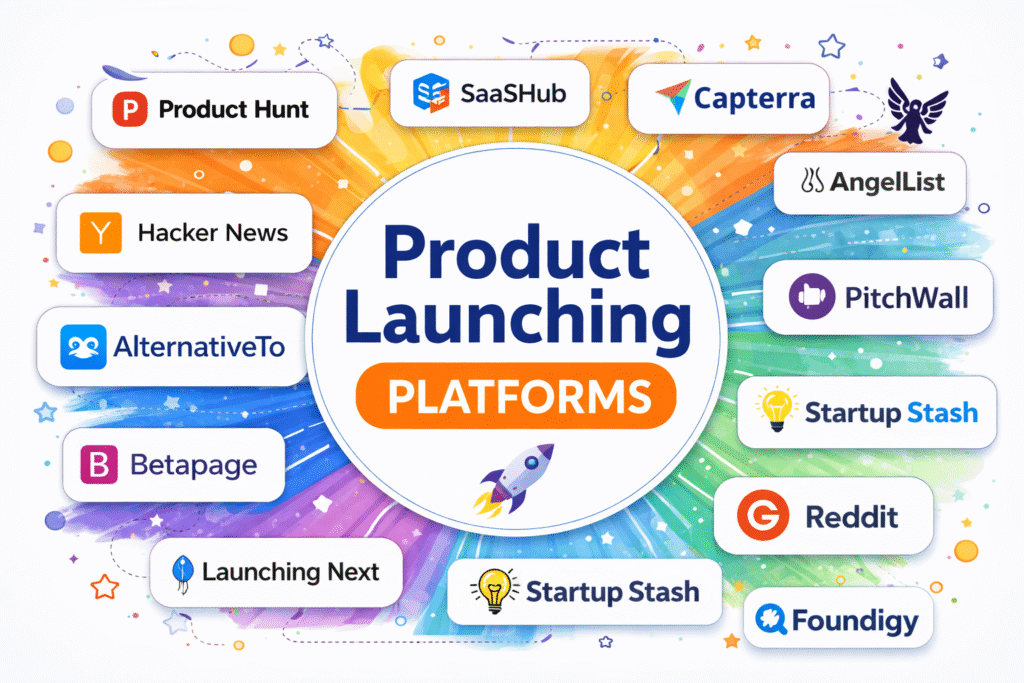
8. AppSumo

AppSumo is a marketplace for lifetime deals (LTDs) that can generate a massive influx of users and upfront revenue. It provides access to a huge audience of entrepreneurs and small business owners actively looking to buy software.

An AppSumo launch is a trial by fire. You can get thousands of new users and a significant cash injection in a matter of weeks. You'll also get an overwhelming amount of feedback and stress-test every aspect of your product. It's a powerful growth lever but requires offering a steep discount.

Pros:

  • Access to an audience of over 1.5 million deal-hungry buyers.
  • Can generate significant upfront cash and thousands of new users quickly.
  • Provides an intense volume of product feedback from a diverse user base.

Cons:

  • Requires offering a heavily discounted lifetime deal and a revenue share with the platform.
  • The "Sumo-ling" audience may not represent your ideal customer profile and can have high support demands.
  • Requires significant operational readiness to handle the massive influx of users.

9. AlternativeTo & SaaSHub

AlternativeTo and SaaSHub are crowdsourced software directories that generate long-term SEO traffic from users searching for alternatives to established products. Listing your product here is a foundational SEO play that captures high-intent search traffic for years.

This is a classic "sustain" strategy. Instead of a one-day spike, these sites provide a steady trickle of highly qualified traffic. When someone searches for "alternatives to established products," you want to be on the list they find. It's a low-effort submission that pays dividends by positioning you directly against market leaders.

Pros:

  • Captures high-intent search traffic for "[Competitor] alternative" queries.
  • A permanent listing acts as a long-term asset driving consistent, relevant traffic.
  • Community suggestions and upvotes add a layer of social proof.

Cons:

  • Not a platform for generating launch-day buzz or immediate traffic.
  • Effectiveness is highest when you are positioned against a well-known incumbent.
  • Visibility can be limited without community engagement.

The Niche Specialists: Platforms for Hyper-Targeted Audiences

These platforms cater to specific verticals like open-source, AI, or developer tools, ensuring your product is seen by the people who will care the most.

10. GitHub

GitHub is the essential platform for launching and distributing open-source projects and developer-first tools. For this audience, a well-documented repository is more powerful than any landing page, and "Stars" are the ultimate form of social proof.

For a developer tool, GitHub is the launch. It's where your community forms, where contributions happen, and where technical credibility is built. A great launch here involves crafting an exceptional README.md with clear installation instructions, usage examples, and a contribution guide.

Pros:

  • The default platform for developers to discover, evaluate, and adopt new tools.
  • GitHub Stars are a key, publicly visible metric of technical traction.
  • A clean, well-maintained repository with excellent documentation builds immense trust.

Cons:

  • Only suitable for products with a significant open-source or developer-facing component.
  • Requires ongoing community management, not a one-time submission.

11. Fazier

Fazier is a curated launch platform for AI-first products, targeting a technical, builder-focused audience. It has emerged as a less crowded and more focused alternative to Product Hunt for startups in the artificial intelligence space.

The audience here isn't just interested in the application; they're interested in the technology behind it. It's smaller and more focused than Product Hunt, which means you're competing on the quality of your AI, not the size of your Twitter following.

Pros:

  • A highly curated feed ensures visibility among a relevant, technical audience.
  • The audience is specifically looking for new AI tools, wrappers, and applications.
  • Strong SEO indexing for AI-related search queries drives long-term discovery.

Cons:

  • Significantly smaller audience than mainstream platforms like Product Hunt.
  • Hyper-niche focus makes it unsuitable for general tech products.

12. DevHunt

DevHunt is a launch platform for developer tools where submissions and voting are authenticated through GitHub. This mechanism ensures that the community consists of genuine developers, making the feedback and traction highly credible.

By tying votes to GitHub accounts, it filters out marketing noise and ensures that the products rising to the top are genuinely valued by the developer community. Its weekly newsletter and focused user base make it a powerful channel for reaching engineers.

Pros:

  • Authentic and credible due to the mandatory GitHub-based voting system.
  • A hyper-focused community provides highly relevant feedback.
  • The weekly newsletter provides sustained visibility beyond the launch day.

Cons:

  • Strictly for developer-facing tools; no other product types are relevant.
  • The audience is small and highly specialized.

The SEO Foundation: Directories for Long-Term Link Building

These platforms are the bedrock of your off-page SEO. Submitting to them is a low-effort, high-impact task that builds your backlink profile, improves your domain authority, and drives a steady stream of referral traffic.

13. LaunchingNext

LaunchingNext is a curated directory of upcoming tech startups, making it an excellent source for an early, high-quality backlink. It's a simple, low-effort submission that contributes to your site's domain authority. It's part of the essential "blocking and tackling" of a good launch strategy, ensuring search engines see you as a legitimate business early on.

14. Uneed

Uneed is an evergreen product directory that provides a permanent listing for long-term discovery and SEO benefits. Unlike feed-based launch sites, a listing on Uneed remains relevant for months, capturing users searching for specific tools. This is particularly effective for capturing long-tail search traffic.

15. Startup Stash

Startup Stash is a comprehensive, curated directory of tools and resources for entrepreneurs. Getting listed here places your product alongside established tools and brands, lending it credibility by association. It's a widely respected resource that generates a valuable backlink and a steady flow of high-quality referral traffic.

Beyond Product Hunt: Top Alternatives for Every Goal

While Product Hunt is the most well-known launch platform, a "one-size-fits-all" approach is rarely optimal. The best strategy often involves a sequence of launches on platforms tailored to specific goals. Here are the top alternatives and when to use them:

  • For Technical Credibility: Hacker News (Show HN) is the gold standard. A successful launch here provides validation from a discerning audience of engineers and can drive more high-quality traffic than any other source.
  • For Pre-Launch Waitlists: BetaList is the undisputed leader. It's designed exclusively for unreleased products, making it the perfect first step to validate an idea and build an email list before your public launch.
  • For Niche Audiences: Reddit, Fazier (for AI), and DevHunt (for dev tools) allow you to reach hyper-targeted communities. A top spot in a relevant subreddit can be more valuable than a mid-tier finish on a broad platform.
  • For Building in Public: Indie Hackers is ideal for founders who want to build a community around their journey. It's less about a one-day spike and more about creating a long-term narrative that attracts loyal followers.
  • For Long-Term SEO: Directories like Uneed and Startup Stash are not launch-day platforms, but they are crucial for building a sustainable foundation of backlinks and referral traffic long after the initial buzz has faded.

How to Choose the Right Product Launch Platform

Choosing the right launch platform requires matching your product, goals, and resources to the platform's audience and format. Don't just chase the biggest audience; chase the right audience.

  1. Analyze Your Audience: Go where your customers live. A developer tool belongs on Hacker News and DevHunt. A B2B SaaS needs to build a fortress of reviews on G2. A consumer AI app should target Product Hunt and Fazier.
  2. Define Your Goal (Spike vs. Sustain): Are you hunting for a viral traffic spike to validate an idea (Product Hunt)? Or are you building a sustainable foundation of SEO and long-term discovery (AlternativeTo, Startup Stash)?
  3. Assess Your Product Stage:
  • Pre-Launch: Use BetaList to build a waitlist.
  • Public Launch: Use Product Hunt or Hacker News for a big splash.
  • Mature Product: Focus on G2, Capterra, and AppSumo to scale users and build trust.
  1. Evaluate Your Resources: A winning Product Hunt launch can take over 100 hours of preparation. Submitting to an SEO directory takes 10 minutes. Be honest about your team's capacity.

A startup founder preparing for a product launch on their laptop.

Source: foundigy.com

The Launch Funnel: A Sample Sequence

  • T-30 Days: Submit to BetaList to start building a waitlist.
  • T-1 to T-4 Weeks: Engage on Indie Hackers and relevant Reddit communities as part of your overall launch strategy.
  • Launch Day (T-0): Launch on Product Hunt. If technical, post to Hacker News (Show HN).
  • T+1 Day: Share your launch results and learnings on Indie Hackers and Reddit.
  • T+1 Week: Submit to Uneed, LaunchingNext, Startup Stash, and other directories for SEO.
  • T+1 Month: Begin a campaign to get reviews on G2 or Capterra.

Checklist for a Successful Platform Launch

A great launch is 90% preparation and 10% execution. Use this checklist to ensure you’re ready.

Pre-Launch (T-4 Weeks)

  • Platform Selection: Choose your primary launch platform and 2-3 secondary platforms.
  • Asset Creation: Create a launch kit: high-res logos, product screenshots/GIFs, a 60-90 second demo video, and compelling copy.
  • Landing Page Optimization: Ensure your site is fast, mobile-friendly, and has a clear call-to-action.
  • Community Engagement: Start participating genuinely in your target communities.

Launch Week (T-7 Days)

  • Finalize Assets: Get a second pair of eyes on all copy, images, and videos.
  • Technical Check: Test your servers for load capacity. Ensure analytics are working.
  • Brief Your Team: Assign roles for launch day (e.g., who handles comments, social media, bug monitoring).
  • Prepare Your First Comment: For Product Hunt or Hacker News, write a detailed "maker's comment."

Launch Day (T-0)

  • Publish: Go live on your primary platform(s) at the optimal time.
  • Announce: Share the launch link with your email list and social media followers.
  • Engage, Engage, Engage: Respond to every single comment personally and thoughtfully.
  • Monitor: Keep an eye on analytics for traffic sources and site performance.

Post-Launch (T+1 Week)

  • Thank Your Supporters: Post a "thank you" update sharing the results.
  • Analyze Performance: Dig into the data. Where did users come from? What feedback was most common?
  • Submit to Directories: Begin submitting to SEO-focused directories to build long-term value.

Frequently Asked Questions

What is a launch platform versus a startup directory?

A launch platform facilitates a timed event to generate maximum attention (e.g., Product Hunt's 24-hour cycle), while a startup directory is a permanent, searchable listing for long-term discovery (e.g., Startup Stash). The first is for a "spike," the second is for "sustain."

What are the best free product launch platforms?

Most of the best launch platforms are free to post on, including Product Hunt, Hacker News, Reddit, Indie Hackers, and most startup directories. Paid options typically offer to expedite a review process (like on BetaList) or provide sponsored placement (like on G2/Capterra).

What assets do I need prepared for a multi-platform launch?

A successful launch requires a "launch kit" with high-resolution logos, 5-10 product screenshots or GIFs, a 60-second demo video, a concise one-liner, and a longer paragraph description. Preparing these in a shared folder ensures consistency and saves time.

How do I avoid common startup directory submission mistakes?

The most common mistakes are using a vague product description, providing low-quality screenshots, submitting to irrelevant categories, and failing to engage with comments on launch day. Always tailor your submission to the platform's audience and be actively present.

Are there startup directories for specific regions like the USA or UK?

Yes. While global platforms like Crunchbase allow filtering by location, many region-specific sites exist. For example, EU-Startups focuses on Europe, YourStory covers the Indian ecosystem, and local tech publications often maintain lists for their city or state.

How can I find an AI startup directory?

You can find a dedicated AI startup directory on niche platforms that exclusively curate artificial intelligence tools. The best places to look are sites like Fazier, There's An AI For That, and Futurepedia, which are more effective for AI discovery than general-purpose directories.

What is the difference between a Windows startup directory and a business startup directory?

A "startup directory in Windows" is a system folder on your PC that launches applications automatically at boot-up. A "business startup directory" is a website that lists new companies for marketing and discovery. They are completely unrelated.