




Introduction: Why a Robust Startup Launch Strategy is Non-Negotiable
A startup launch represents a pivotal moment for any new venture. Its success dictates initial market reception, customer acquisition rates, and long-term growth trajectory. An unplanned launch often leads to missed opportunities, misallocated resources, and critical early-stage failures. Many startups falter due to poor market entry or product misalignment.
A successful product launch is defined by its ability to achieve specific, predetermined objectives. These objectives include gaining market traction, validating a business model, securing early adopters, and generating initial revenue. It is not merely about releasing a product; it is about strategically introducing it to create maximum impact and establish a foundation for sustained expansion.
This guide provides a comprehensive framework for developing and executing a potent startup launch strategy. It integrates essential components from market research and product development to strategic marketing, leadership, and post-launch optimization. Each section offers actionable insights to equip entrepreneurs with the knowledge required for a triumphant market debut.
I. Pre-Launch Foundations: Building a Solid Base
Effective preparation is the bedrock of a successful startup launch. This phase focuses on deep market understanding, product refinement, and robust business model validation.
A. Market Validation & Opportunity Sizing
Market validation confirms a genuine need for your product within a specific target market, while opportunity sizing quantifies the potential revenue and growth. This ensures resources are directed towards a viable and lucrative segment.
Identifying your target market type/market maturity is a critical first step. MaRS Discovery District emphasizes this as foundational for launch planning. Markets can vary in their characteristics, influencing how a product is positioned and marketed. Understanding the maturity level helps assess competitive intensity and customer readiness for new solutions.
A deep dive into customer needs and pain points uncovers the core problem a startup aims to solve. This involves gathering insights to validate that a significant segment experiences these pain points and desires a solution. Unaddressed pain points often represent market opportunities.
Competitive analysis identifies existing solutions and their market share, strengths, and weaknesses. This process informs your Unique Value Proposition (UVP). A strong UVP articulates what makes your startup unique and superior to alternatives. It communicates clear benefits to the target audience, justifying why they should choose your product over others.
B. Product Development & Readiness
Product readiness is essential before considering a product launch. The focus here is on developing a solution that genuinely addresses validated market needs.
Defining and testing a Minimum Viable Product (MVP) allows for efficient resource allocation. An MVP contains only the core features necessary to solve the primary customer pain point and deliver initial value. This approach minimizes development costs and time, with testing providing crucial feedback on usability, functionality, and overall desirability.
Iterative development based on early feedback is a continuous cycle. Customer input informs product improvements and feature prioritization. This agile approach ensures the product evolves in alignment with actual user needs, reducing the risk of developing unwanted features.
Ensuring strong product alignment with market demand before product launch is a critical step. This alignment is evidenced by positive user engagement and testimonials. Launching without this validation can lead to rapid churn and an unsustainable business.
C. Business Model Design & Validation
A well-defined business model outlines how a startup creates, delivers, and captures value. Validation ensures its economic viability.
Revenue streams, cost structure, and profitability projections form the financial core of the business model. Revenue streams detail how money is generated, cost structure identifies all expenses incurred, and profitability projections forecast financial performance. These elements are interconnected and must be realistically assessed.
Funding considerations and investor readiness are crucial for many startups. This involves determining capital requirements, exploring funding sources, and preparing compelling investor pitches. Demonstrating a clear path to profitability and scalability is vital for attracting investment.
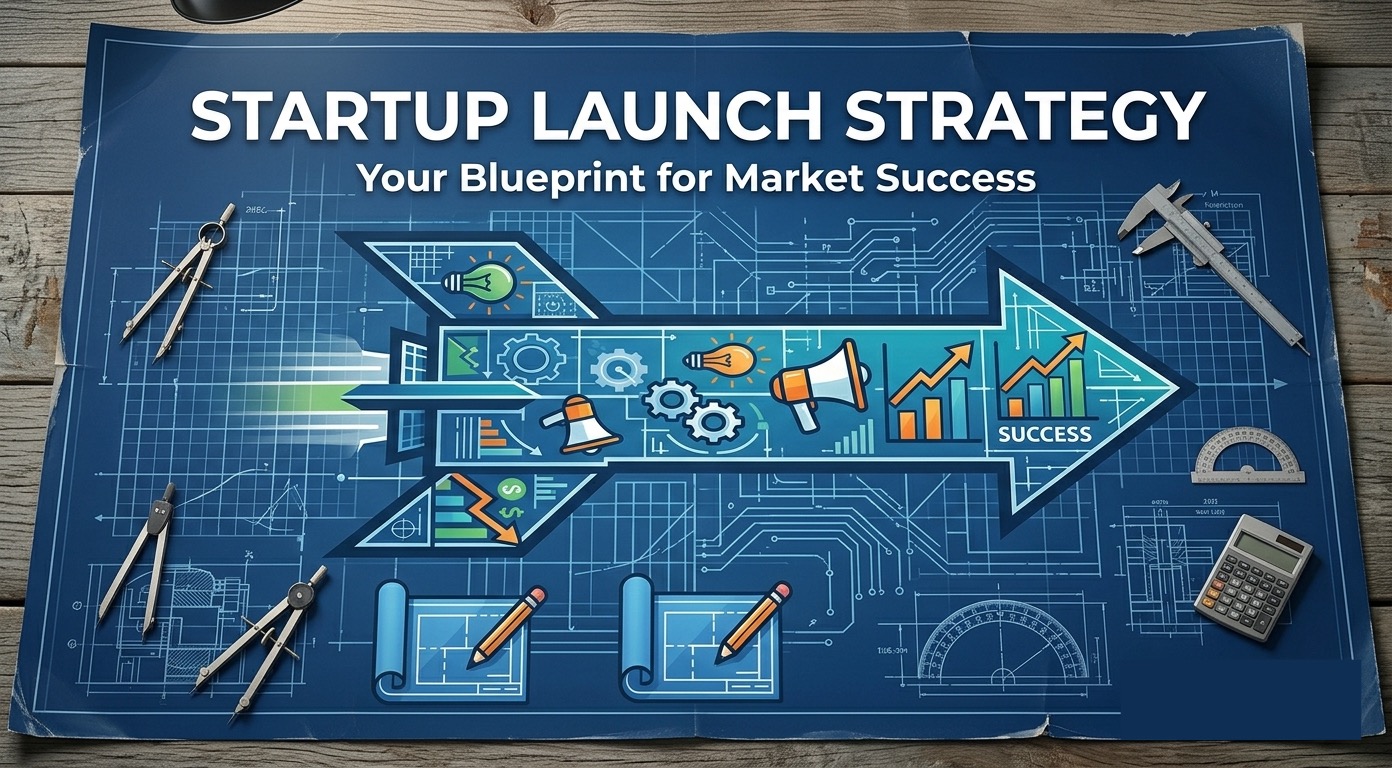
II. Strategic Planning: Crafting Your Launch Blueprint
Strategic planning translates pre-launch insights into a detailed action plan. This involves setting clear objectives, defining market positioning, and choosing the optimal launch approach.
A. Defining Clear Launch Goals
Setting measurable objectives is paramount for evaluating launch success. These objectives can include user acquisition targets, revenue targets, or brand awareness metrics. Goals should be Specific, Measurable, Achievable, Relevant, and Time-bound (SMART).
Aligning goals with the overall startup vision ensures every launch activity contributes to the long-term success of the venture. The launch is not an isolated event but the initial phase of a broader strategic plan. Each goal should reflect the company's core mission and desired future state.
B. Strategic Positioning & Messaging
Developing a compelling brand story helps connect with the target audience emotionally. This narrative explains the startup's origin, purpose, values, and the problem it solves. A strong brand story fosters loyalty and differentiates the startup in a crowded market.
Crafting key messages that resonate with your target audience is essential for effective communication. These messages highlight the UVP and address specific customer pain points. MaRS Discovery District emphasizes the importance of clear, concise, and consistent key messages across all communication channels. The language must speak directly to the target demographic, using terms and concepts they understand and value.
Understanding the Entrepreneur’s Toolkit approach to positioning involves creating a distinct image of your product in the minds of your target customers. This isn't just about what your product does, but how it is perceived relative to competitors. Effective positioning considers features, benefits, price, and customer experience to carve out a unique space.
C. Choosing Your Launch Approach
The choice of launch approach significantly impacts resource allocation and market perception. Different strategies suit different products and market conditions.
A soft launch involves releasing the product to a limited audience. This approach allows for controlled testing, gathering feedback, and making iterative improvements before a wider release, minimizing public scrutiny. A hard launch involves a widespread, public release, often accompanied by extensive marketing and PR efforts to create immediate impact and awareness.
Phased rollout strategies involve introducing the product sequentially, perhaps by geographic region, customer segment, or feature set. This reduces operational complexity, allows for learning and adaptation, and conserves resources.
D. Sales Process Management Preparation
A clearly defined sales funnel and customer journey are vital for converting interest into acquisition. The sales funnel maps the stages from initial awareness to final purchase. The customer journey details the customer's interactions with the startup across various touchpoints. Both require meticulous planning to guide prospective customers efficiently.
Tools and tactics for early customer engagement include lead generation strategies, personalized outreach, and compelling calls to action. For B2B startups, this might involve direct sales teams and strategic partnerships. For B2C, it could be referral programs or social media contests. Preparing a robust sales process management framework ensures consistency and effectiveness in converting leads.
III. Digital Launch Execution: Marketing & Communication Prowess
Digital marketing is indispensable for modern startup launches, offering scalable and measurable ways to reach target audiences.
A. Comprehensive Digital Marketing Solutions
SEO fundamentals for visibility are non-negotiable. This involves optimizing website content, structure, and technical elements to rank highly in search engine results. This increases organic visibility and drives qualified traffic. Early SEO integration is critical for long-term sustainable growth.
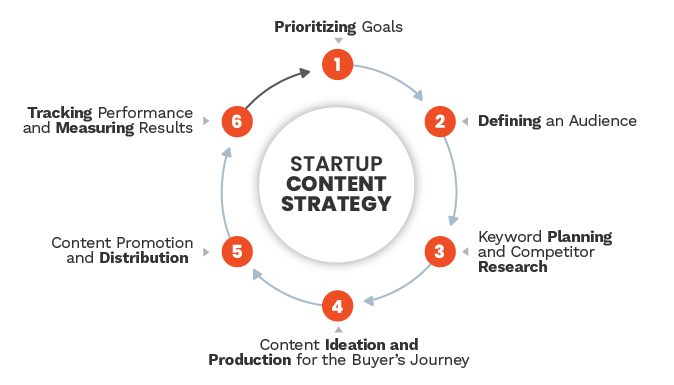
A content marketing strategy establishes thought leadership and attracts organic traffic. This includes creating valuable content such as blogs, guides, video tutorials, infographics, and case studies. Content should address customer pain points and provide solutions, driving engagement and building trust. Consistent, high-quality content positions the startup as an authority in its niche.
A robust social media strategy builds community and fosters direct engagement with the target audience. Selecting the right platforms is key. Content tailored to each platform, interactive posts, and community management efforts drive brand awareness and direct traffic.
Paid advertising (PPC, social media ads) provides immediate visibility and targeted reach. Platforms like Facebook Ads and LinkedIn Ads allow for precise audience targeting based on demographics, interests, and behavior. Effective ad campaigns require careful budget allocation, continuous testing, and performance monitoring to maximize ROI.
B. Leveraging Email and SMS Marketing for Impact
Email Marketing Platform and SMS Marketing Platform offer direct communication channels, enabling personalized engagement and high conversion rates.
| Feature | Email Marketing Platform | SMS Marketing Platform |
|---|---|---|
| Reach | Broad, global | High open rates, immediate |
| Content Depth | Long-form, rich media | Concise, urgent |
| Cost-Effectiveness | Generally low per message | Varies, potentially higher for mass |
| Engagement Type | Nurturing, informative | Direct, transactional |
| Platform Example | Mailchimp | Mailchimp (SMS) |
| Key Use Case | Newsletters, detailed offers | Alerts, promotions, quick updates |
Building an effective subscriber list is foundational for both channels. This involves collecting opt-in consent through website forms, lead magnets, and customer interactions. A robust list ensures messages reach interested individuals.
Automated drip campaigns and segmentation enhance personalization and relevance. Tools like Mailchimp (an Intuit company) enable startups to send a series of pre-scheduled emails or SMS messages based on user actions or demographics. Segmentation ensures specific messages reach the most relevant target audience segments, increasing engagement and conversion rates.
Compliance and best practices for Email Marketing Platform and SMS Marketing Platform are critical. This includes adhering to regulations regarding data privacy and consent. Best practices involve clear opt-in/opt-out options, transparent communication, and avoiding unwanted content to maintain sender reputation and audience trust.