





Your startup’s hosting isn't just a digital parking lot; it is the engine room of your entire business. In the early stages, every second of load time counts toward your conversion rate, and every minute of downtime burns your limited runway.
Most founders make the mistake of choosing the cheapest option to save $5 a month, only to pay thousands later in lost customers and painful migration fees. Whether you are bootstrapping a SaaS MVP or scaling a content platform, the hosting provider you choose today dictates your growth ceiling tomorrow.
This guide cuts through the marketing fluff. We analyzed the top contenders—synthesizing data from performance tests and real-world user reviews—to help you find the best hosting for startups in 2026.
The "Big Two" for Bootstrappers: Hostinger vs. Namecheap
If you are pre-revenue or operating on a "ramen profitability" budget, you are likely looking at the sub-$5/month category. The two heavyweights here are Hostinger and Namecheap. While both are affordable, they serve very different types of founders.
Hostinger: The Performance-Per-Dollar King
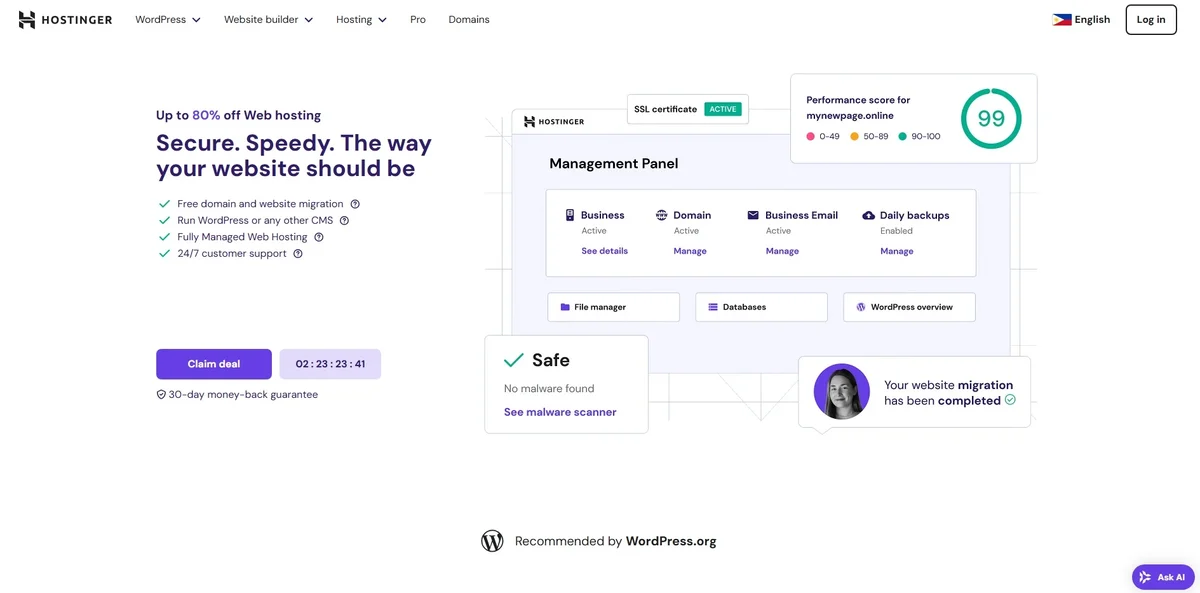
Hostinger has aggressively captured the market by offering "premium" speed at budget prices.
- The Tech: They use LiteSpeed Web Server technology, which is significantly faster than the traditional Apache servers used by older hosts.
- AI Integration: For non-technical founders, Hostinger’s built-in AI website builder can generate a functional site layout in minutes.
- The Catch: To get their headline price (often under $3/mo), you usually have to lock in a 4-year contract.
- Best For: Founders who are confident their project will last a few years and want the fastest possible speeds for the lowest price.
Namecheap: The "No-Commitment" Flexible Option
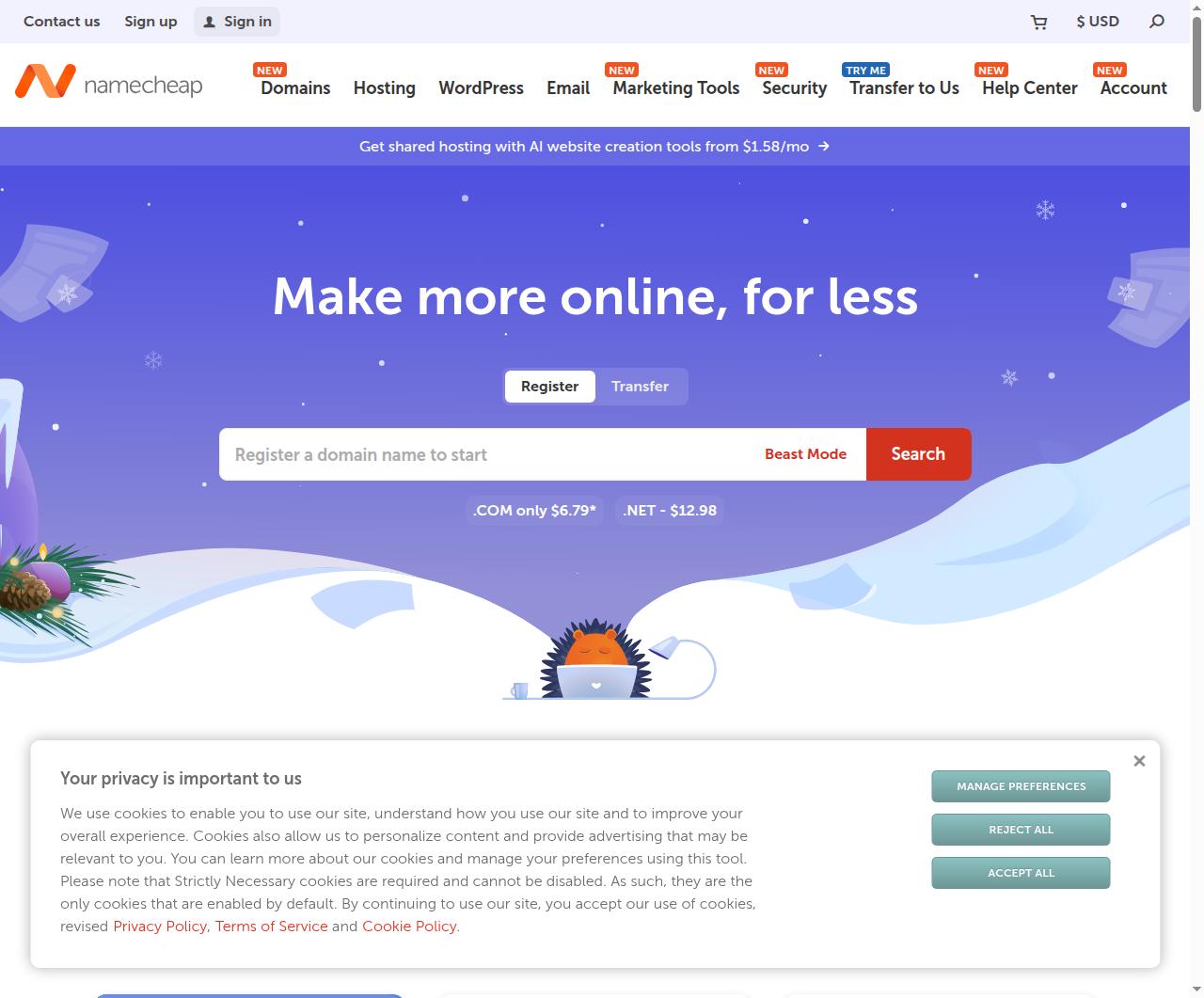
As the name suggests, Namecheap focuses on keeping entry barriers low.
- True Monthly Plans: Unlike most competitors, Namecheap offers decent month-to-month pricing (often under $10) without forcing you into a multi-year marriage.
- Security First: They include a free virus scanner and basic privacy protection, which is often an upsell elsewhere.
- The Catch: No phone support. If your site goes down at 3 AM, you are relying on chat tickets.
- Best For: The "Experimenter." If you are launching a landing page to test an idea and might shut it down in 3 months, Namecheap’s monthly flexibility is unbeatable.
Hostinger vs. Namecheap: Head to Head Comparison
| Feature | Hostinger | Namecheap | The Winner? |
|---|---|---|---|
| Best For | Long-term business/blogs | Short-term projects & testing | Depends on goal |
| Introductory Price | ~$2.99/mo (requires 4-year deal) | ~$1.98/mo (requires 1-year deal) | Hostinger (for value) |
| Renewal Price | Jumps higher (~$7-$12/mo) | Jumps moderately (~$4-$9/mo) | Namecheap |
| Month-to-Month Cost | Expensive (~$12/mo) | Cheapest (<$5-$10/mo) | Namecheap |
| Performance Speed | Fast (Uses LiteSpeed Servers) | Average (Standard Apache) | Hostinger |
| Uptime Guarantee | 99.90% | 100% (Claimed on some plans) | Tie |
| Customer Support | 24/7 Live Chat (No Phone) | 24/7 Live Chat (No Phone) | Tie |
| Ease of Use | High (Custom hPanel is very simple) | Moderate (Standard cPanel) | Hostinger |
| Free Domain | Yes (on 1-year+ plans) | Yes (on 1-year+ plans) | Tie |
| Backups | Weekly (Daily on higher plans) | Twice a week (on lower plans) | Hostinger |
The "Bottom Line" Verdict
- Choose Hostinger IF: You are ready to commit to a business idea for at least 1–4 years. You get significantly faster server speeds (better for SEO) and a modern, easy-to-use dashboard. It is the superior choice for a serious website.
- Choose Namecheap IF: You are testing an idea, buying a domain just to "park" it, or need a month-to-month plan that doesn't cost a fortune. It is the best "low risk" option for experimenters.
The "Reliability" Layer: Bluehost & SiteGround
Once you have validated your idea and have actual users, you need stability. This is where the mid-tier giants come in.
Bluehost: The "WordPress Standard"
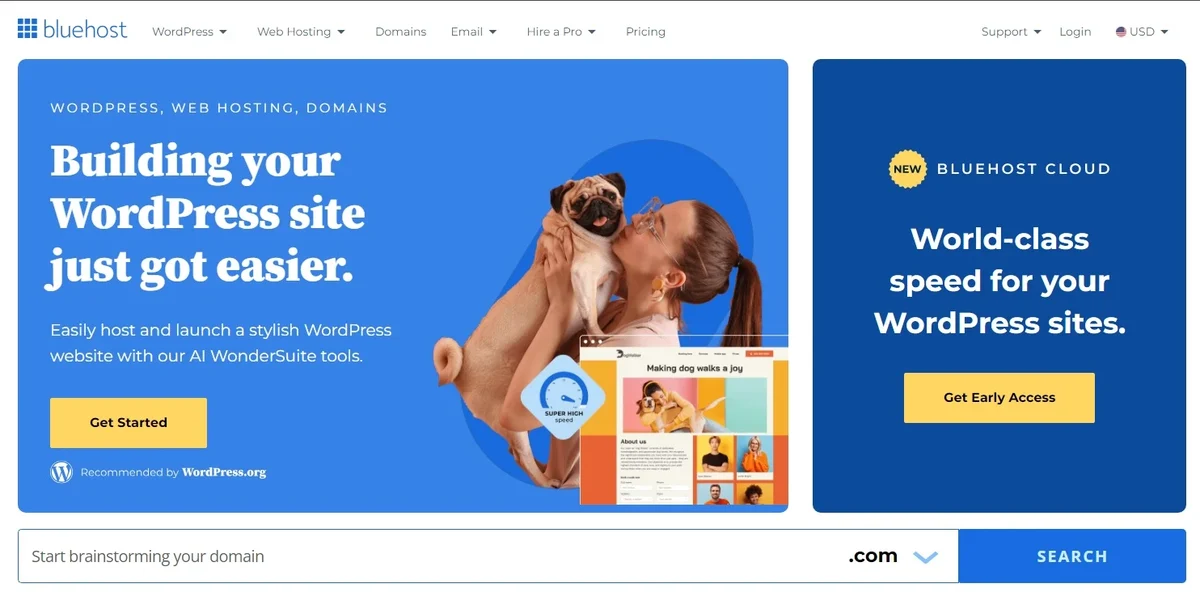
Bluehost is officially recommended by WordPress.org, and for good reason. It is the default choice for a reason.
- Beginner Friendly: Their onboarding is seamless. You get a free domain for the first year and a one-click WordPress install that actually works.
- Scalability: They offer a clear path from shared hosting to VPS (Virtual Private Server) as your traffic grows.
- Data Point: Testing shows they have a strong global infrastructure, meaning your site loads relatively quickly regardless of where your user is located.