






The launch-day buzz from platforms like Product Hunt can feel like the ultimate validation, driving thousands of signups in 24 hours. Yet, this is just one piece of a complex visibility puzzle. The startup ecosystem platform market is projected to hit $4.55 billion by 2032, making these directories core infrastructure for how startups get discovered, funded, and staffed.
While the right directories offer a surge of qualified traffic, high-authority backlinks, and crucial investor visibility, the wrong ones are a waste of resources and can even harm your site's SEO. This guide provides a systematic framework to tell the difference.
To properly evaluate a startup directory, you must assess its domain authority, audience relevance, community engagement, and submission process. This ensures the platform aligns with your startup's specific goals, whether for SEO, direct lead generation, or investor visibility. Choosing strategically is the difference between shouting into the void and being discovered by your first crucial customers and investors.
Are You Looking for the Windows Startup Directory?
The term "startup directory" can refer to websites that list businesses or a specific system folder in the Windows operating system that automatically launches applications on startup. This guide focuses on the websites used for marketing and growth.
Before diving into marketing platforms, it's crucial to clarify a common point of confusion for users searching terms like "startup directory windows 10" or "startup directory windows 11". These queries often refer to a system folder on a Windows computer, not a business listing website. This system folder contains shortcuts to applications that you want to run automatically every time you log into your computer.
| Operating System | Action | Instructions |
|---|---|---|
| Windows 10 & 11 | Open the Startup Folder | Press the Windows Key Win + R to open the Run dialog box. |
| Windows 10 & 11 | Enter the Command | Type shell:startup and press Enter. |
| Windows 10 & 11 | Result | A File Explorer window will open, showing the shortcuts for all applications that launch automatically when you log in. To add a program, simply create a shortcut to it in this folder. |
If you were looking for that system folder, you've found your answer. The remainder of this guide is for founders, marketers, and entrepreneurs on how to evaluate websites that list startup companies to achieve specific business goals.
What Are Startup Directories and Why Do They Matter?
Startup directories are websites that curate lists of new and established companies. They matter because they provide critical visibility, generate high-quality backlinks for SEO, drive targeted traffic from potential customers and investors, and build brand credibility within the tech ecosystem.
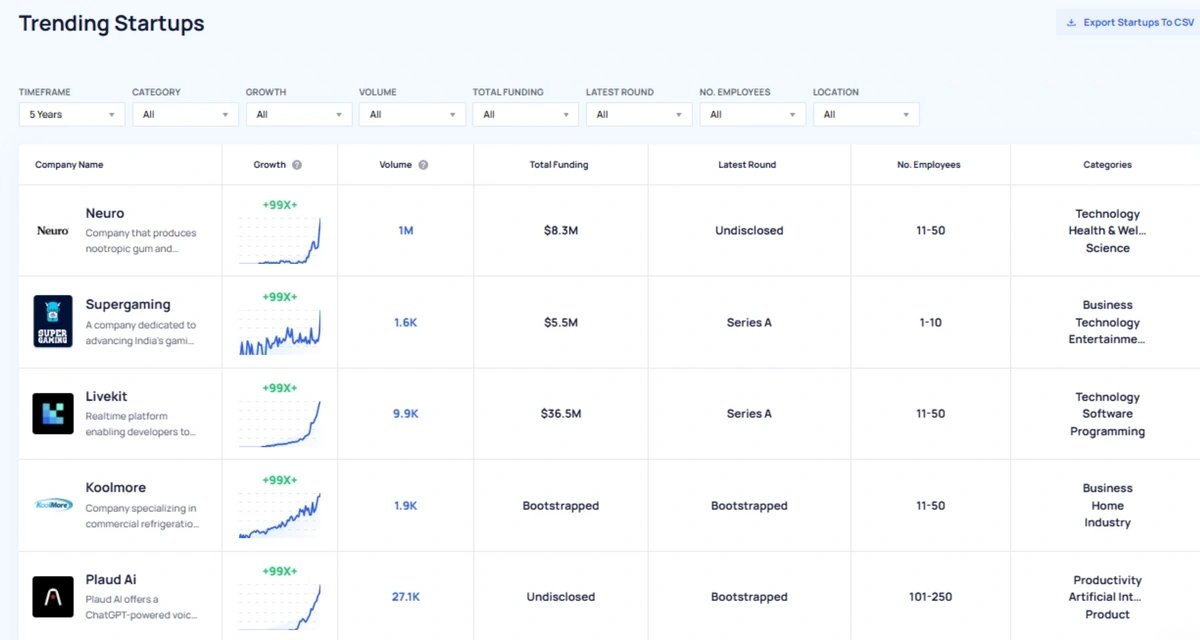
At their core, startup directories are the modern Yellow Pages for the tech industry. They range from massive databases like Crunchbase to niche platforms focused on specific verticals like AI or SaaS. Submitting your company is more than just adding your name to a list; it’s a strategic marketing activity with several key benefits:
Source: buttercms.com
- Enhanced Discoverability: Your startup gets placed in front of an active audience of potential customers, investors, journalists, and job seekers who use these platforms for research and discovery.
- SEO and Backlinks: A listing on a high-authority directory provides a valuable "dofollow" or "nofollow" backlink, signaling to search engines like Google that your website is legitimate and trustworthy. This can significantly improve your domain authority and search rankings over time.
- Targeted Traffic: Unlike general advertising, traffic from a relevant directory is often highly qualified. A developer browsing an AI tools directory is more likely to be interested in your AI coding assistant than a random visitor from a social media ad.
- Credibility and Social Proof: Being listed alongside other respected companies in your industry lends your startup instant credibility. It acts as a signal to the market that you are a serious player.
- Market Intelligence: By browsing these directories, you can analyze competitors, spot market trends, and identify potential partnership opportunities.
A well-executed directory strategy doesn't rely on submitting to hundreds of sites; it focuses on securing placements on a select few that offer the highest value for your specific goals.
Before You Start: Define Your Goals
Before evaluating any startup directory, you must first define your primary objective, as the platform's value is relative to your specific goals. Common objectives include SEO, direct lead generation, investor visibility, early user feedback, and general brand awareness.
You cannot effectively evaluate a platform without first knowing what you want to achieve. A directory that's phenomenal for attracting venture capitalists might be useless for sourcing beta testers for a consumer app. Your goals are the lens through which you must view every potential directory. Each platform serves a different audience and purpose; misalignment is the most common reason for a failed submission strategy.
Here are the primary objectives to consider, with examples of how they shape your evaluation:
- SEO & Link Building: Your primary goal is to acquire high-authority backlinks to improve your website's search engine rankings. For this, metrics like Domain Authority (DA) are paramount. The link's quality,
dofollowstatus (a link that passes SEO value), and the directory's topical relevance to your industry matter more than the direct traffic it sends. - Direct Traffic & Lead Generation: You want to attract potential customers directly to your website who are likely to sign up or make a purchase. For this goal, the directory's audience relevance and community engagement are the most critical factors. A B2B SaaS startup would prioritize a listing on G2 or Capterra, where buyers actively research software.
- Investor & Talent Visibility: The objective is to get on the radar of VCs, angel investors, and potential key hires. Platforms like Crunchbase and Wellfound (formerly AngelList) are built for this purpose. The quality and completeness of your profile, including funding rounds and team members, are crucial here.
- Early User Feedback: You need to source early adopters and beta testers to get initial reactions to a new product. Platforms like BetaList are specifically designed for this, connecting you with an audience that enjoys testing new things and providing constructive criticism.
- Brand Awareness & Credibility: Your goal is to establish social proof and legitimacy by being listed alongside other respected companies. Think of this as participating in a digital trade show; your presence alone builds credibility. These listings can then be leveraged in your own marketing with "As seen on..." badges.
A Step-by-Step Framework for Evaluating Directories
With your goals defined, you can now apply a consistent framework to vet any directory. This four-step process moves from high-level technical metrics to a granular look at community and quality.
Step 1: Assess the Directory's Authority and Trustworthiness
The first evaluation step is a technical assessment of a directory's reputation and SEO power by checking its Domain Authority (DA) or Domain Rating (DR). A high score (above 40) indicates a trustworthy site that can pass on SEO value.
Once you know your goal, the first filter is a technical one. A directory with low authority or a spammy backlink profile is unlikely to provide any significant benefit and, in a worst-case scenario, could even harm your website's reputation.
Check Domain Authority (DA) or Domain Rating (DR)
Domain Authority (DA) from Moz and Domain Rating (DR) from Ahrefs are scores from 0-100 that predict a website's ranking potential. While not a Google metric, they are reliable indicators of a site's backlink profile quality and overall authority.
These metrics are the industry standard for quickly gauging a website's strength. You can check these scores for free using tools like the MozBar browser extension or Ahrefs' free Website Authority Checker.
| Metric | Tool | What it Measures |
|---|---|---|
| Domain Authority (DA) | Moz | A logarithmic score from 1-100 predicting a website's likelihood to rank in search results. |
| Domain Rating (DR) | Ahrefs | A logarithmic score from 1-100 showing the strength of a website's backlink profile compared to others. |
Guidelines for Evaluation:
- Excellent (60+): Top-tier, authoritative sites like Crunchbase (DA 90) or Product Hunt (DA 84). A link from these directories carries significant weight.
- Good (40-59): Reputable niche directories and well-established platforms. They provide solid SEO value and targeted traffic.
- Average (20-39): Newer or highly specific niche directories. Potentially valuable if the audience is a perfect match, but proceed with caution.
- Poor (<20): Often indicates a low-quality, new, or potentially spammy site. Submitting to these directories is generally not worth the effort and can be risky.
Analyze the Site's Backlink Profile
A quality startup directory will have backlinks from other reputable websites within the tech, business, and venture capital communities. A backlink profile filled with spammy or irrelevant sites is a major red flag indicating low quality and potential SEO risk.
Don't just look at the score; look at the sources behind it. Use an SEO tool to inspect who links to the directory you're evaluating. A healthy backlink profile consists of links from tech news sites (e.g., TechCrunch), venture capital firms, and other high-quality business resources. If the directory's own backlinks are from low-quality blogs or irrelevant sites, avoid it.
Step 2: Evaluate Relevance to Your Niche and Audience
A directory's value depends on its audience's relevance to your startup's target market. You must determine if the platform is general or niche-specific and analyze its community to ensure your product will resonate with its users.
A directory with a DA of 90 is useless if its audience is a poor fit for your product. This step is about matching the platform's audience to your ideal customer profile.
Determine if it's General or Niche-Specific
General directories like Product Hunt have a broad tech audience, while niche directories like SaaSHub or "There's An AI For That" serve a specific industry. Niche directories often provide higher-quality leads for specialized products.
Directories fall into two main categories, and your choice depends on your product's appeal.
| Directory Type | Examples | Best For |
|---|---|---|
| General | Product Hunt, Crunchbase, Hacker News (Show HN), BetaList | Consumer apps, developer tools, horizontal SaaS, and products with broad appeal across the tech industry. |
| Niche-Specific | SaaSHub, G2 (B2B Software), Designer News, Indie Hackers, specific AI Startup Directory sites | Startups targeting a very specific user persona, such as SaaS buyers, designers, or users of a specific technology stack. |
For startups in a specific vertical, such as FinTech or HealthTech, finding a high-quality niche directory by browsing relevant categories can be more valuable than being featured on a large, general platform.
Analyze the Audience and Community Engagement
An active community with recent comments, discussions, and upvotes is a strong indicator of a high-value directory. A "ghost town" with no recent activity signals that the platform is no longer maintained or valued by its users.
The presence of an active community is a key differentiator between a simple list and a vibrant ecosystem. Before submitting, spend at least 30 minutes on the site to understand its culture.
- Who are the users? Are they investors, early adopters, developers, or fellow founders? Read the comments on top-listed products.
- Is there recent activity? Look at the dates on the latest submissions and comments. If the most recent activity was months ago, the site is likely dormant.
- How do users interact? Is the feedback constructive and detailed, or is it just generic praise? High-quality engagement suggests a thoughtful audience.
- Do founders engage? Look for founders actively responding to comments and answering questions. This is a sign of a healthy, two-way community.
Step 3: Scrutinize the Submission Process
A directory's submission process reveals its quality standards; a detailed form with a manual review process indicates high quality, whereas an instant, no-questions-asked approval is a red flag for a low-quality link farm.
How a directory accepts new listings is one of the most reliable indicators of its quality. Curation is what separates a valuable resource from a spam-filled list. A rigorous submission process is a feature, not a bug.
- Green Flag: The process requires more than just a name and a URL. Look for fields asking for a detailed description, founder information, product screenshots, and a video demo. A stated manual review process is an excellent sign of quality control.
- Red Flag: The process is instant, automated, and only asks for a URL and perhaps a payment. These are often signs of a low-quality directory whose business model is selling links, not building a valuable community.
Step 4: Final Check with an Evaluation Checklist
To make an objective decision, consolidate your findings using an evaluation checklist that scores directories based on domain authority, audience relevance, community engagement, curation process, cost structure, and the quality of existing listings.
After going through the steps, organize your findings to make a clear, objective decision. For each potential directory, run through these questions.
| Evaluation Criteria | Green Flag (High-Value) | Red Flag (Low-Quality Spam) |
|---|---|---|
| Domain Authority/Rating | DA/DR > 40, with a clean backlink profile from relevant tech/business sites. | DA/DR < 20, with a spammy backlink profile from irrelevant sites. |
| Audience Relevance | The audience perfectly matches your ideal customer profile and buying intent. | Broad, untargeted, or completely irrelevant audience with no clear purpose. |
| Community Engagement | Active, recent comments, upvotes, and meaningful discussions on listings. | A ghost town; no activity for months. Comments are disabled or full of spam. |
| Curation Process | A clear manual review and approval process is stated. Listings are high quality. | Instant, automated approval for anyone who pays or submits. Listings are thin or spammy. |
| Cost Structure | A robust free listing option is the primary choice. Paid options are for promotion. | "Pay-to-play" is the only option for a basic listing. High fees for little guaranteed value. |
| Quality of Listings | Profiles are detailed, professional, use high-quality images, and are regularly updated. | Listings are thin, contain broken links, have low-res images, or are clearly outdated. |
| Website UX/Design | Modern, fast, easy-to-navigate design that inspires trust and encourages discovery. | Outdated design, slow loading times, broken pages, and excessive ads. |
