




Why Your Cloud Provider is a Foundational Startup Decision
Choosing a cloud provider is like picking the foundation for your house. Get it right, and you have a solid base to build and scale your dream. Get it wrong, and you're dealing with costly cracks and frustrating problems when you should be focused on growth. The best cloud provider for a startup isn't a one-size-fits-all answer. It hinges on your team's existing skills, your tech stack, your funding runway, and your long-term vision. It dictates whether your engineers spend their time building new features or patching servers.
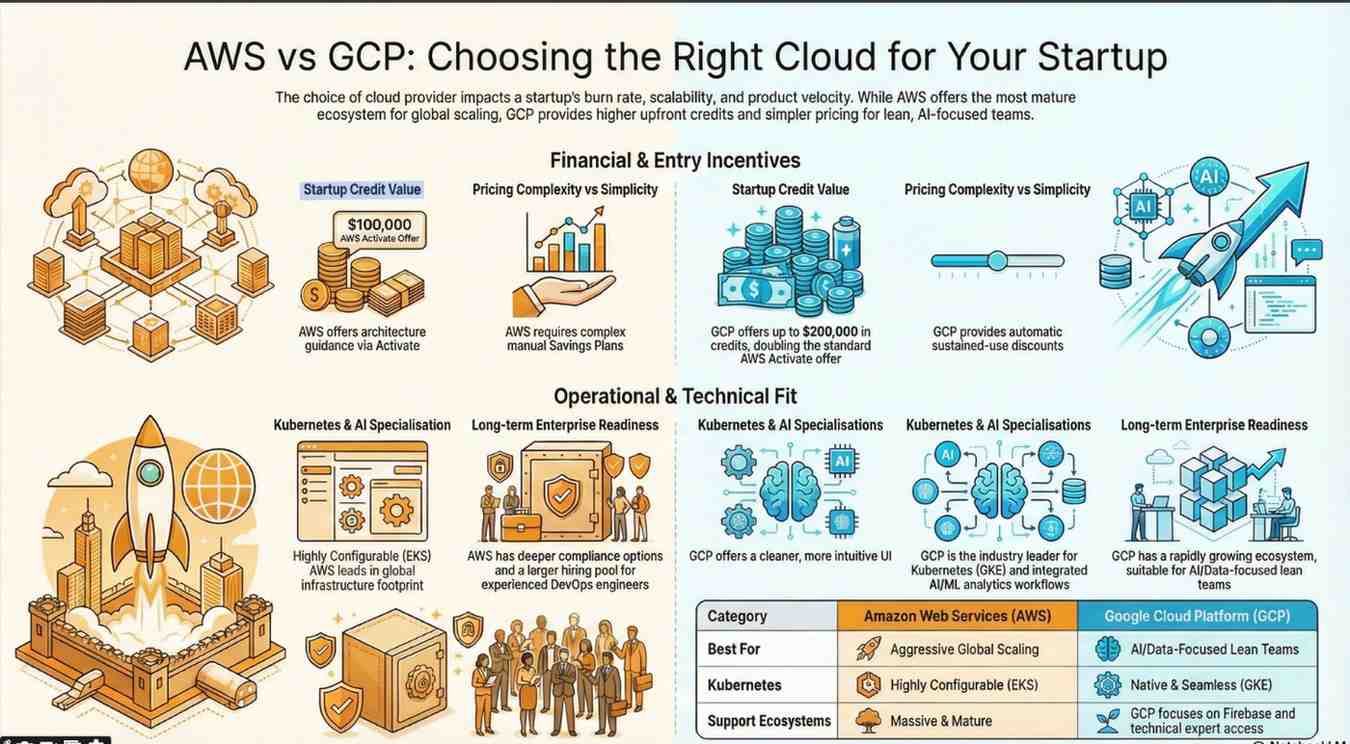
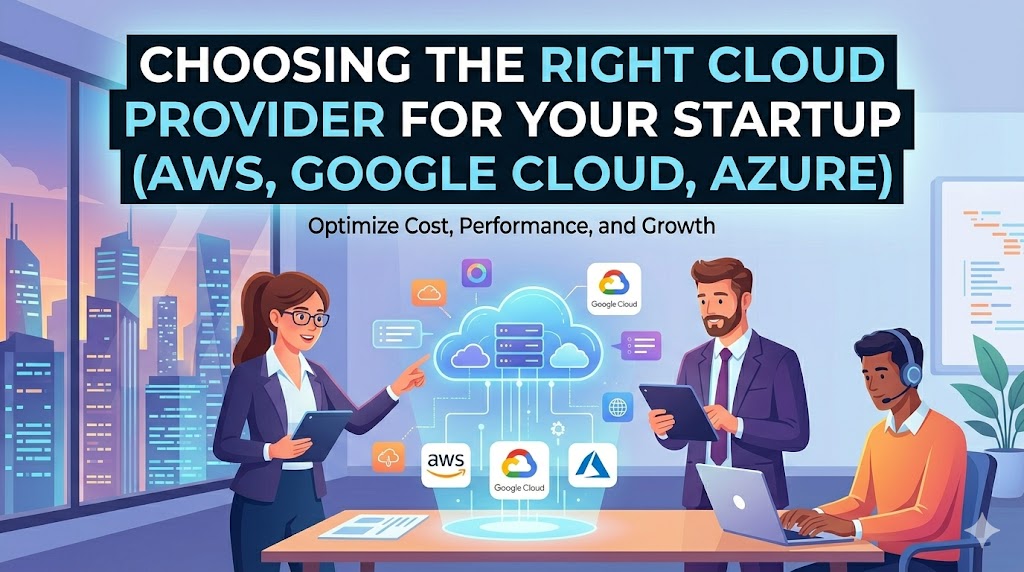
Amazon Web Services (AWS) is the 800-pound gorilla, the market leader with a service for literally everything. Google Cloud Platform (GCP) is the data and Kubernetes genius, built on the same infrastructure that powers Google Search and YouTube. And Microsoft Azure is the enterprise champion, a strategic choice for startups targeting corporate clients. This decision defines how fast you can innovate, how you manage costs, and whether your infrastructure can handle that viral spike you're hoping for. Getting it right is a key part of a solid startup launch strategy. This guide breaks down the top providers so you can make a smart, foundational choice for your company.
How We Evaluated Cloud Providers for Startups
To cut through the marketing jargon, we focused on the criteria that matter most to a startup founder. Our evaluation is based on a practical framework:
- Startup Programs & Free Tiers: The value and accessibility of credits, support, and always-free services that extend your runway.
- Pricing & Cost Transparency: How easy it is to understand billing, manage costs, and avoid surprise invoices.
- Scalability & Performance: The provider's ability to support your growth from a simple MVP to a global user base.
- Ease of Use & Developer Experience: The steepness of the learning curve and how quickly your team can build and deploy.
- Ecosystem & Community: The availability of talent, third-party tools, documentation, and community support.
At a Glance: Top Cloud Providers for Startups Compared
Here is a high-level summary of how the leading cloud providers stack up on the factors that matter most to a new business.
| Feature | AWS (Amazon Web Services) | Google Cloud (GCP) | Microsoft Azure | DigitalOcean |
|---|---|---|---|---|
| Startup Program | AWS Activate | Google for Startups Cloud Program | Microsoft for Startups Founders Hub | DigitalOcean Hatch |
| Core Strength | Unmatched service breadth, mature ecosystem, largest community. | Data analytics, AI/ML, Kubernetes, global networking. | Deep enterprise integration, hybrid cloud, exclusive OpenAI access. | Simplicity, predictable pricing, great developer experience. |
| Best For... | Startups needing the widest range of services and the largest talent pool. | Data-intensive, AI/ML-driven, or Kubernetes-native startups. | B2B SaaS startups targeting enterprise clients or building on the Microsoft stack. | Bootstrapped MVPs, developers who want to ship fast without a DevOps team. |
| Pricing Model | Complex (On-Demand, RIs, Savings Plans). Most powerful but hard to master. | User-friendly (Sustained Use Discounts, per-second billing). | Similar to AWS, strong hybrid use benefits for Windows licensing. | Simple & predictable. Fixed monthly costs for Droplets (VMs). |
| Ease of Use | Steep learning curve due to service breadth. Can cause analysis paralysis. | Generally considered more intuitive for core services; clean UI. | Can be complex; documentation quality can vary across services. | Extremely easy to use. Clean, intuitive UI designed for developers. |
In-Depth Reviews: The "Big Three" Hyperscalers
AWS for Startups: The Pros and Cons
Amazon Web Services is the default choice for a reason. VCs and technical advisors will never question your decision to build on AWS; it's the safe, standard option that has scaled countless unicorns.
Pros of Choosing AWS:
- Massive Ecosystem: AWS's market leadership means you'll find the largest community for support (Stack Overflow, forums), the most third-party tool integrations, and the biggest pool of engineers who already know how to use it.
- Comprehensive Service Portfolio: If you can think of a cloud-related task, there's an AWS service for it. You will almost never hit a wall where the platform can't do what you need.
- Proven and Trusted: It has the longest history of taking startups from a garage project to a global phenomenon. Companies like Netflix, Airbnb, and Stripe all scaled on AWS.

Source: softwebsolutions.com
Cons of Choosing AWS:
- Cost Complexity: The flip side of having a service for everything is having a pricing model for everything. AWS billing can be incredibly complex. Without a dedicated person or tool managing costs, it's easy for your bill to spiral.
- Steep Learning Curve: The sheer size of the AWS service catalog can overwhelm new teams. The console can feel cluttered, and figuring out the "right" way to build something often requires sifting through multiple options.
Google Cloud for New Businesses: The Pros and Cons
GCP is the powerhouse for data-driven startups. If your competitive advantage lies in processing and understanding vast amounts of data, Google Cloud provides best-in-class tools built on the infrastructure that powers its own dominant products.
Pros of Choosing Google Cloud:
- Data and AI Leadership: Services like BigQuery (a serverless data warehouse) and Vertex AI (a unified ML platform) are industry-leading and can provide a significant competitive edge.
- Developer-Friendly: Many developers find GCP's user interface cleaner and its project-based resource organization more intuitive. The automatic Sustained Use Discounts are a prime example of its user-first approach to pricing.
- High-Performance Network: Your traffic runs on the same high-performance, private global fiber network that Google uses for Search and YouTube, which can reduce latency for a faster user experience.
Cons of Choosing Google Cloud:
- Smaller Market Share: While a powerful #3, GCP's smaller market share means a less mature ecosystem. You'll find a smaller community and a slightly smaller talent pool compared to AWS.
- Less Enterprise Focus (Historically): While rapidly closing the gap, Google has historically trailed AWS and Azure in providing the kind of deep enterprise sales and support processes that large corporate customers expect.
Azure Startup Solutions: The Pros and Cons
Microsoft Azure is the strategic choice for B2B startups. If your target customers are large companies already running on Microsoft products, building on Azure can give you a significant advantage in integration, sales, and trust.
Pros of Choosing Azure:
- Unbeatable Microsoft Integration: If you're building a B2B SaaS product, the integration with Azure Active Directory, Office 365, and Dynamics 365 is seamless. The ownership of GitHub and exclusive partnership with OpenAI also provide preferential access to tools like GitHub Copilot and the latest GPT models.
- Strong Hybrid Capabilities: Azure is the clear leader for managing a mix of on-premise and public cloud infrastructure, a common scenario for established enterprise customers.
- Enterprise-Ready: Azure was built with the enterprise in mind. It has deep expertise in compliance, security, and governance (e.g., GDPR, HIPAA), a huge selling point when you're trying to land your first Fortune 500 customer.
Cons of Choosing Azure:
- "Less Cool" Factor: In some startup circles, Azure can still be perceived as the "old-school" corporate choice, which can be a minor factor in attracting certain types of talent. This is mostly perception, not a reflection of its technical capabilities.
- Inconsistent Experience: While Azure's core services are top-notch, the user experience and documentation quality can sometimes be less polished as you move into more niche services.