




What Launched Today

Top 25 European Startup Directories for Global Expansion

Published on June 18, 2026

Discover the top 25 European startup directories for global expansion. Our curated list helps founders gain visibility, connect with investors, and grow.

Why European Startup Directories Are Key to Navigating Its Booming Tech Ecosystem

European startup directories are curated databases that list new and established companies across the continent, serving as a critical tool for founders to gain visibility, connect with investors, attract talent, and secure high-quality backlinks within the massive European tech market.

Okay, let's get straight to it. Europe's startup scene is a powerhouse, a sprawling collection of interconnected hubs that represent a significant and growing portion of the global tech economy. But it's also famously fragmented. Unlike the US, where Silicon Valley dominates the conversation, Europe has London, Berlin, Paris, Stockholm, and dozens of other "startup cities," each with its own unique ecosystem, local regulations, and investor networks.

Navigating this landscape—with its multiple languages, diverse talent pools, and data privacy frameworks like GDPR—requires a map. That's exactly what a good directory is. These platforms are more than just a list of companies. They are dynamic ecosystems where venture capitalists scout for the next unicorn, journalists hunt for stories, and top-tier talent looks for its next big move. For founders, getting listed isn't just a vanity metric; it's a strategic imperative for tapping into the flow of capital, talent, and attention that defines entrepreneurship in Europe. For investors, sales teams, and job seekers, these directories are the most efficient way to identify and track the continent's most promising ventures.

How We Selected the Top European Startup Databases

We selected the top European startup databases by evaluating their geographic focus, audience reach, data quality, submission process, and SEO authority, prioritizing platforms that offer founders tangible value in terms of visibility, funding opportunities, and online credibility.

To cut through the noise, we applied a founder-first filter. This isn't just about the biggest lists; it's about the most effective ones. Here’s what we looked for:

  • Geographic Focus: We prioritized platforms with a deep, granular focus on Europe. While global players are included, they had to demonstrate a significant European presence and utility for navigating its fragmented markets.
  • Audience & Reach: Who is using this directory? The best platforms are daily tools for investors, journalists, enterprise customers, and potential hires—the people who can actually move the needle for your business.
  • Data Quality & Depth: Freshness is everything. We looked for directories that provide accurate, up-to-date information on funding rounds, company size, key personnel, and growth signals. Platforms that integrate directly with official registries scored higher.
  • Submission Process: We considered how easy it is to get listed. Is it a simple form, a curated editorial process, or part of a paid package? Both free and premium options were evaluated for their return on investment.
  • SEO & Authority: A listing should be more than a mention; it should be an asset. We valued directories that provide a high-quality backlink, boosting your startup's domain authority. The presence of startups with modern websites, whether a standard .com, a country-specific domain, or a simple .info page, signals an active and relevant community.

Categorizing European Startup Directories: Finding the Right Tool for the Job

Before diving into the list, it's crucial to understand that not all directories serve the same purpose. Choosing the right platform depends entirely on your goal. Here’s a quick breakdown of the main categories:

  • Comprehensive Databases (The Intelligence Hubs): These are the encyclopedias of the startup world. Platforms like Dealroom.co and Crunchbase aim to capture everything—funding rounds, employee counts, investor profiles, and acquisitions. They are essential for deep market research, investor prospecting, and competitive analysis.
  • Curated Media & News Lists (The Tastemakers): These directories are often part of a larger media outlet, like EU-Startups or Sifted. Getting listed here is less about filling out a form and more about being newsworthy. Inclusion is a powerful form of PR, signaling to the market that you're a company to watch.
  • Accelerator & VC Portfolios (The Elite Clubs): Directories like the YC startup directory or the EIC Market Place are not open for public submission. They are exclusive showcases of companies that have passed a rigorous selection process. For outsiders, they are an invaluable source for identifying highly-vetted, high-potential startups.
  • Job & Talent Platforms (The People Finders): Platforms like Wellfound and The Hub are purpose-built for one thing: connecting talented individuals with innovative companies. While they serve as a directory, their primary function is recruitment.
  • Government & Ecosystem Hubs (The Nation Builders): These platforms, such as La French Tech or Startup Estonia, are often government-backed initiatives designed to promote a specific country's or region's startup ecosystem. They offer credibility, access to local resources, and a direct line into the national tech scene.

Pan-European Giants: The Must-Have Listings

If you’re serious about making an impact across Europe, these are the platforms where you absolutely need to have a presence. They are the household names for investors and media across the continent.

Map of active startups across EU member states showing density in different countries

Source: Reddit

1. Dealroom.co

Dealroom.co is a leading global intelligence platform providing extensive data on startups, tech ecosystems, and venture capital, with an exceptionally strong focus and granular dataset on European companies, investors, and funding rounds, making it a go-to for VCs.

Dealroom is the gold standard for data-driven analysis of the European tech scene. Governments, VCs, and corporate development teams live on this platform to map ecosystems and find investment targets. Having an accurate, up-to-date profile here means you're on the radar of some of the most powerful players in the industry.

  • Pros: Unmatched data depth on funding, valuations, and investors. Powerful tools for market analysis and competitive intelligence. Widely trusted by decision-makers.
  • Cons: The most powerful features are locked behind a steep enterprise paywall.
Item Detail
Primary Audience VCs, Governments, Enterprise
Data Focus Funding Rounds, Valuations, Investors
Listing Process Automated & Manual
Key Use Case Investor Research & Market Mapping

2. Crunchbase

Crunchbase is a global database of record for company and investor information, making it an essential, high-authority platform for any European startup seeking international visibility, as it's often the first source for journalists and VCs worldwide.

While Dealroom is the specialist's tool for European data, Crunchbase is the world's business card. It's often the top search result for your company's name. A missing or incomplete Crunchbase profile signals you're not a serious player. It’s table stakes for credibility on a global scale.

  • Pros: Massive global audience and high domain authority. The universal standard for tracking funding history. Free to create a basic profile.
  • Cons: Unlocking its powerful search and alert features requires a paid Pro subscription.
Item Detail
Primary Audience Global Investors, Journalists, Sales Teams
Data Focus Funding, Acquisitions, People
Listing Process Open, Community-Edited
Key Use Case Establishing Global Credibility

3. EU-Startups

EU-Startups is a leading online publication dedicated exclusively to the European startup ecosystem, featuring a comprehensive startup database alongside news coverage, making it a prime channel for gaining targeted media exposure.

If you want to get noticed by the European tech community, EU-Startups is the place to be. It's less of a pure data platform and more of a media outlet with a great directory. Being featured in one of their articles or lists can drive significant, high-quality traffic and investor interest.

  • Pros: Hyper-targeted audience of European founders, investors, and tech enthusiasts. Hosts a popular annual summit, offering great networking opportunities.
  • Cons: Visibility is often tied to being newsworthy or sponsoring content.
Item Detail
Primary Audience European Tech Community
Data Focus Newsworthy Companies, Funding News
Listing Process Submit a Tip / Editorial Curation
Key Use Case Public Relations & Brand Awareness

4. StartupBlink

StartupBlink is a global startup ecosystem map and research center that provides data-driven rankings of cities and nations, including an extensive directory of European startups, offering unique insights into the strengths of different tech hubs.

StartupBlink offers a unique, top-down view of the startup world. Its annual Global Startup Ecosystem Index Report is widely cited by governments and corporations for strategic planning. Listing your company contributes to your local ecosystem's score and puts you on a global map, quite literally.

  • Pros: Excellent for ecosystem-level analysis and strategic planning. Provides a global context for your local scene.
  • Cons: The user interface is more focused on data visualization than simple company discovery.
Item Detail
Primary Audience Policymakers, Researchers, Founders
Data Focus Ecosystem Rankings, Startup Density
Listing Process Free Public Submission
Key Use Case Geographic Strategy & Expansion

5. F6S

F6S is a massive global network for startup founders that hosts a large number of European companies, and is particularly strong for discovering grants, accelerator programs, and exclusive software deals for early-stage ventures.

Think of F6S as the social network for the early-stage grind. It's where you go to find the resources you need to get from idea to MVP and beyond, especially for finding your first accelerator program or landing crucial perks like free cloud credits.

  • Pros: A huge resource for finding accelerators, grants, and startup deals. Strong community features. Free to list.
  • Cons: The platform can feel crowded and a bit dated. The focus is heavily skewed towards the very early-stage.
Item Detail
Primary Audience Early-Stage Founders, Accelerators
Data Focus Accelerator Applications, Startup Deals
Listing Process Free Profile Creation
Key Use Case Finding Accelerators & Grants

Global Directories with a Powerful European Footprint

Some directories are so influential globally that their European sections are more powerful than many region-specific platforms.
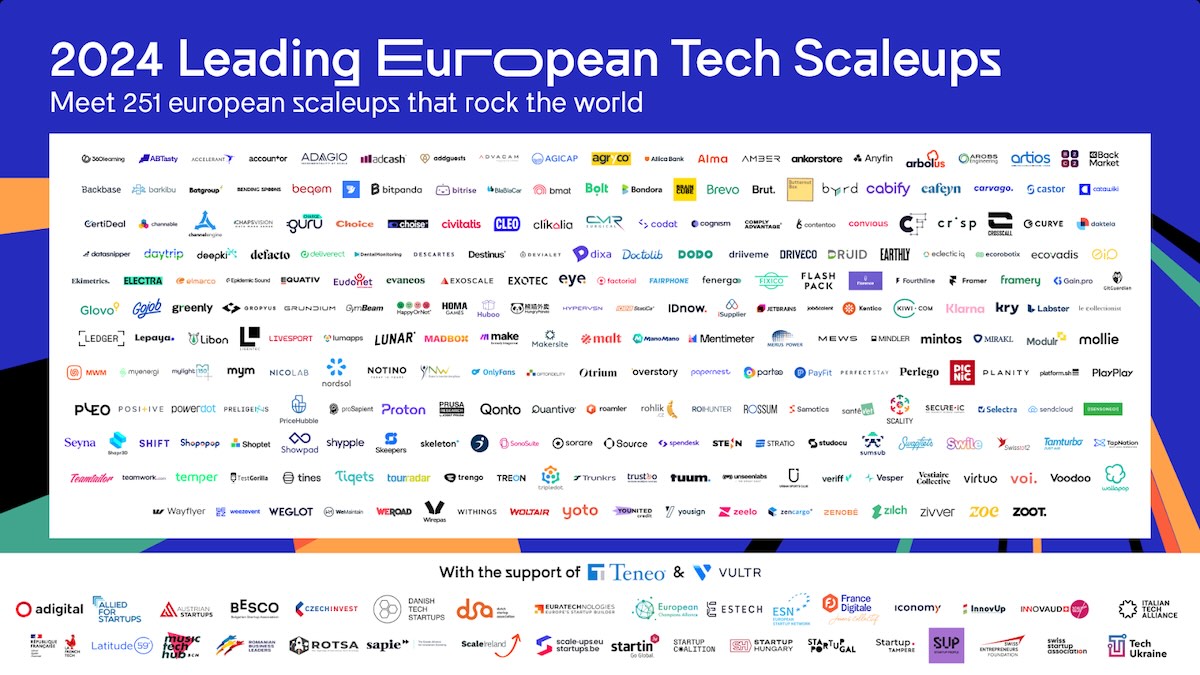
Chart showing the leading European tech scaleups and unicorns

Source: latitude59.ee

6. Y Combinator Startup Directory

The YC startup directory is a prestigious, curated list of all companies funded by the Y Combinator accelerator, and its European section showcases some of the continent's most promising and well-vetted ventures, sorted by industry, batch, and region.

You can't just "submit" to this one. The YC directory is an exclusive club. But as a research resource, it's unparalleled. It’s a directory of companies that have already passed one of the highest bars in the tech world. You can filter by "Europe" to see business models YC believes are the future, providing a powerful signal for emerging trends.

  • Pros: The ultimate signal of prestige and validation. Features powerful filtering tools, with 441 companies listed in the Europe region.
  • Cons: It's a closed ecosystem. You can only be listed if you are accepted into the YC program.
Item Detail
Primary Audience Investors, Acquirers, Top Talent
Data Focus YC Alumni Companies
Listing Process Exclusive to YC Alumni
Key Use Case Competitive Research & Trend Spotting

7. Wellfound (Formerly AngelList)

Wellfound, previously AngelList, is a premier global platform for startup hiring and fundraising, featuring thousands of active European tech companies and serving as the go-to destination for finding high-quality, startup-focused talent on the continent.

When you're ready to hire your first employees in Europe, Wellfound is where you go. It has become the definitive marketplace for people who specifically want to work at startups. The quality of candidates is typically much higher than on generalist job boards.

  • Pros: The top platform for recruiting startup-minded talent. Tightly integrated with fundraising tools.
  • Cons: Functions more as a recruitment and investment tool than a general-purpose directory for PR.
Item Detail
Primary Audience Startup Job Seekers, Angel Investors
Data Focus Open Roles, Team, Funding Needs
Listing Process Free Company Profile Creation
Key Use Case Hiring and Early-Stage Fundraising

Regional & National Powerhouses: Win Your Local Market

Europe's strength is its diversity. Winning in Germany requires a different approach than winning in the Nordics. These regional platforms are key to unlocking local markets.

8. The Hub (Nordics)

The Hub is the leading recruitment and discovery platform for the Nordic startup ecosystem, connecting startups in Denmark, Sweden, Norway, and Finland with a curated pool of local and international talent.

The Nordic region is a unicorn factory, and The Hub is its main recruiting office. If you're building a team in Stockholm, Copenhagen, Helsinki, or Oslo, this is your primary channel.

  • Pros: Hyper-focused on the Nordic tech community. High-quality company profiles and job listings. Completely free.
  • Cons: Its utility is limited if you have no operational or hiring presence in the Nordic countries.
Item Detail
Primary Audience Nordic Startups & Job Seekers
Key Use Case Talent Acquisition in Nordics

9. German Startups Association

The German Startups Association is the primary representative body for startups in Germany, offering a member directory, influential research, and critical networking opportunities within Europe's largest economy.

To operate effectively in Germany, you need to understand the landscape, and this association is the official mapmaker. Joining gives you credibility and access to a network that can help navigate the German market's complexities, connecting with other innovative companies like Chekzly.

  • Pros: An authoritative voice for the German tech scene. Provides valuable policy insights and high-level networking.
  • Cons: It's a membership-based organization, not an open directory.
Item Detail
Primary Audience German Startups, Policymakers
Key Use Case Networking & Policy in Germany

10. La French Tech

La French Tech is a government-supported movement that promotes French startups globally, providing a directory, resources, and access to specific funding programs and visas to bolster France's position as a leading tech hub.

Anchored by giants like Station F in Paris, La French Tech is a powerful branding initiative. Being part of this ecosystem provides a stamp of approval and access to a global network of partners, events, and crucial government resources like the French Tech Visa.

  • Pros: Strong government backing and a globally recognized brand. Offers access to valuable resources.
  • Cons: Exclusively focused on startups with a significant operational base or connection to France.
Item Detail
Primary Audience French Startups, International Investors
Key Use Case Accessing French Gov't Support

11. Tech.eu

Tech.eu is a premier news and market intelligence platform covering the European tech industry, offering deep data analysis, reports, and a database of startups that provides context on funding trends and ecosystem shifts.

Tech.eu is where you go to get the story behind the numbers. Their data-driven journalism provides crucial context that you won't find in a simple database.

  • Pros: High-quality, data-backed journalism. Excellent for staying on top of European tech news and investment trends.
  • Cons: The most valuable data and reports require a paid subscription.
Item Detail
Primary Audience European VCs, C-level Execs
Key Use Case Market Intelligence & Trend Analysis

12. UKTN (UK Tech News)

UKTN (UK Tech News) is a leading news outlet for the UK's technology scene, offering a startup directory, detailed funding round reports, and analysis of regional ecosystems, making it the definitive resource for the British market.

Post-Brexit, the UK tech scene operates with its own distinct rhythm. UKTN is the publication that has its finger on that pulse, with particular strength in covering the booming tech hubs outside of London, such as Manchester, Bristol, and Edinburgh.

  • Pros: The go-to source for news and insights on the UK tech landscape. Strong coverage of regional hubs.
  • Cons: Tightly focused on the UK, making it less relevant for a pan-European strategy.
Item Detail
Primary Audience UK Founders, Investors, and Tech Workers
Key Use Case UK Market Entry & PR

13. Startup Estonia

Startup Estonia is the official government-backed gateway to Estonia's world-renowned digital ecosystem, featuring a comprehensive and highly accurate database of Estonian startups.

Estonia punches far above its weight, producing more unicorns per capita than almost anywhere else. Startup Estonia is the official, data-rich front door to that ecosystem, with data often sourced directly from the country's official business register.

  • Pros: Official, accurate, and comprehensive data on Estonian startups.
  • Cons: Strictly limited to startups that are registered or have a significant operational presence in Estonia.
Item Detail
Primary Audience Global entrepreneurs, Estonian Startups
Key Use Case Ecosystem Data & e-Residency

Niche & Industry-Specific Directories

Sometimes, a broad audience isn't what you need. These niche directories connect you with a highly relevant community of experts, investors, and partners in your specific field.

14. An AI Startup Directory Example: appliedAI Initiative

The AI startup landscape from Germany's appliedAI Initiative is a curated European market map of top AI companies, offering a high-quality, vetted list that signals credibility and innovation within the community.

Getting on a list like the one from appliedAI is a major endorsement. It's not an open-submission directory; it's a curated landscape map created by experts. Inclusion means you've been recognized as a significant player in the European AI scene, alongside interesting new tools like an AI 3D Model Generator.

  • Pros: Highly respected and curated by AI experts. Inclusion is a powerful signal of quality.
  • Cons: Not an open directory. Inclusion is based on their independent research and merit.

15. FinTech Global

FinTech Global is a specialist research firm offering authoritative directories like the annual FinTech100, which highlights the most innovative financial technology companies and provides a strong mark of distinction.

For fintech startups, making it onto a list from FinTech Global is a significant milestone. It places you among the sector's elite and is a powerful signal to investors and potential enterprise partners.

  • Pros: High authority and respect within the financial technology industry.
  • Cons: Getting listed is highly competitive and based on the firm's proprietary research.

EU-Backed & Government-Affiliated Platforms

These platforms are backed by major European institutions and provide high-level data for policy and connecting top-tier innovators.

16. European Startup Nations Alliance (ESNA) Data Platform

The European Startup Nations Alliance (ESNA) provides an official data platform that aggregates key information on startup performance and ecosystem health across EU Member States, serving as a primary source for policymakers.

ESNA's platform is where EU policymakers go to understand the health of the continent's startup economy. It’s a macroeconomic tool that provides aggregated data, offering insights into which national policies are fostering innovation most effectively.

  • Pros: Authoritative, high-level data used for shaping European policy.
  • Cons: It's a tool for analysis, not a directory for individual company discovery or lead generation.

17. EPO Deep Tech Finder

The EPO Deep Tech Finder is a unique tool from the European Patent Office that connects investment-ready European startups with investors based on the strength of their patent applications.

This directory answers a critical question for deep tech investors: who has defensible technology? By focusing on patent portfolios, the EPO Deep Tech Finder highlights startups whose core value is tied to genuine, protectable innovation.

  • Pros: Unique focus on intellectual property as a marker of quality.
  • Cons: Only relevant for startups with a strong patent strategy.

18. EIC Market Place (European Innovation Council)

The EIC Market Place is an exclusive community for high-growth companies that have already secured funding from the prestigious European Innovation Council, offering direct access to a network of innovators and investors.

Similar to the YC directory, the EIC Market Place is a closed ecosystem for Europe's elite innovators. Gaining EIC funding is incredibly competitive, and this platform is the private club for the winners.

  • Pros: Direct access to a vetted, high-power network of Europe's top innovators.
  • Cons: Only accessible to startups that have successfully secured EIC funding.

Quick-View: Comparing Top 5 European Startup Databases

A comparison of the top five European startup databases shows Dealroom.co excels at market intelligence, Crunchbase provides global visibility, EU-Startups is best for PR, The Hub is ideal for Nordic hiring, and StartupBlink offers unique ecosystem analysis.

Here’s a quick-view table to help you decide where to focus your efforts first.

Directory Focus Best For Pricing Model Key Feature
Dealroom.co Pan-European, Data Market Intelligence, VCs Freemium / Enterprise Deep funding & ecosystem data
Crunchbase Global, Data Global Visibility, Funding Freemium / Pro Universal company profile
EU-Startups Pan-European, Media PR & Brand Awareness Free Listing / Ads Editorial features & summit
The Hub Nordic, Talent Hiring in Nordics Free Curated startup job board
StartupBlink Global, Ecosystems Ecosystem Analysis Freemium / Pro Interactive startup map

Spotlight on Key European Tech Hubs

To succeed, you need to know where to look. Here's a cheat sheet for matching top European startup cities with the directories that best serve them.

  • For London: As a global financial and tech center, focus on the giants: Crunchbase for global visibility, Wellfound for talent, and UKTN for local UK market intelligence.
  • For Berlin: A hub for B2B, SaaS, and FinTech. Use Dealroom.co for deep data analysis, the German Startups Association for local networking, and niche directories like HealthTech Hub.
  • For Paris: A growing powerhouse in AI and deep tech. Leverage La French Tech for government resources, Crunchbase for investor relations, and keep an eye on curated lists like the appliedAI Initiative.
  • For Stockholm & The Nordics: A world leader in producing unicorns. The Hub is non-negotiable for talent acquisition, while StartupBlink can help analyze the region's ecosystem strengths.
  • For Amsterdam: A highly international and connected hub. Dealroom.co (headquartered there) is essential, alongside global platforms like Wellfound that cater to its diverse talent pool.
  • For Tallinn & The Baltics: The leader in e-governance and unicorns per capita. Startup Estonia is the official and most accurate database, supplemented by F6S for early-stage opportunities.

Actionable Workflows: How to Use European Startup Directories

Having a list is one thing; using it effectively is another. Here are practical workflows for different professional goals.

For Investors & VCs: Deal Sourcing

  1. Define Your Thesis: Start with your investment criteria (e.g., "B2B SaaS startups in the DACH region, post-seed/pre-Series A").
  2. Screen on Dealroom: Use Dealroom's advanced filters for geography, industry, funding date, and amount.
  3. Identify Rising Stars: Look for "breakout" signals like significant hiring growth or recent senior hires from established tech companies.
  4. Cross-Reference on Crunchbase: Validate the funding history and check the investor list for reputable angels or seed funds.
  5. Check for Prestige: Search for shortlisted companies in the YC directory or EIC grantee lists to identify elite competitors or prospects.
  6. Monitor News Flow: Set up alerts on Tech.eu and Sifted for your target companies to track new product launches or partnership announcements.

For Sales & Business Development: Lead Generation

  1. Identify Your ICP: Define your Ideal Customer Profile (e.g., "UK-based FinTech companies with 50-200 employees that just raised a Series A").
  2. Find the Trigger Event: Use Crunchbase Pro to create a saved search that alerts you whenever a company matching your ICP raises a new funding round—a powerful buying signal. You can also stay on top of new market entrants by tracking our monthly launch roundup.
  3. Map the Organization: Use the target company's Crunchbase or Dealroom profile to identify key decision-makers.
  4. Enrich Contact Data: Use the profile information to find these individuals on professional networks for personalized outreach.
  5. Reference Their News: In your outreach, mention their recent funding or a positive story you saw on UKTN to show you've done your homework.

For Job Seekers: Finding Your Next Role

  1. Target Your Hubs: Decide which European tech hubs appeal to you (e.g., Berlin for FinTech, Stockholm for music tech).
  2. Screen on Talent Platforms: Use The Hub for Nordic roles or Wellfound for pan-European positions. Filter by your desired role, experience level, and tech stack. A well-crafted CV from a builder like WerkCV can make you stand out.
  3. Research Company Momentum: Before applying, look up the company on Dealroom. Have they raised funding recently? Are they growing their team?
  4. Assess the Ecosystem: Check platforms like StartupBlink to understand the health of the city's ecosystem. A city with a high ranking will have more opportunities.
  5. Look for Culture Clues: Read articles about the company on media sites like Sifted or EU-Startups for insights into the company culture and founders' vision.

The Freemium Frontier: Navigating Free vs. Paid Tiers

A common question is whether it's worth paying for these directories. The answer depends on how actively you plan to use them as a tool.

  • What You Get for Free: For most startups, a free profile is essential and sufficient for foundational visibility. You get listed, you become discoverable, and you secure a valuable backlink. For casual research, the free search functions are often adequate.
  • What You Pay For: Premium tiers (like Crunchbase Pro or Dealroom's plans) unlock proactive growth tools. The core value propositions are typically:
  • Advanced Search & Filtering: Run highly specific, multi-variable queries.
  • Alerts & Tracking: Get real-time notifications about funding rounds or news.
  • Data Export: Export lists of companies for use in your own CRM.
  • Contact Information: Access verified contact details for key personnel.

For founders, a free profile is a must. For investors and sales teams, a paid subscription to at least one major data platform is often a non-negotiable cost of doing business.

Frequently Asked Questions (FAQ)

1. What is the best startup directory for Europe?
There is no single "best" directory; it depends on your goal. For deep data and investor research, Dealroom.co is a top choice. For global visibility and tracking funding, Crunchbase is essential. For hiring in the Nordics, The Hub is unbeatable. For PR and brand awareness, getting featured by EU-Startups or Sifted is powerful.

2. Which city has the most startups in Europe?
London has historically been Europe's largest startup hub by volume of companies and investment. However, other major hubs like Paris and Berlin are growing rapidly and are leaders in specific sectors. Cities like Stockholm and Tallinn are also notable for producing a high number of successful startups per capita.

3. How do I get my startup listed in a European directory?
The process varies. Platforms like Crunchbase and F6S allow you to create a free profile via open submission. Others, like EU-Startups, are editorially curated, meaning you get listed by being newsworthy. Elite directories, such as the YC or EIC platforms, are exclusive to members of their programs.

4. Are European startup directories free to use?
Most directories operate on a "freemium" model. Creating a basic company profile and performing simple searches is usually free. However, advanced features like detailed filtering, data exports, market trend analysis, and alerts are typically part of a paid subscription designed for professionals like VCs and sales teams.

5. What is a European "unicorn" startup?
A "unicorn" is a privately held startup company with a valuation of over $1 billion. Europe has produced many famous unicorns, such as Klarna (Sweden), Revolut (UK), and DeepL (Germany), and the number continues to grow each year across various tech hubs on the continent.